

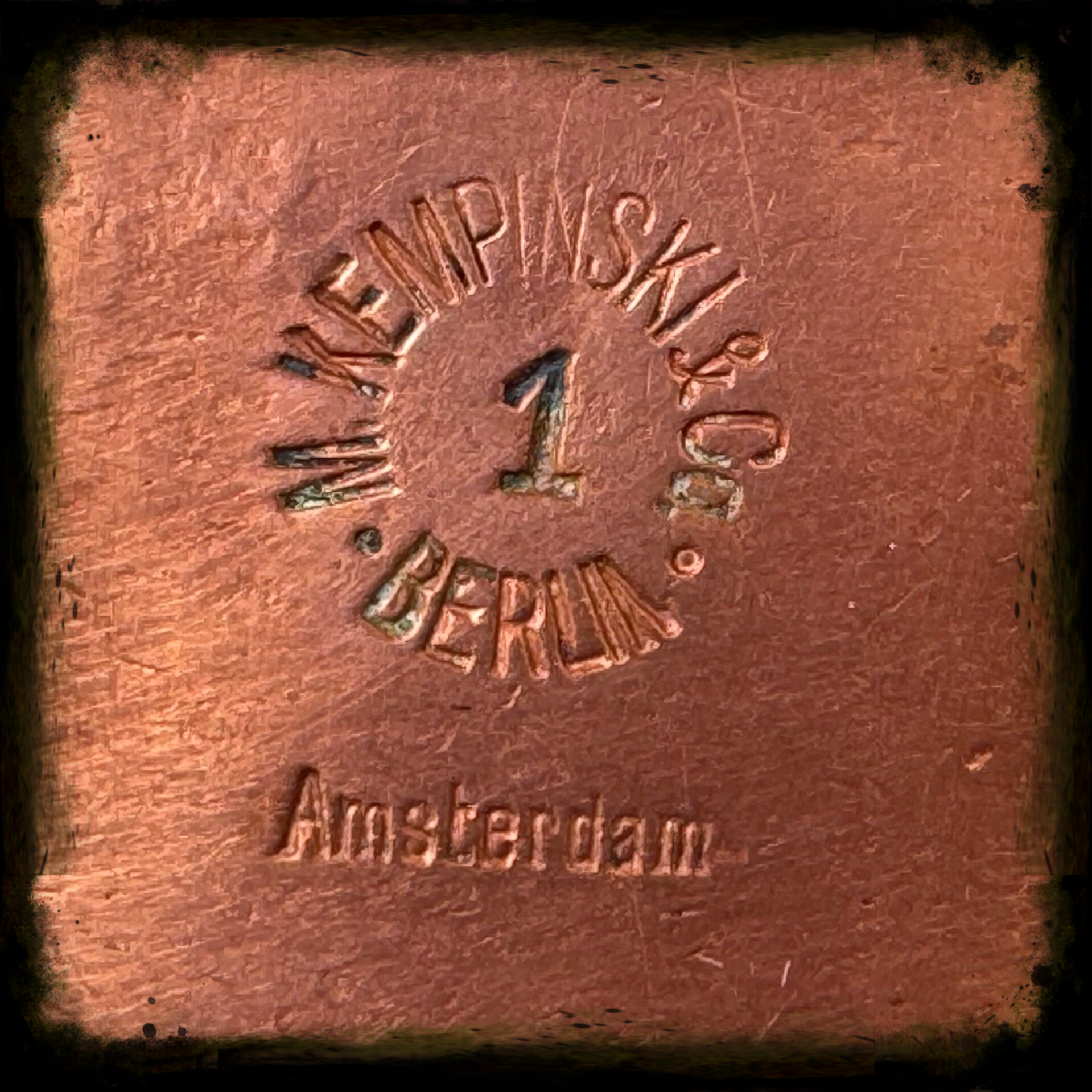
M. Kempinski & Co Berlin - Amsterdam
The moment I come across a pan with a Dutch stamp, I'm wide awake and completely hooked. Luckily, it didn't take long to strike a wonderful deal with the seller. He told me he had once bought it at a flea market, right alongside an H. Pommier Windsor.
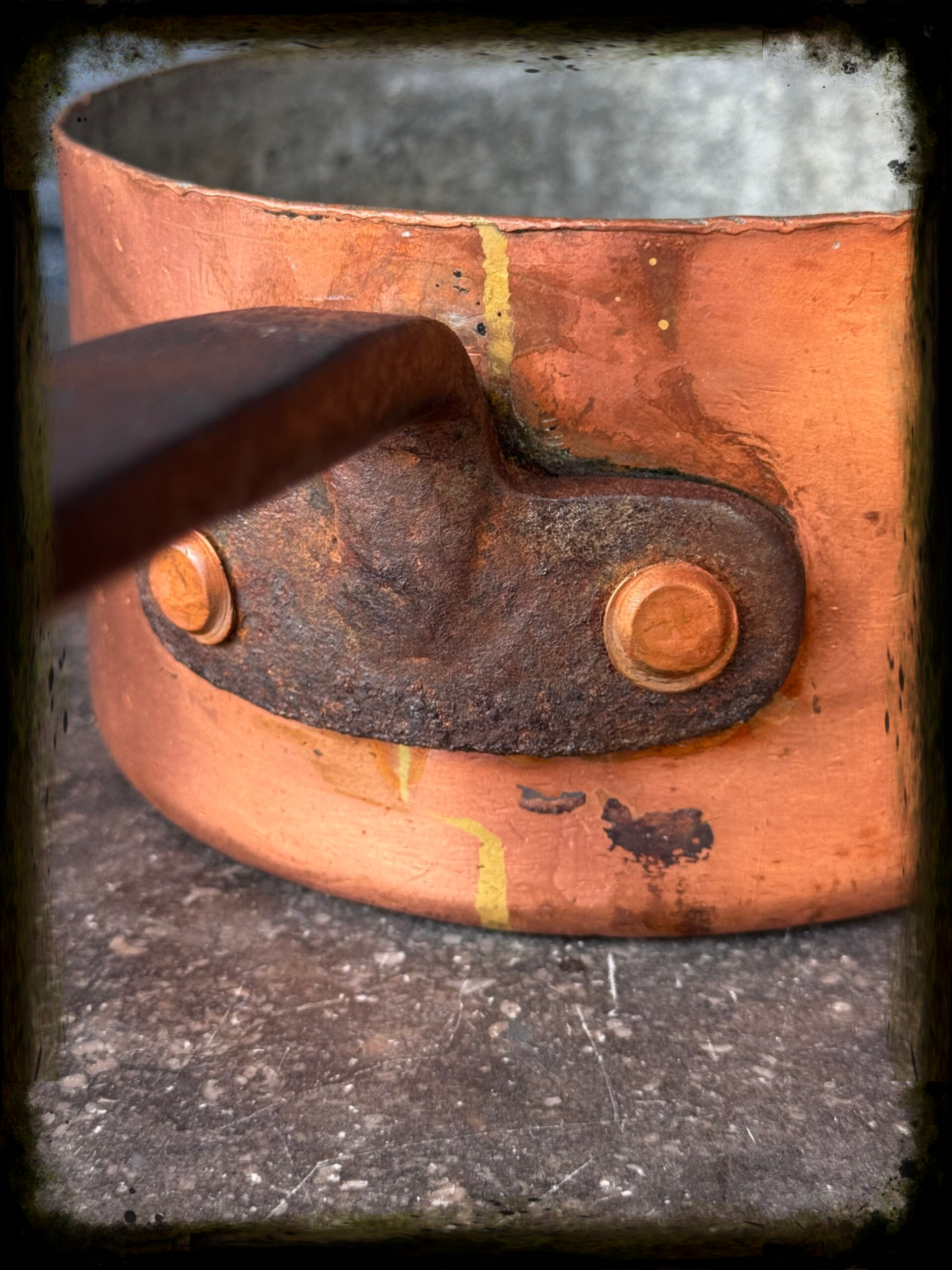
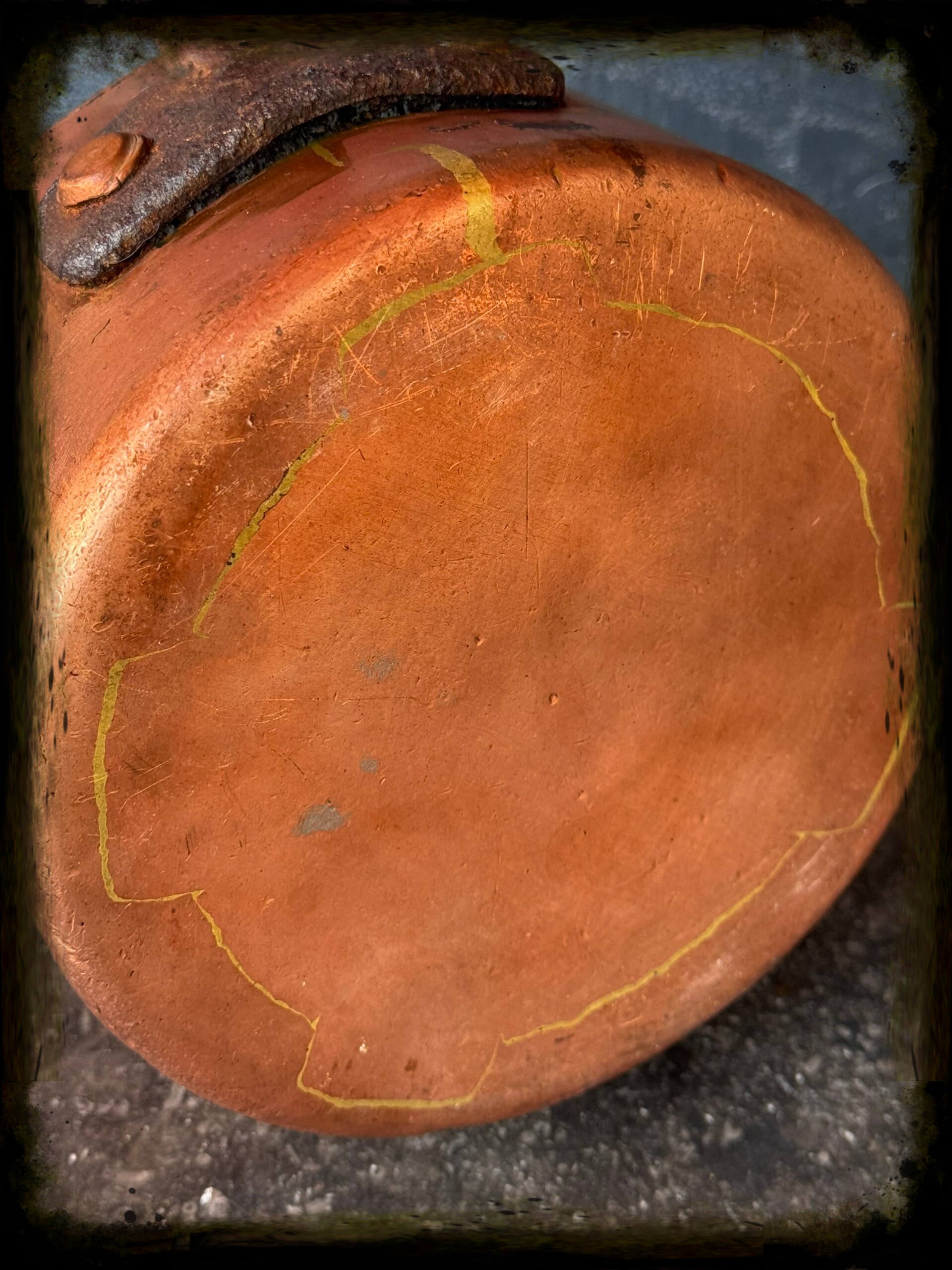
This particular copper pan is a collector's dream, complete with a beautiful dovetail construction and two solid copper rivets fixing the handle. What truly makes my heart beat faster, though, is the historical stamp it carries: Kempinski & Co Berlin Amsterdam.

The Forgotten Luxury of Amsterdam: M. Kempinski & Co.
If you walk down Amsterdam's bustling Leidsestraat today, you might never guess that it once housed a piece of European culinary royalty. During the 1920s, 30s, and early 40s, Leidsestraat 95 was home to M. Kempinski & Co (also known as the "Delicateria") a highly high-end, iconic restaurant and delicatessen.
This elegant spot was an official international branch of the famous Berlin hospitality empire founded by Jewish entrepreneur Berthold Kempinski. The grand building spanned five impressive levels:
* Basement: Wine and beer cellars, alongside guest restrooms.
* Ground Floor: A bustling, upscale express buffet.
* First Floor: The main fine-dining restaurant, central kitchen, and management offices.
* Second Floor: A sophisticated tea salon and additional offices.
*Third Floor: Staff-only quarters, featuring a staff canteen and linen room.
Though celebrated architect A. Komter renovated the property in 1950, Kempinski's original layout is long gone. Today, the historic building serves a completely different culinary tradition as an Indonesian restaurant leaving only rare antique silverware and cookware as a reminder of its pre-war German-Dutch luxury era.
Berthold Kempinski
According to records, it all started in 1897 in Berlin with the launch of the Hotelbetriebs-Aktiengesellschaft hotel company on the one hand and on the other, M. Kempinski & Co., which in those years specialised in the wine selling and restaurant business. Looking ahead, it is necessary to mention the fact that the Hotelbetriebs-Aktiengesellschaft would subsequently engulf M. Kempinski & Co., but as it is his name that is etched on the hotels of the chain, we should begin with Berthold Kempinski, the founder of the second firm.
Berthold Kempinski was endowed with the most important qualities for a successful business he possessed both the entrepreneurial spirit and a strong focus on the kind of services his company was to provide. His other asset was a successful wine trade experience acquired in his native province of Posen. He may be said to have entered the hospitality industry through the wine trade. Upon moving to Berlin, he opened another wine store, which was followed by a restaurant. In addition to rapidly acquiring a throng of loyal customers in Berlin in 1907, Berthold Kempinski's masterstroke of offering the public a range of affordable dishes at a fixed price created a sensation in the restaurant business. Not only full portions of the dishes, but also half portions were available, and served with a glass of wine, to the patrons' special delight.
From a Leipziger Strasse wine bar to culinary legend
In 1872, on Leipziger Strasse in Berlin, Berthold Kempinski opened the doors to what would become the beginning of everything. Starting as a respected wine merchant and dining tavern offering high quality food and fine wines by the glass, the Kempinski name quickly set an extraordinary benchmark for European hospitality, leading to celebrated establishments in both Berlin and Amsterdam.

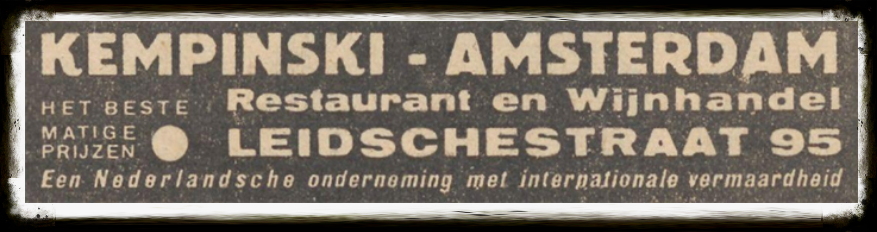

M. Kempinski & Co. restaurant
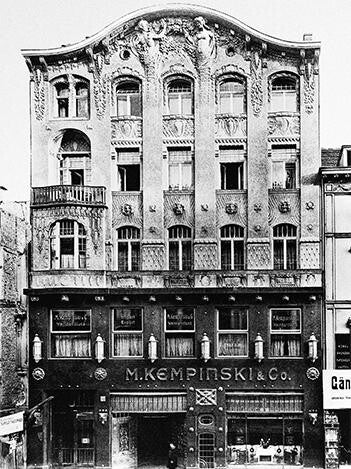
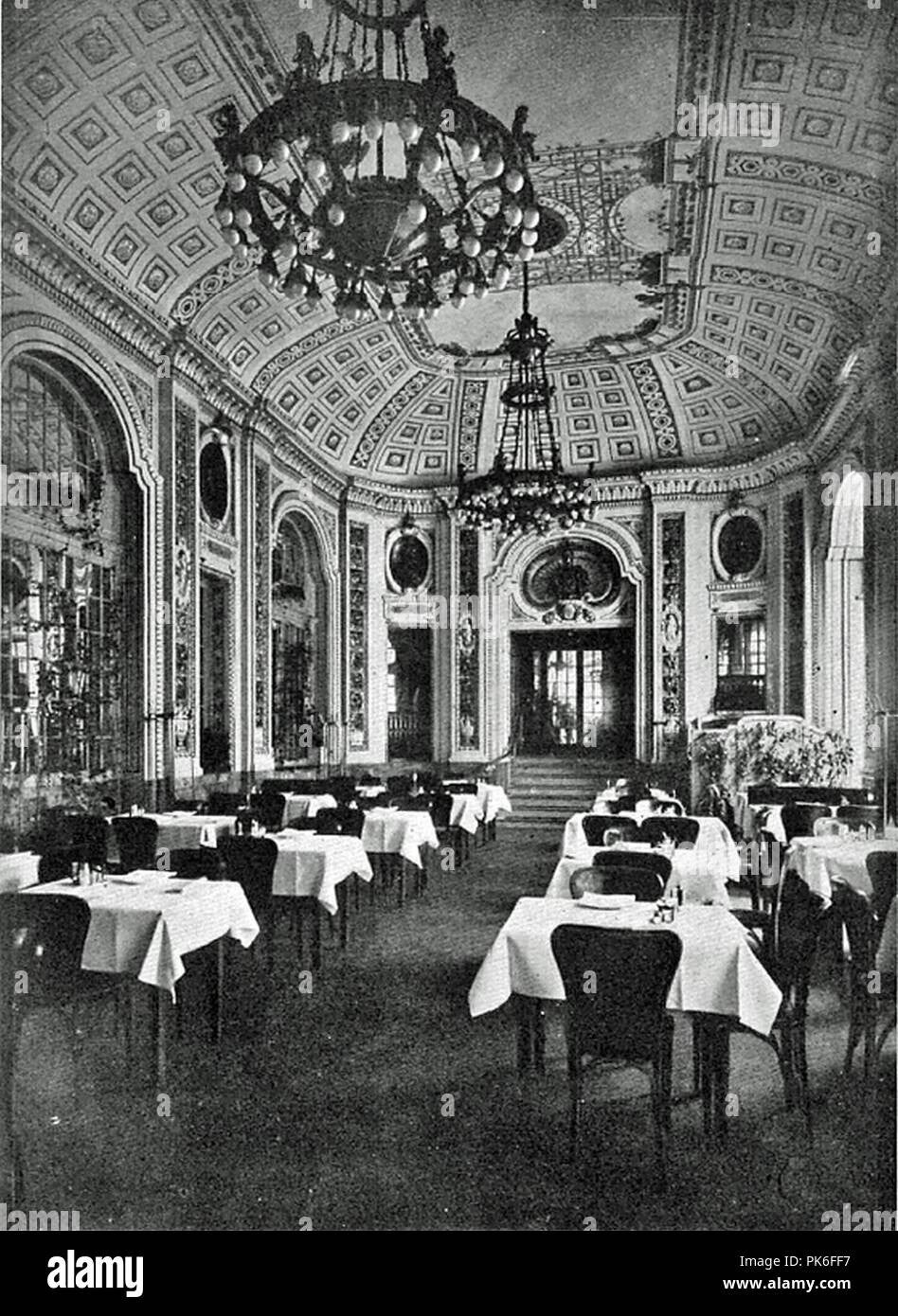
It should come as no surprise that the next Kempinski triumph again had to do with offering Berliners new ways of entertainment. This time, it was the first holiday resort that the company launched in the Marquardt Castle (Schloss Marquardt) near Potsdam, on the lake Schlänitz in 1923. The target audience of wealthy Berliners had a choice of 24 rooms, several restaurants, a tea room and a wine bar, with a beautiful view of the lake from the terrace thrown into the bargain.
The war years had a great impact on Schloss Marquardt. The function of the castle was constantly changing. There were plans to open a new hotel there in the 1990s, but the project never came to be. The new owner of Schloss Marquardt and the adjacent park since the 2000s will probably want to give the place a new history.
In the 1970s, the Kempinski acquired another hotel, built in 1858, at 17, Maximilianstrasse, Munich, and turned it into Hotel Vier Jahreszeiten Kempinski Munich. The list of the hotel's guests includes Robbie Williams, Winston Churchill and Vladimir Putin.
The next milestone in the hotel group history was associated with accessing the Chinese market, as Kempinski Hotel Beijing Lufthansa Center opened in Beijing in 1992. Later, this Asian country offered broad opportunities for the construction of new Kempinski hotels, whose service and cuisine reflected both European sophistication and the Chinese culture.
In 2005, Kempinski Hotels announced the opening of a new hotel in the Middle East – the impressive Emirates Palace Abu Dhabi, with more than a kilometre of private beach in the capital of the United Arab Emirates.
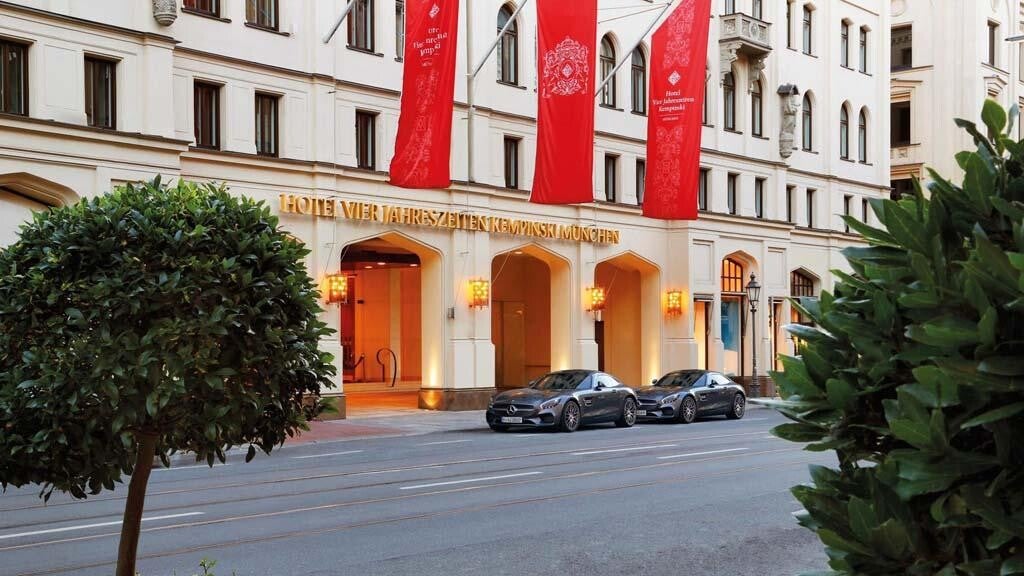
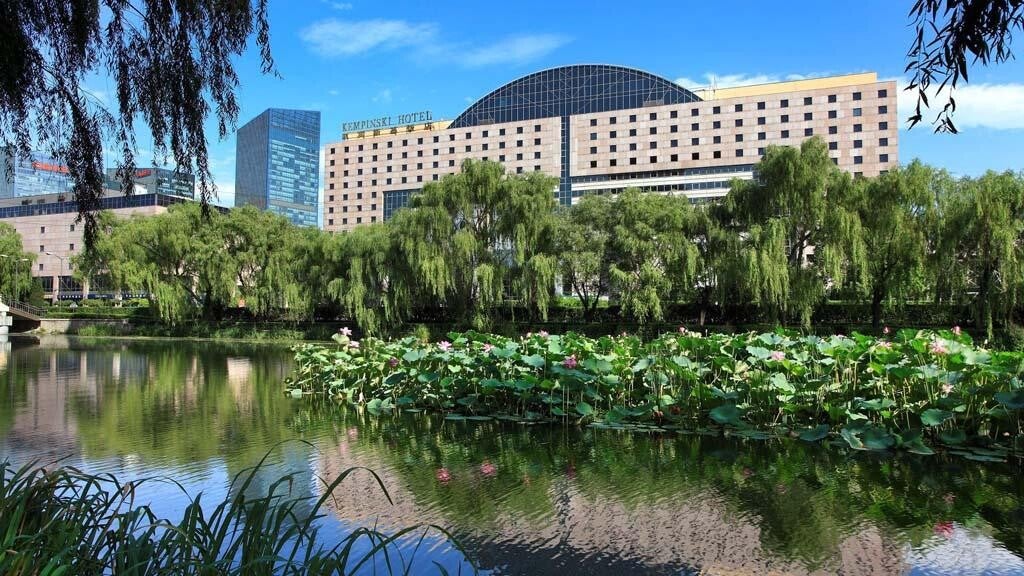
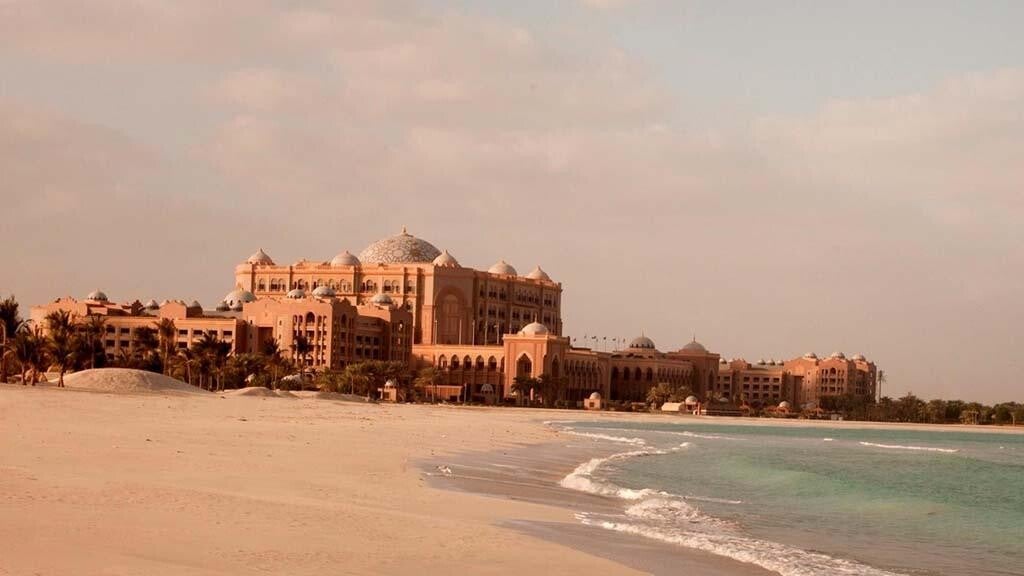
At present, Kempinski also offers accommodation in other popular destinations, including Africa, the Asia-Pacific region and Russia, with the hotel in Cuba, which is to be opened in the next few months, promising to be a real curiosity.
https://www.tohology.com/en/hotels/news/kempinski-celebrates-120th-anniversary/