

Casino Vals- les Bains
Casino Vals-les-Bains, Vals-les-Bains - 3 Place Galimard, 07600 Vals-les-Bains, France



The Grand Casino of Vals-les-Bains was an essential part of the spa resort's prestige. It was constructed between 1882 and 1885 by the Société Générale des Eaux Minérales de Vals (SGEMV), the company that later became Vals Saint-Jean, named after its principal mineral spring.
Due to a dispute between Auguste Clément, president of the SGEMV, and Gaston Giraud, the mayor of Vals at the time, the interior decoration remained unfinished for many years. Construction eventually resumed after the deaths of both men, and the Grand Casino was officially inaugurated on June 16, 1898.
As Vals lacked a significant historic architectural heritage, architects Besset and Longuevilles designed an elegant Louis XIII-style building. The structure featured a long rectangular layout oriented east to west, with a grand central pavilion flanked by two wings and smaller pavilions at each end. Built of stone and crowned with Mansard domes, the pavilions were decorated with ornate pediments, creating a refined and prestigious appearance befitting one of France's rising spa destinations.
During the First World War, the casino was converted into a military hospital. From 1918 onward, it also served as an administrative center for American soldiers visiting Vals during periods of rest and recuperation.
In the 1920s, as part of a broader effort to modernize the spa resort, the operators of the mineral springs undertook a major transformation of the casino. The decorative influences of Art Nouveau gave way to the cleaner, more functional lines of modernism and Art Deco. The original building was extensively remodeled, and a 600-seat Italian-style theater constructed of reinforced concrete was added to the southern side. Designed by architects Lelièvre, Jamme, and Bellemain, the new casino was inaugurated on June 30, 1928.
Throughout the twentieth century, the casino underwent regular renovations to accommodate changing tastes, evolving technologies, and modern safety standards. A devastating fire in 1979 destroyed much of the interior and roof. Reconstruction took place between 1980 and 1985, replacing the original Mansard roof with a flat terrace roof. The most recent major restoration was completed between 2009 and 2011.
Today, the Grand Casino remains one of the architectural landmarks of Vals-les-Bains, reflecting the town's rich spa heritage and its evolution from a Belle Époque resort into a modern destination. The casino played a key role in establishing the fame of Vals' mineral waters and remains a significant part of the town's cultural heritage.
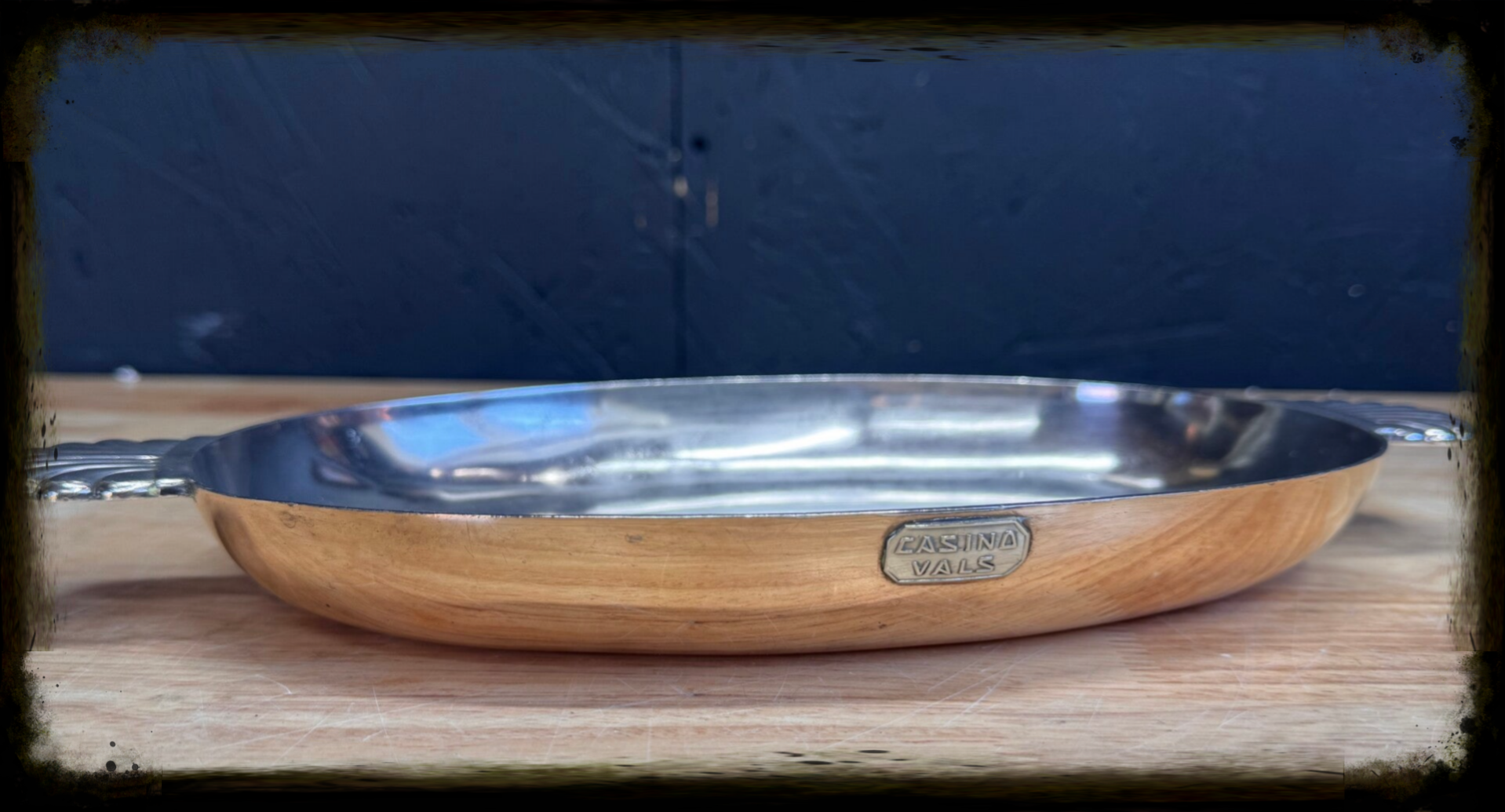
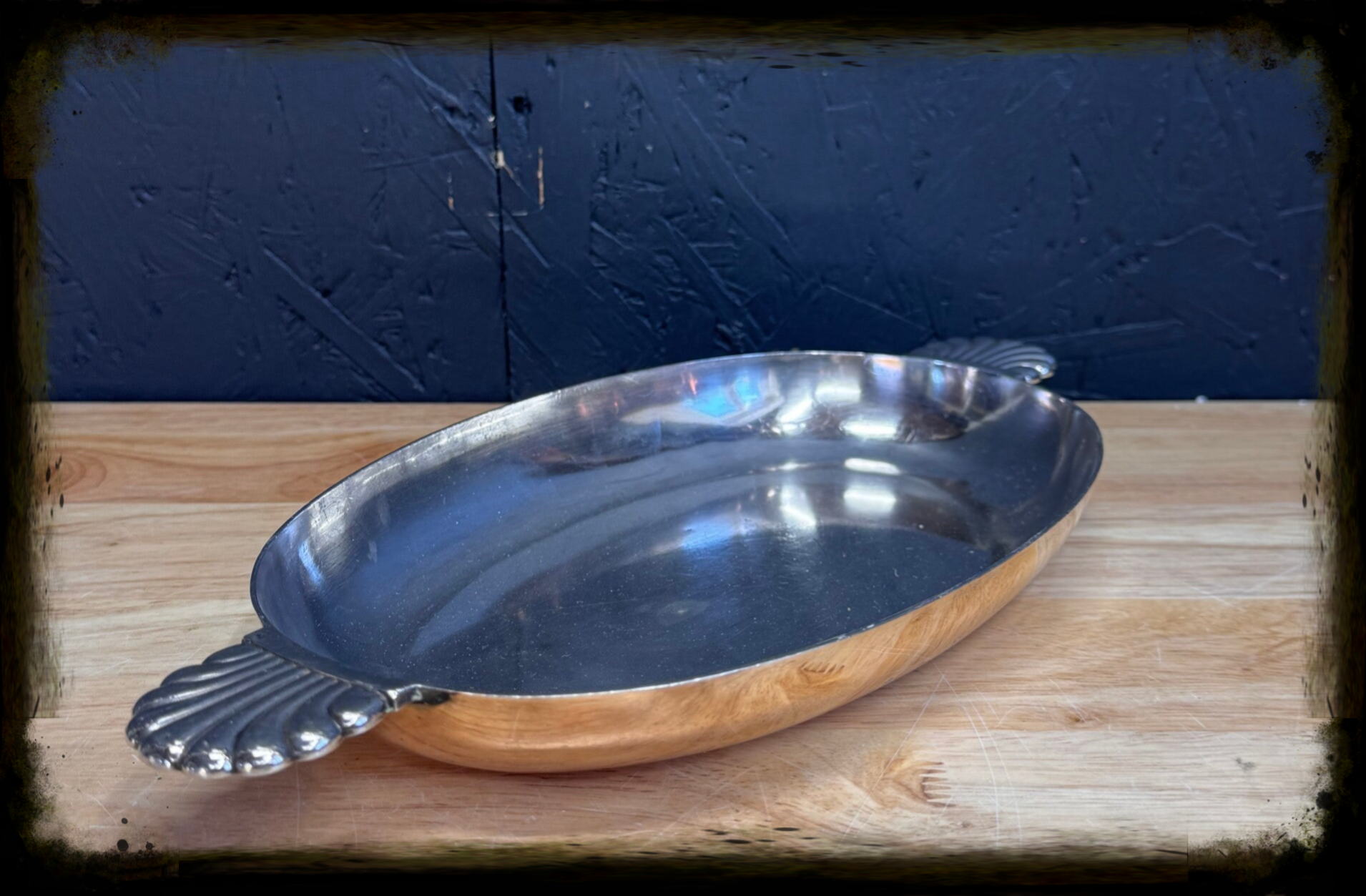
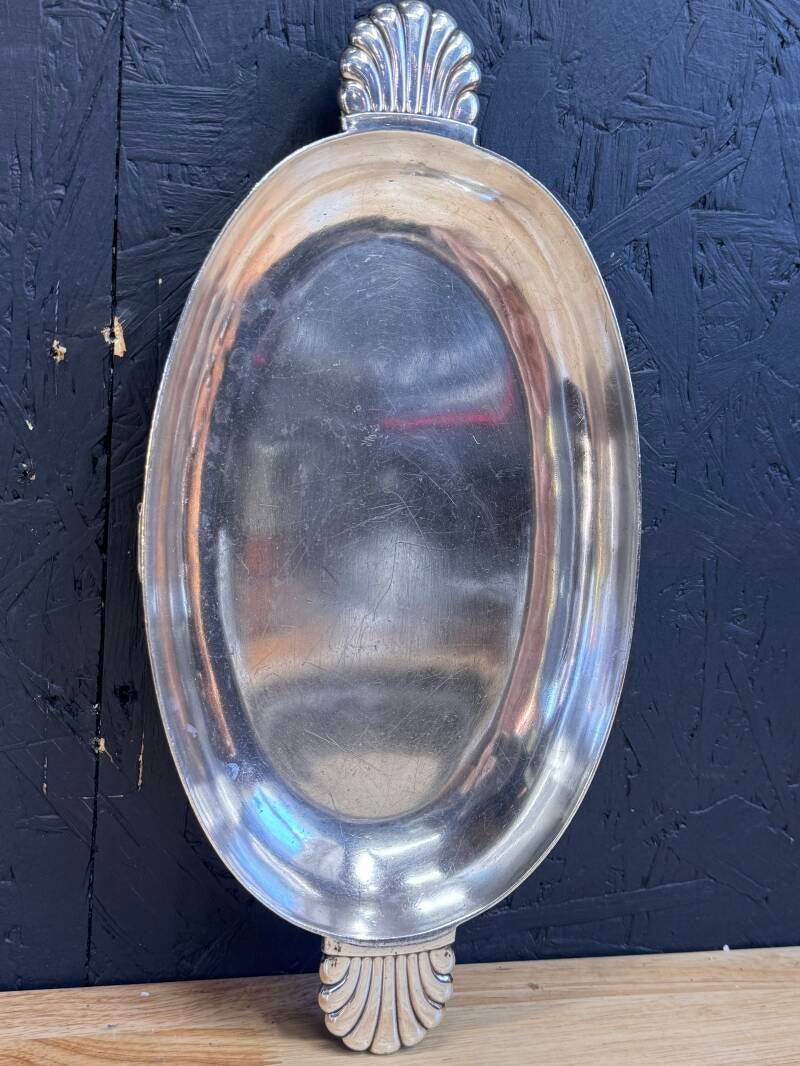
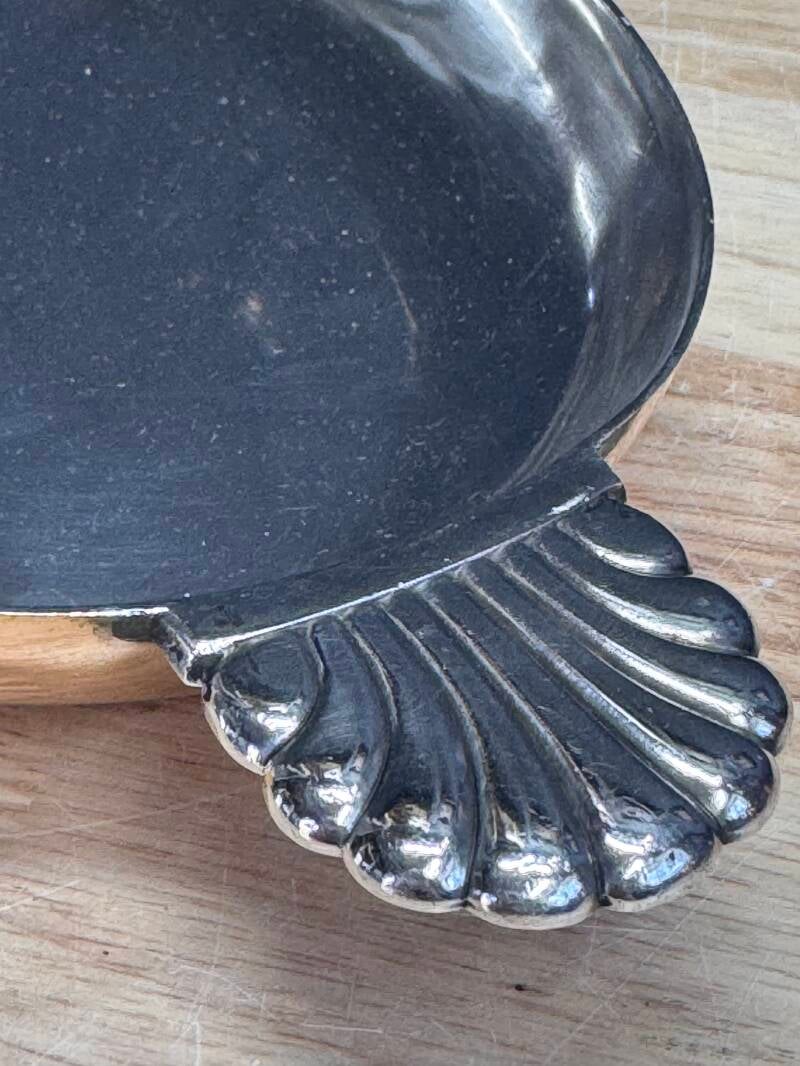
The Copper - Duplex Genève Silver-Lined Gratin Dish for Casino Vals-les-Bains
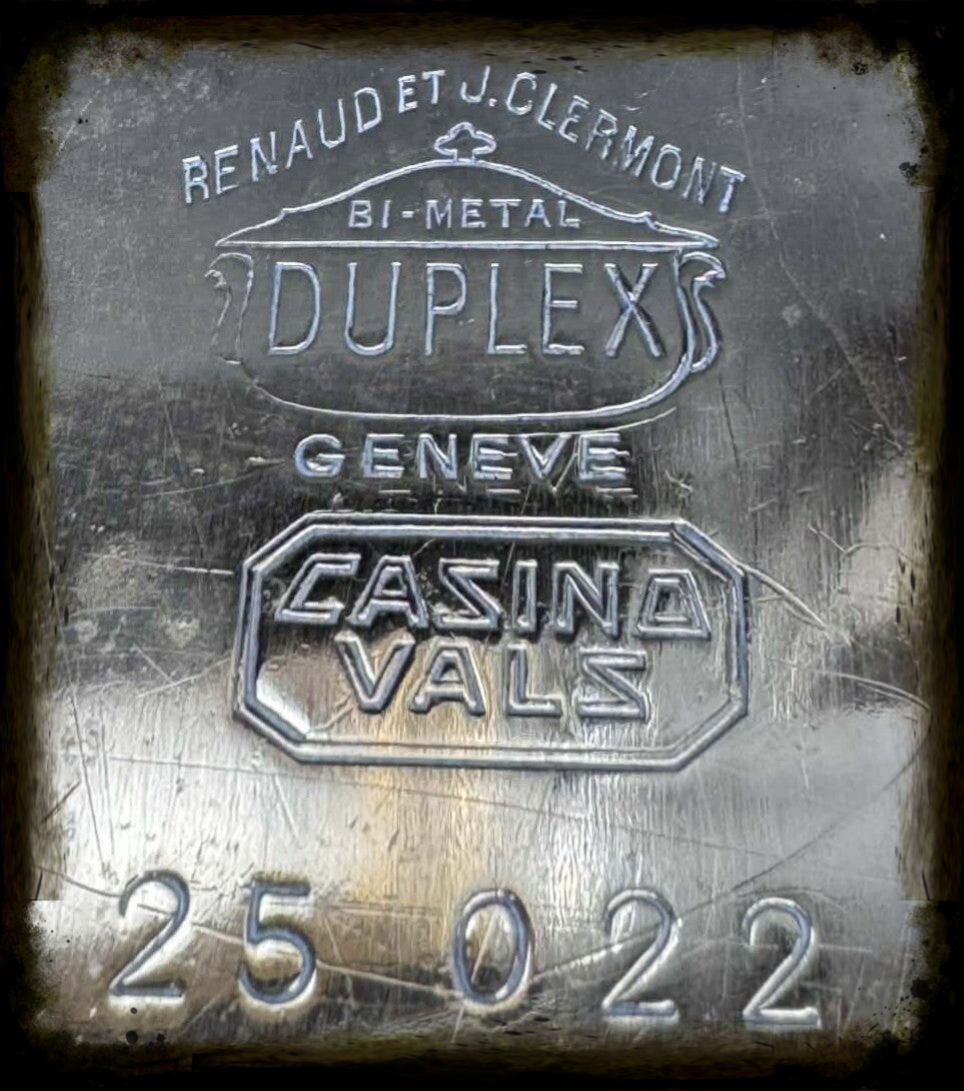
This Duplex Genève silver-lined copper gratin dish is a rare example of high-quality Swiss copper cookware made for the Grand Casino of Vals-les-Bains. It bears the stamped mark of the casino and represents the pinnacle of European culinary craftsmanship from the late nineteenth and early twentieth century.
Crafted from heavy-gauge copper and lined with a thick layer of solid silver, it was designed for both exceptional cooking performance and lasting durability in a grand hotel kitchen.
Unlike the more common tin-lined copper cookware of the period, Duplex Genève pieces feature a luxurious silver-lined interior, reflecting a premium level of production intended for professional kitchens, grand hotels, and discerning cooks. The exceptional craftsmanship, substantial copper construction, and sophisticated silver lining place these pieces among the finest culinary wares of their era.
The History of Duplex Genève
Among the most refined names associated with European copperware is Renaud & J. Clermont, the prestigious Swiss orfèvrerie house active in Geneva and Nice during the Belle Époque and early Art Déco period. Their pieces are often stamped "J. Renaud Clermont – Duplex Genève" or "Renaud & J. Clermont", marks that today are highly sought after by collectors and serious cooks alike.
Although relatively little documentation survives regarding the Duplex Genève brand itself, surviving examples demonstrate a level of quality comparable to that of the finest French and Belgian copper manufacturers of the twentieth century.
A Luxury Maker for Grand Hotels and Royal Tables
Renaud & J. Clermont operated during a period when European craftsmanship reached extraordinary levels of elegance and precision. The firm supplied luxury cookware and tableware to royal households, palaces, and prestigious Grand Hotels, including establishments associated with the renowned Pavillon Sévigné.
Their cookware was intended for elite culinary environments where performance, durability, and presentation were equally important.
The Patented Duplex Construction
What made Duplex Genève exceptional was its innovative Duplex manufacturing technique. Rather than applying a traditional tin lining to the interior of the copper vessel, the company permanently bonded two noble metals together:
Exterior: heavy-gauge solid red copper (cuivre rouge)
Interior: a thick layer of solid silver permanently bonded to the copper
This sophisticated process was considerably more expensive than conventional tin lining and resulted in cookware offering:
- Exceptional heat conductivity from the copper body
- Fast, precise, and responsive cooking performance
- Outstanding durability and longevity
- A non-reactive and hygienic cooking surface
- Greater resistance to wear and high temperatures than traditional tin linings
Why Silver-Lined Copper Matters
Silver is among the most thermally conductive metals known, even surpassing copper itself. When permanently bonded to a heavy copper body, it creates an extraordinarily responsive cooking surface prized by professional chefs.
Duplex Genève cookware was particularly valued for:
- Delicate sauces and reductions
- Confectionery and sugar work
- Precise temperature-controlled cooking
- Fine French cuisine
Because the silver lining forms an integral part of the construction rather than a thin applied coating, these pieces were built to withstand generations of use, a hallmark of true luxury cookware from the Belle Époque.