

Château de Beauregard
The Lost Copper of Baron Maurice de Hirsch
The Man Who Owned Beauregard,
Baron Maurice de Hirsch de Gereuth (1831-1896)
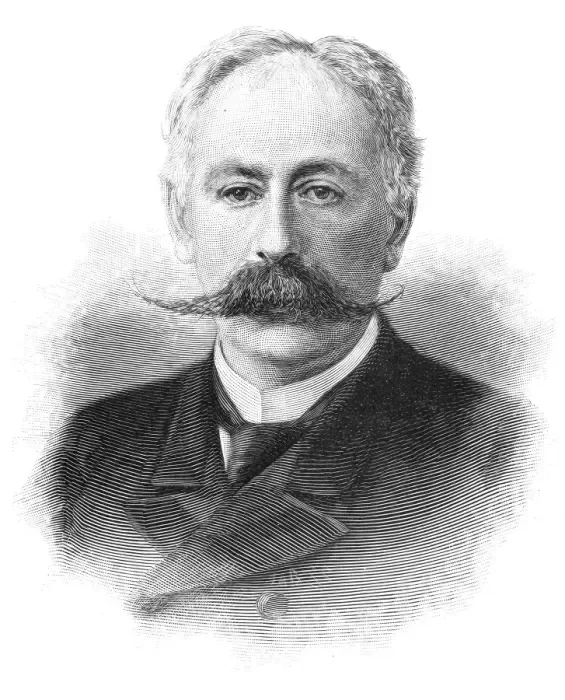
Maurice de Hirsch was born Moritz von Hirsch auf Gereuth on 9 December 1831 in Munich, Bavaria . He was one of the five richest men in Europe, and almost no one remembers his name. His family were Jewish court bankers, ennobled in 1818. His grandfather was the first Jewish landowner in Bavaria. His father was banker to the Bavarian king and was made a Freiherr Baron in 1869.
At 13, Moritz was sent to Brussels for schooling. At 17, he went into business.
On 28 June 1855, he married Clara Bischoffsheim, daughter of Jonathan-Raphaël Bischoffsheim, senior partner of the banking house Bischoffsheim & Goldschmidt in Brussels, London and Paris. It was a union of two banking dynasties.
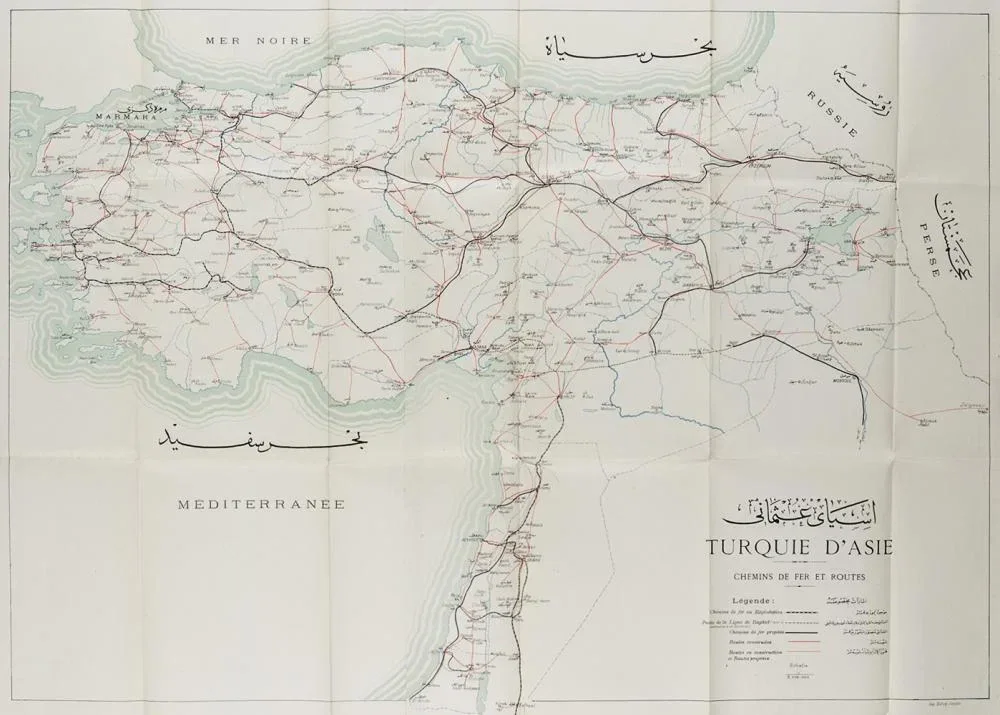
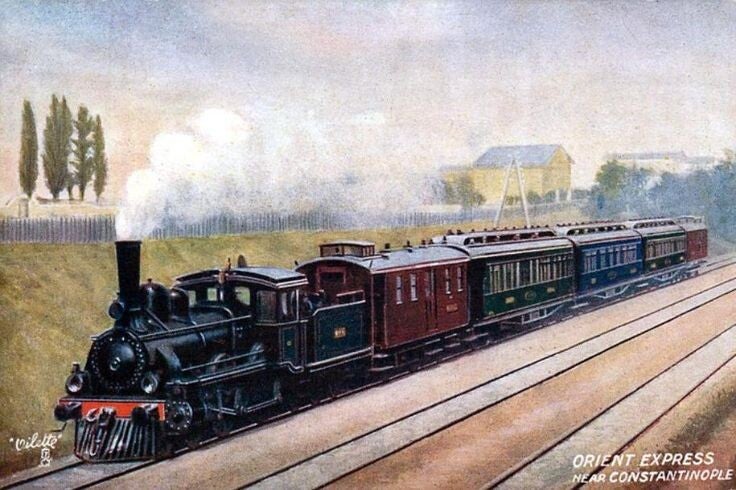
He amassed a fortune that was almost unimaginable. He bought and worked railway concessions in Austria, Turkey and the Balkans, and speculated in sugar and copper. In 1869, he bought the concession for 2,500 km of railway in Turkey from a bankrupt company and founded the Société Impériale des Chemins de Fer de la Turquie d'Europe. His best-known venture was the Chemins de fer Orientaux, the visionary project to link Vienna to Istanbul. It would become the route of the Orient Express.
He lived in Paris, in a townhouse on rue de l'Élysée, and from 1872 in Château de Beauregard in La Celle-Saint-Cloud. He also owned Bath House in Piccadilly, London, and estates in Hungary and Bohemia — Veveří and Rosice.
In 1890, he sold his Ottoman railroads to a consortium that included Deutsche Bank.
His Paris Townhouse
In the early 1870s, the Hirsch family established themselves in Paris, where their home on Rue de l'Élysée quickly became a point of reference for Parisian high society.
Their townhouse at 2 rue de l'Élysée, Paris 8ème, right next to the Élysée Palace was formerly known as the Hôtel de l'Impératrice Eugénie. It is officially listed as the Hôtel du Baron Hirsch.
Photography of this address is restricted today due to its immediate proximity to the residence of the President of France, which is why no recent public images exist. This location, between the Champs-Élysées and the presidential palace, underlines the family's position at the very top of European society in the 1890s.
He had a daughter who died in infancy, and a son, Lucien (1856-1887), who predeceased him at only 31.
After Lucien's death, he changed.
He declared that humanity would be his heir. He and Clara devoted the rest of their lives to philanthropy on a scale the world had never seen. Together they gave an estimated £18,000,000 — today more than $2.2 billion.
He offered the Russian government £2,000,000 to endow secular education in the Jewish Pale of Settlement. Russia was willing to take the money but refused to let a foreigner control it. So he founded the Jewish Colonization Association in 1891 as an English society with a capital of £2,000,000, and in 1892 added another £7,000,000. After Clara's death in 1899, the capital grew to £11,000,000. At the time, it was probably the greatest charitable trust in the world.
The Association founded large agricultural colonies in Argentina, Canada and the United States, and after his death, in Palestine. Villages in Israel still bear his name — Sde Moshe and Nir Zvi — Moshe being his Hebrew name, Zvi meaning Hirsch, deer.
In the United States, he created the Baron de Hirsch Fund in New York with $2,400,000, funding the Woodbine colony in New Jersey, trade schools for carpentry, machinery, plumbing and electrical work, and the Jewish Agricultural Society that helped thousands of immigrants leave the crowded East Coast cities.
He also paid the deficits of the Alliance Israélite Universelle for years, gave £500,000 for schools in Galicia and Bukovina on the 40th anniversary of Emperor Franz Joseph, and donated all his horse racing winnings including over £35,000 won by his mare La Flèche between 1891 and 1894.
He died suddenly in his sleep on 21 April 1896 in Ógyalla, Hungary, now Hurbanovo in Slovakia during a stay at one of his hunting lodges. He was 64. He is buried at Montmartre Cemetery in Paris. Clara died in Paris on 1 April 1899.
He left $45 million in his will to the Jewish Colonization Association. His personal donations over his lifetime likely exceeded $100 million.
And he left Château de Beauregard to his adopted great-nephew Maurice Arnold de Forest, comte de Bendern, who would later give the ruins to the city of Paris.
A banker, a railway magnate, a gambler, a philanthropist. A man who built a line from Vienna to Istanbul and then tried to build a new future for millions of people.
And in 1872, he installed the heaviest copper kitchen outside Versailles.
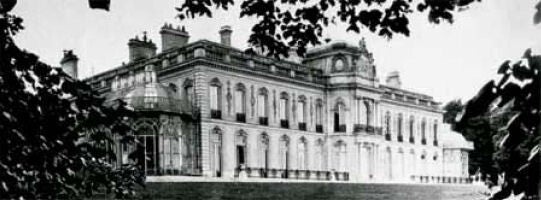
5 km from Versailles, La Celle-Saint-Cloud — 1872-1896
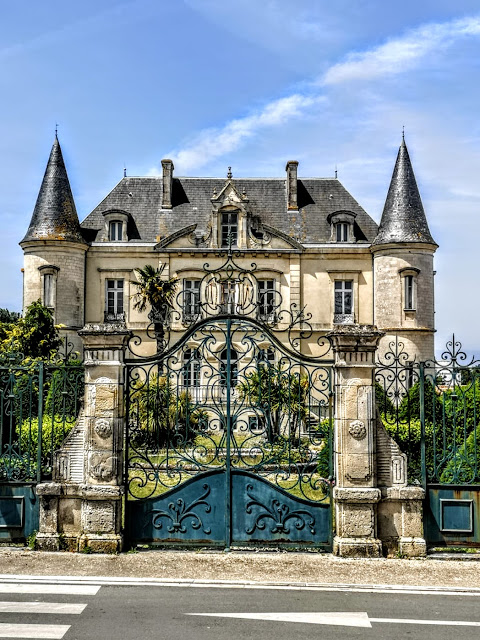
Château de Beauregard was never just a château.
It was a hilltop domain between La Celle-Saint-Cloud and Le Chesnay, five kilometers north of Versailles, southwest of Paris. Its name goes back to the Middle Ages. Built in the 17th century and enlarged under Louis XIV, it was a house that saw empires come and go.
In the mid 19th century it belonged to Harriet Howard. She was the mistress and financial backer of Louis-Napoleon Bonaparte, who would become Napoleon III. In 1856 she bought the estate and transformed it into one of the most sumptuous residences around Versailles. She rebuilt it in a neo-classical style, bought the Béchevet farm and the Bel-Ébat stud farm, and enclosed the whole 184 hectares with a wall. She died there in 1865.
Her son, Martin-Constantin Haryett, created comte de Béchevet by Napoleon III, was a spendthrift. He had to sell the château in 1870 to the duchesse de Beauffremont.
A few months later, war broke out.
During the Franco-Prussian War of 1870-71, the Prussians installed themselves in La Celle-Saint-Cloud. Because of its elevated position overlooking Paris, they made Beauregard their headquarters and built fortifications in the park. The duchesse de Beauffremont was ruined. She could not rehabilitate it. The house was seized.
Then came the Baron.
In 1872, the estate was acquired by Baron Maurice de Hirsch de Gereuth (1831-1896). Born in Munich into a wealthy banking family, Hirsch made his fortune at Bischoffsheim & Goldschmidt in Paris and London. His best-known venture was the Chemins de fer Orientaux, the visionary railway that linked Vienna to Istanbul.
He was one of the five richest men of his time. He owned a townhouse on rue de l'Élysée in Paris and Bath House in Piccadilly, London. And from 1872, Château de Beauregard.
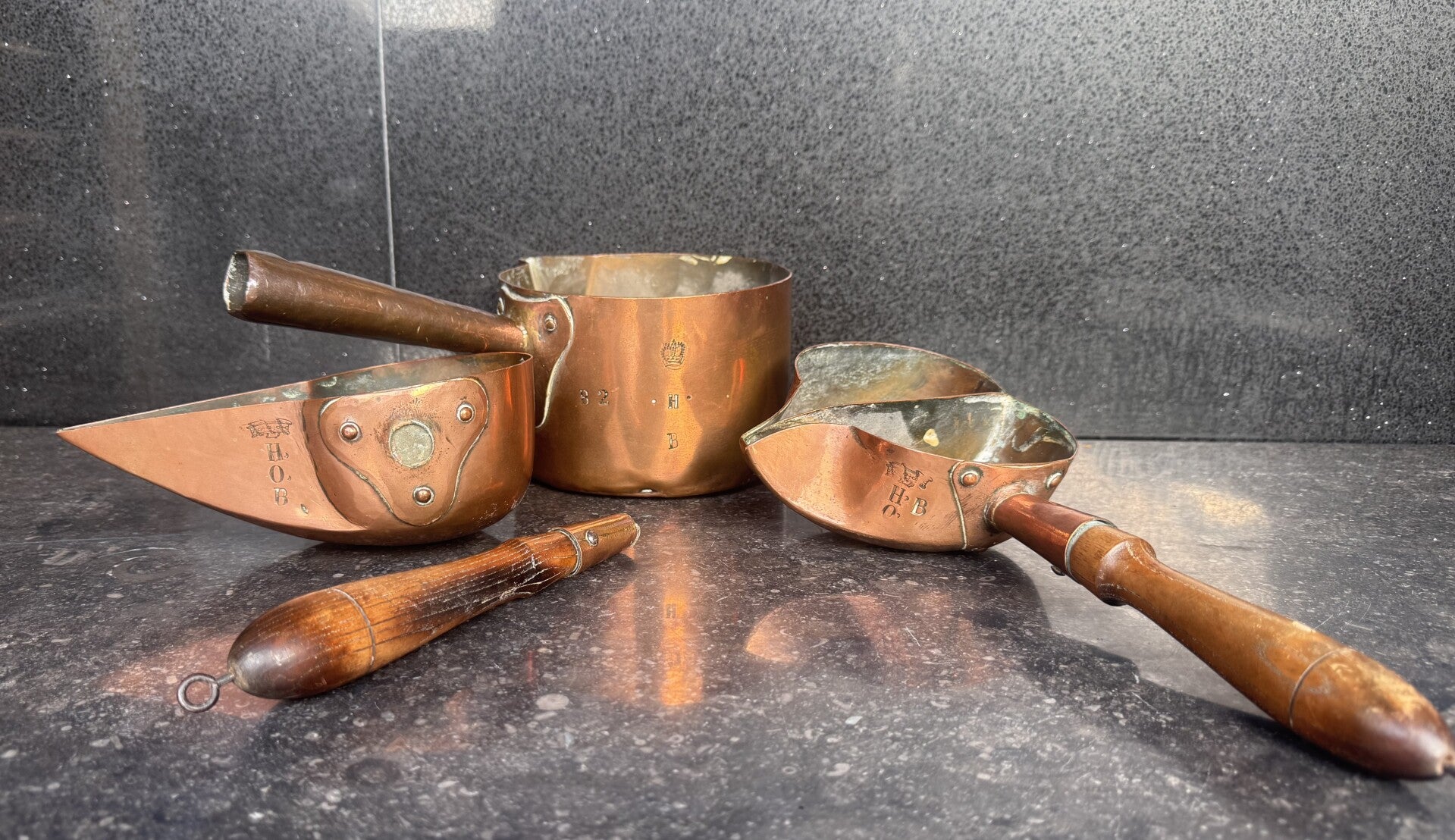
Although he lived in Paris, he and his family frequently stayed at Beauregard. He fully restored it. He preserved the Louis XIV core while modernizing the kitchens and service wings to the highest contemporary standard, installing a heavy, hand-hammered copper batterie de cuisine that would bear his mark.
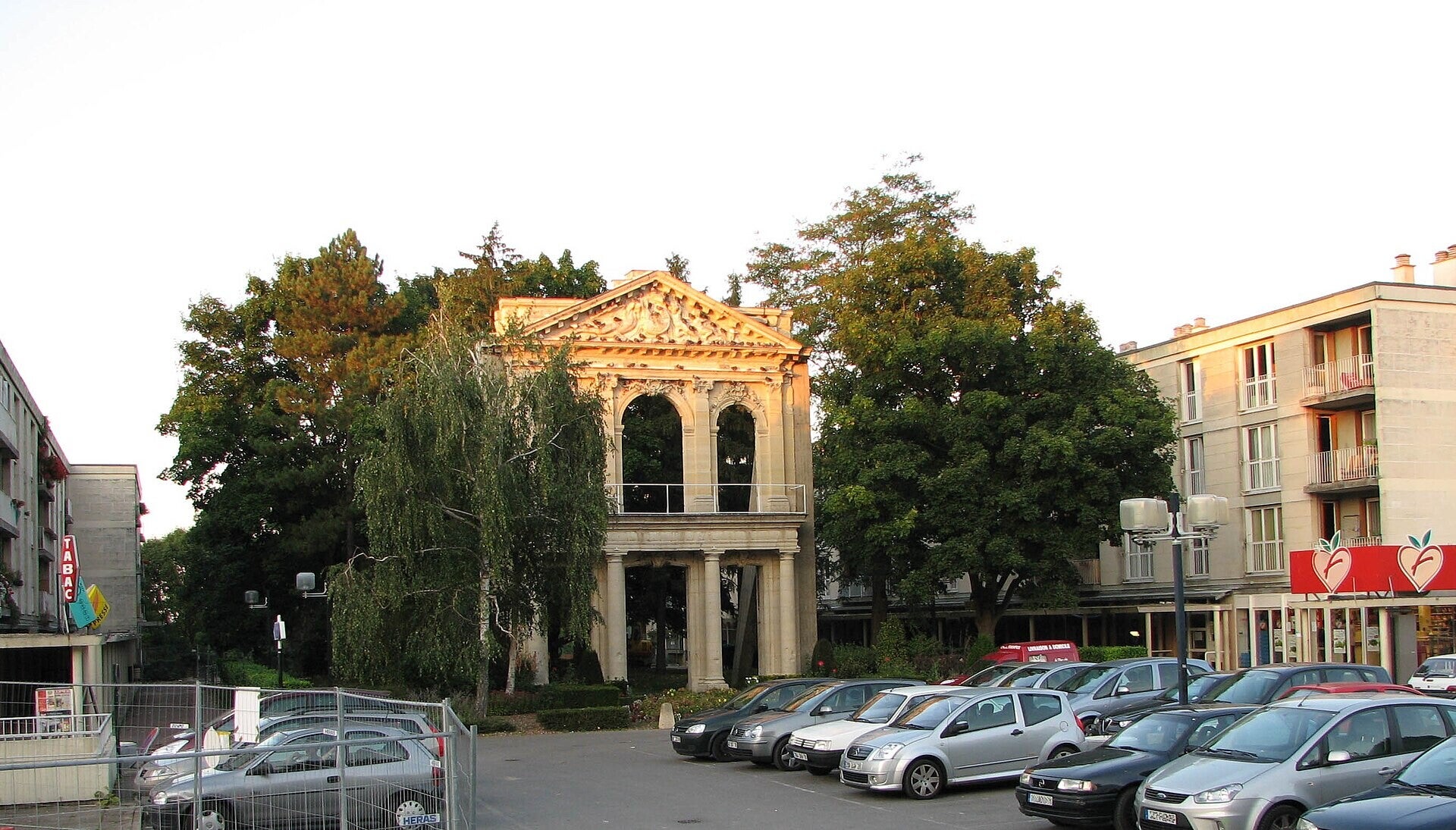
Today, only the front-core still stands ,the portal and central pavilion very deteriorated, surrounded by the Beauregard housing estate, 300 meters north of the A13 motorway.
Beauregard, 17th century - 1956. A lost château.
When this château was cleared, the kitchen was dispersed. I jumped on the lot i sa online for sale.We were able to acquire a small lot stamped with baronial crown H.B., c. 1872–1896. and a few other patestry pieces
Chat history after the deal was concluded, seller confirming the origin: Château de Beauregard, Baron de Hirsch, La Celle-Saint-Cloud

I purchased this set through a French website, where the seller was offering the pieces on behalf of his mother. I have included a screenshot of our chat in which he explains that his mother remembered where the pieces originally came from.
I found this detail extremely interesting, and it was one of the main reasons I decided to purchase the collection immediately. Provenance like this adds another layer to the history of these pieces and makes them much more than simply old copper cookware.
Unfortunately, when the box arrived, I discovered that one of the handles had been broken during shipping. It will be professionally repaired before the piece is offered for sale. In a way, this becomes another small chapter in its history, adding to the story rather than ending it.
The small baking pans did not carry the distinctive crown mark, so I have decided not to include them in this blog. The one-metre long spatula and the sugar bowl (top in the middel) also lack the crown mark, but both are stamped Letang Fils. These two pieces are now available for purchase on my website.
For me, this is exactly what makes collecting antique copper so fascinating: every piece can carry not only the marks of its maker, but also traces of the people, kitchens and places it has passed through over the years.
The copper
This was not just decorative copper. These were purpose-built 19th-century pâtisserie pieces, made for serious pastry work in professional kitchens and grand households. from manufacturers such as
Letang Fils known for there pastertry kitchenware all over the world
Built for precision, durability and repeated use. From delicate preparations to demanding pastry work, these were working tools in the hands of skilled pâtissiers designed to conduct heat evenly and respond precisely to the cook. Ideal for the preparation of chocolate, caramel, creams, custards, sauces and syrups, as well as cakes, tarts, pastries and other delicate desserts where precise temperature control is essential.
This is the kind of copper that was made to work, not simply to decorate a kitchen, aldo it looks very nice on a wall displayed well.
This is provenance you can touch. From Harriet Howard who financed an Emperor, to the Prussian headquarters of 1870, to the private kitchens of one of Europe's greatest philanthropists.
La Celle-Saint-Cloud— Baron Hirsch 1872-1896— Est. H.B. couronnée
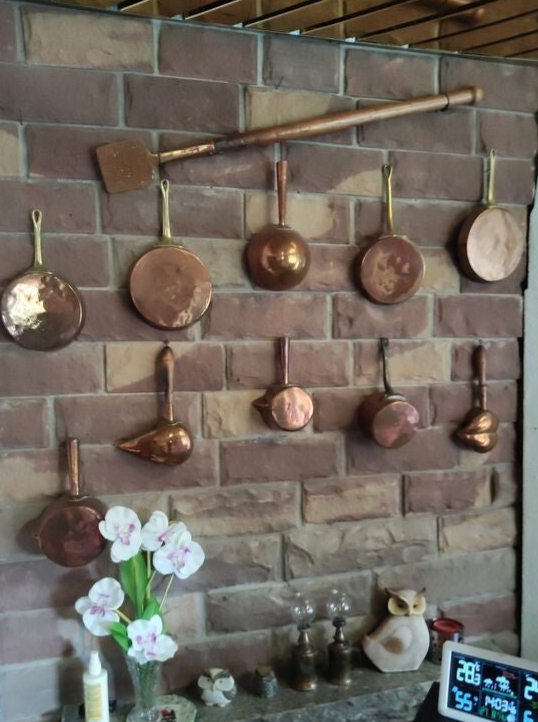
Advertings image
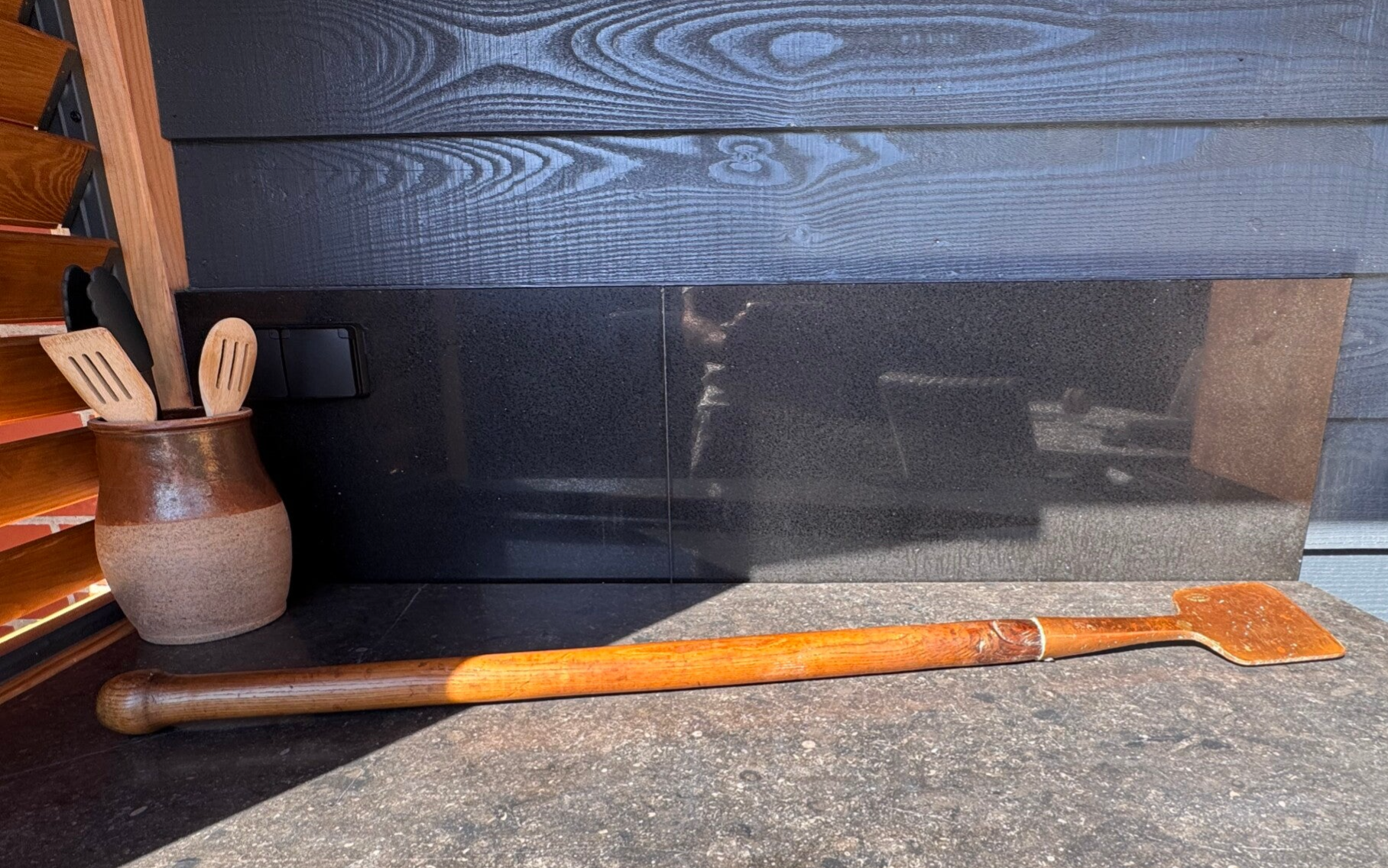
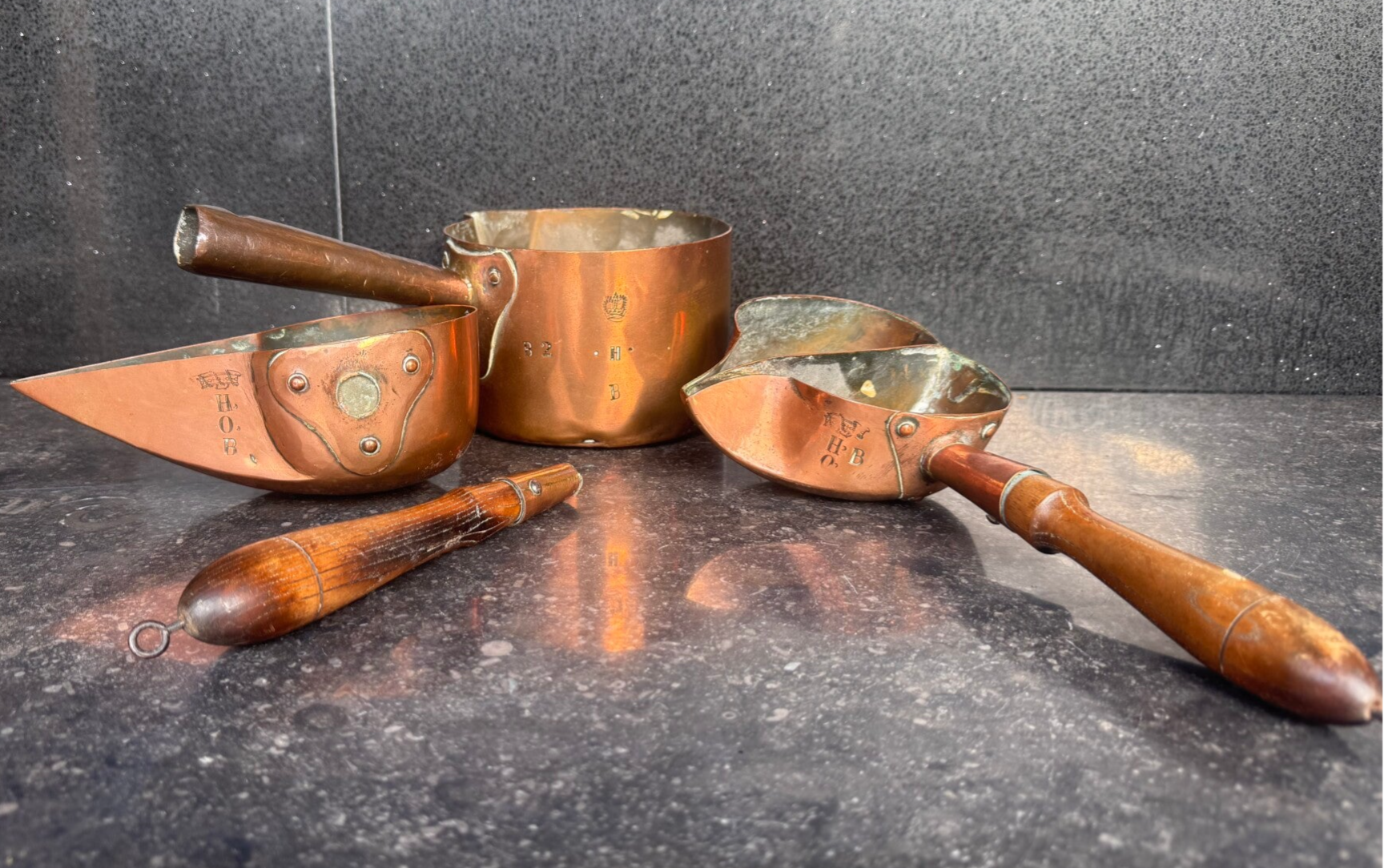
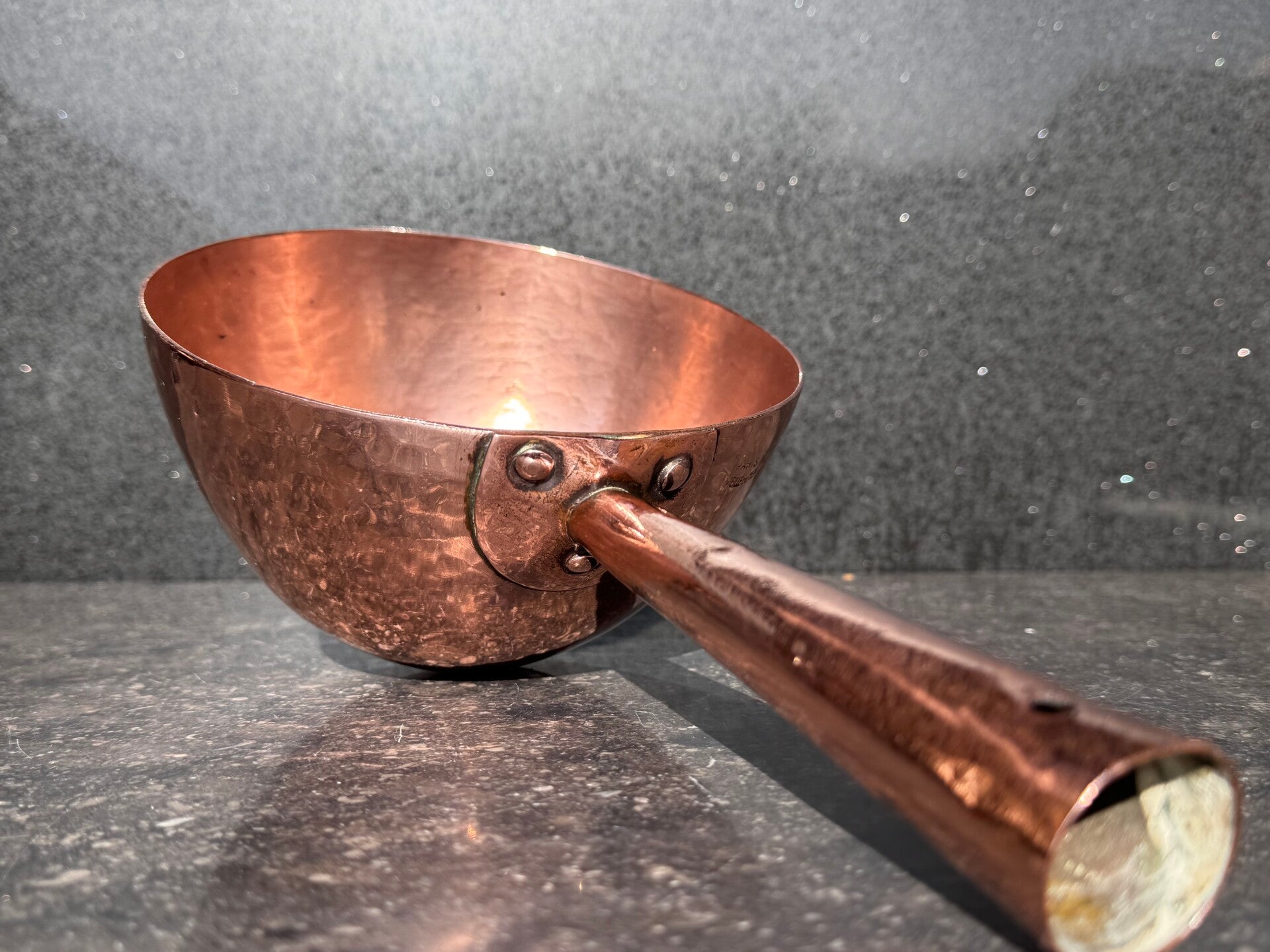
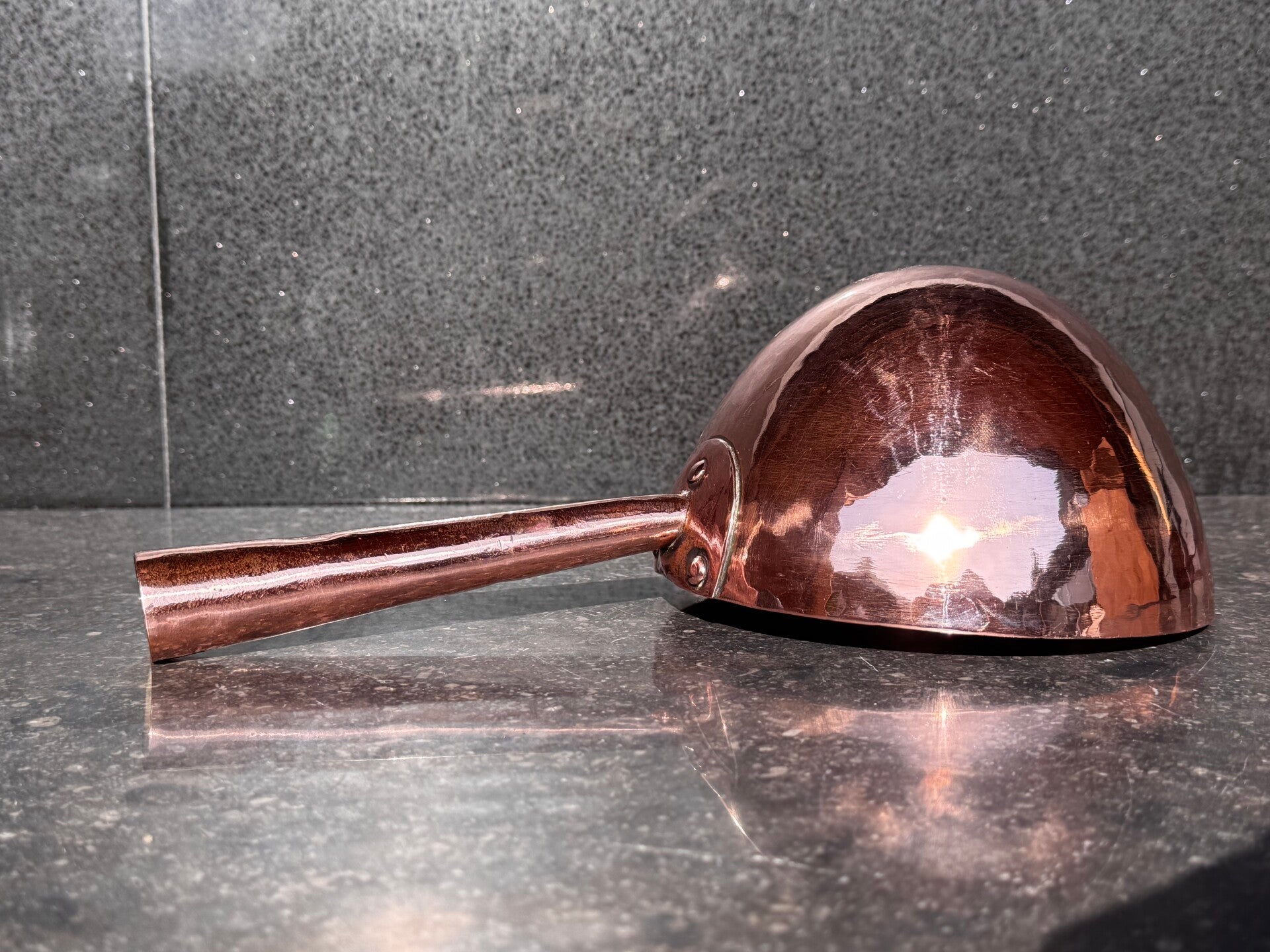
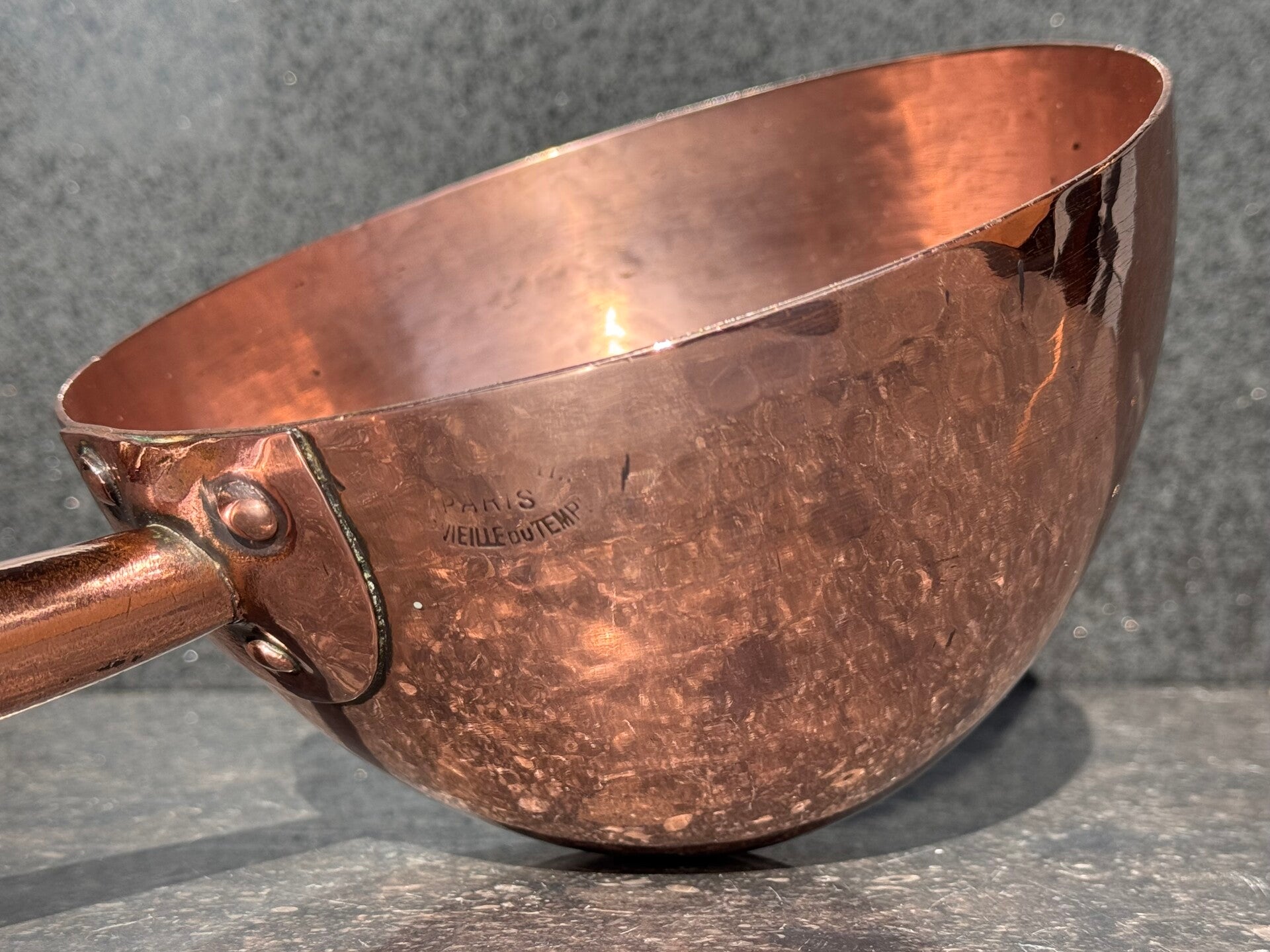
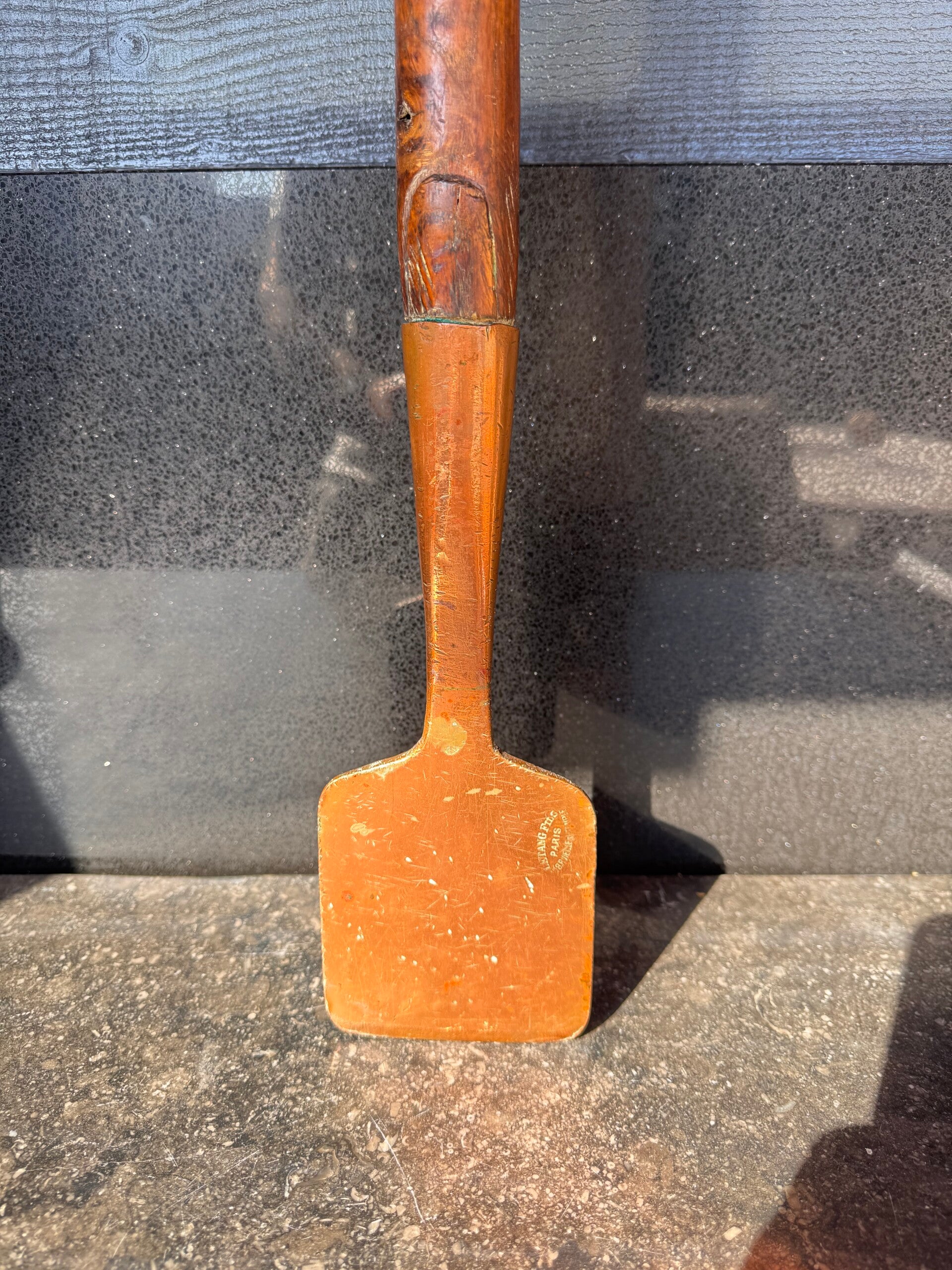
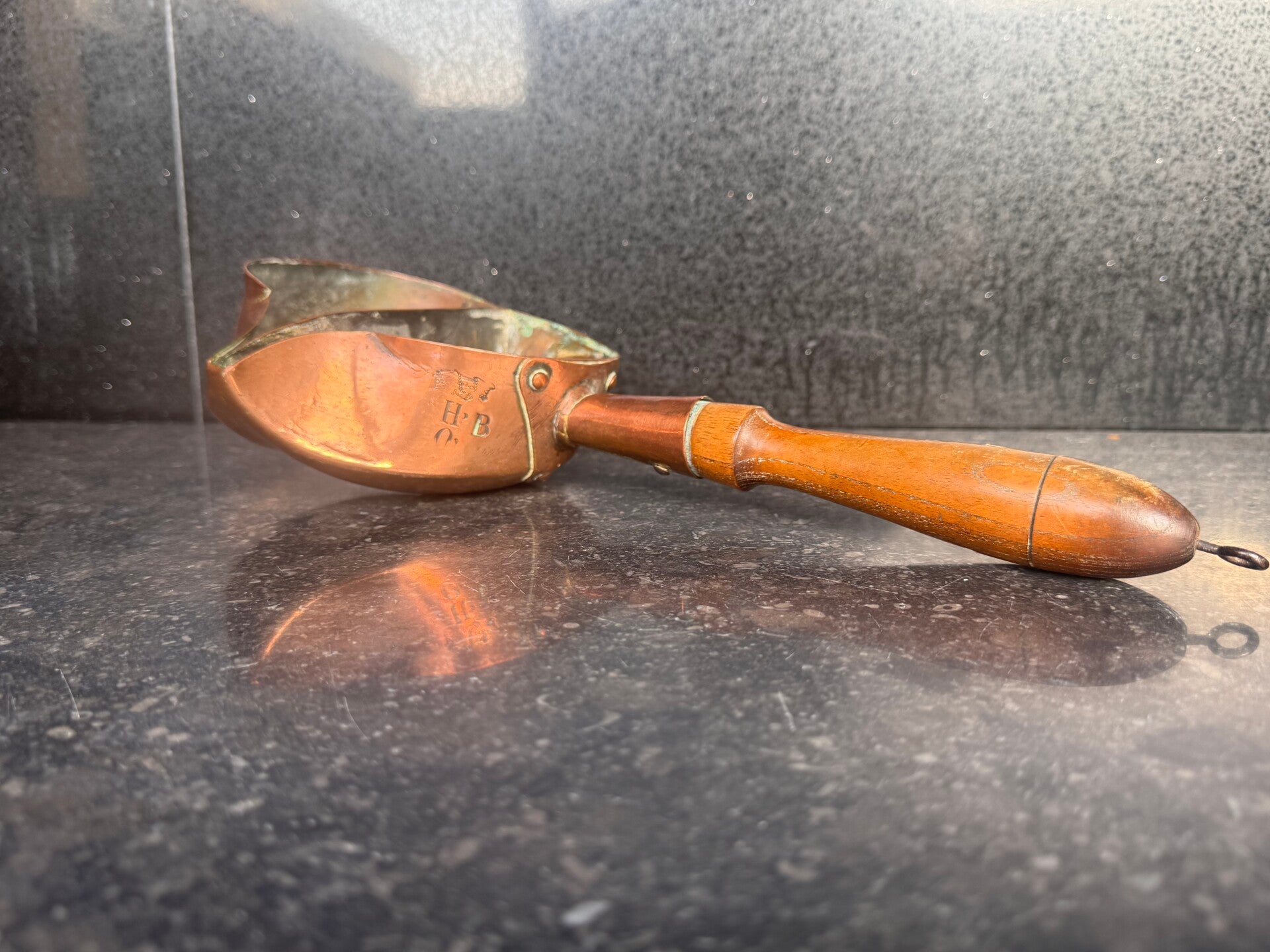
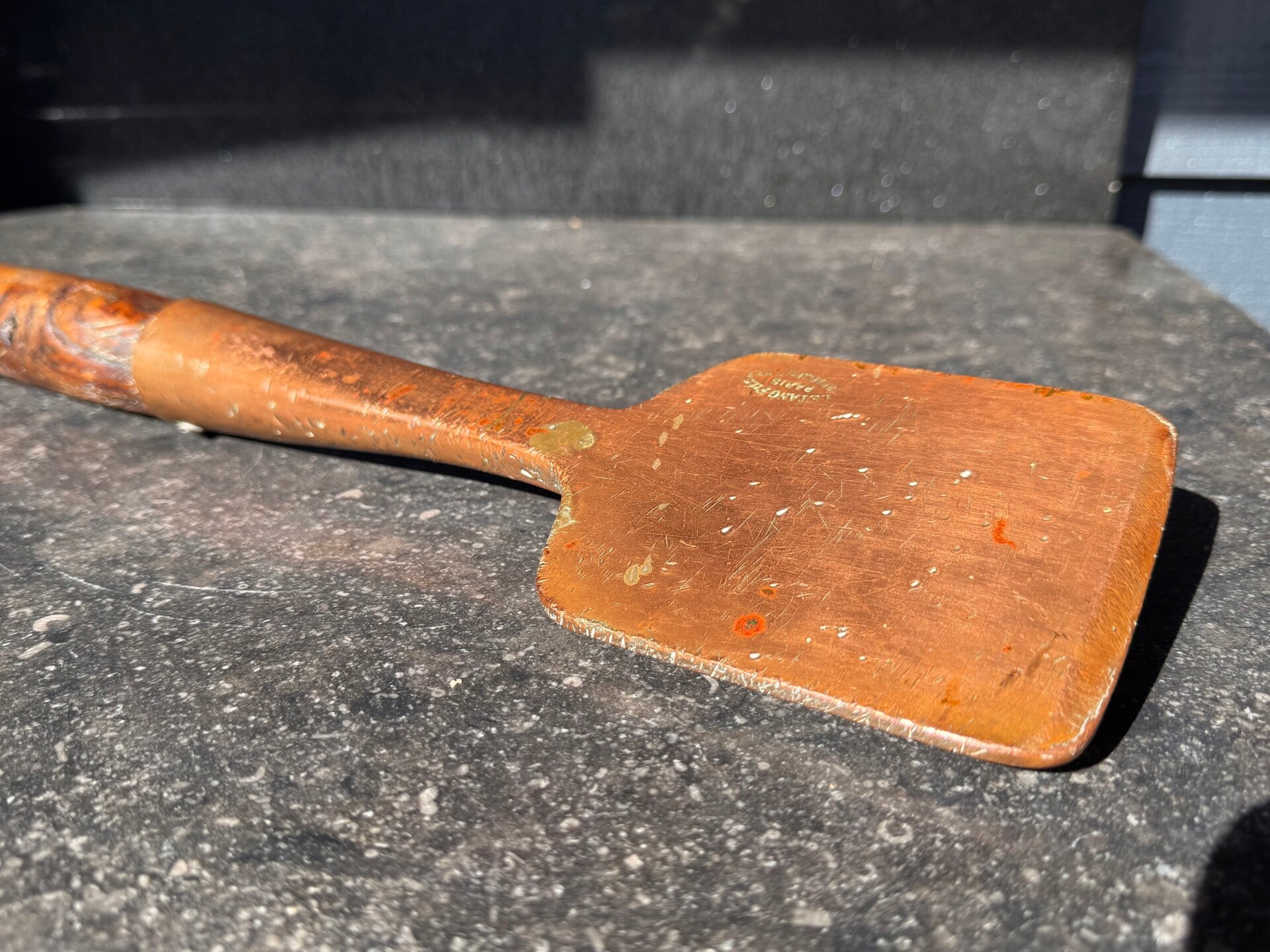
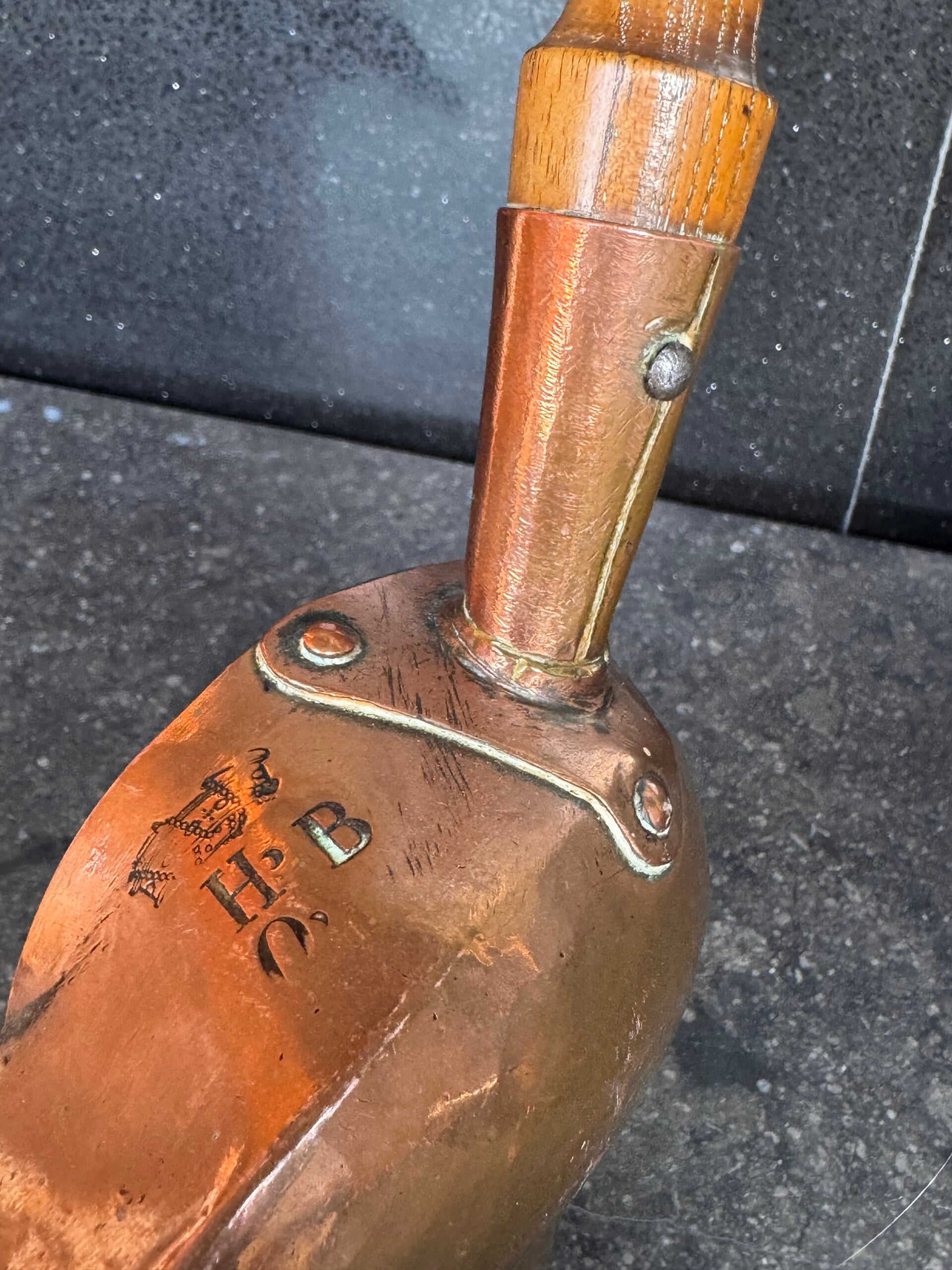
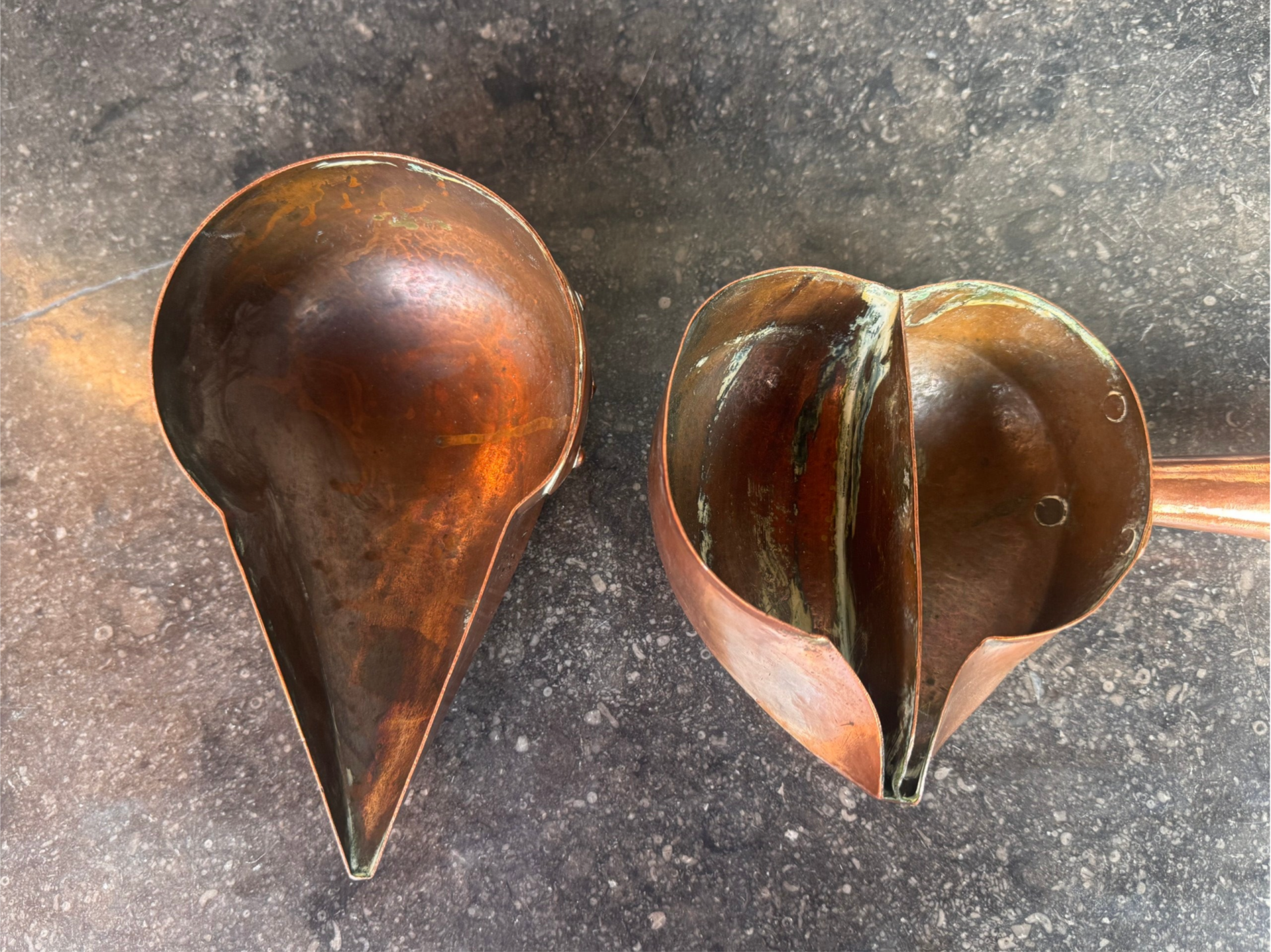
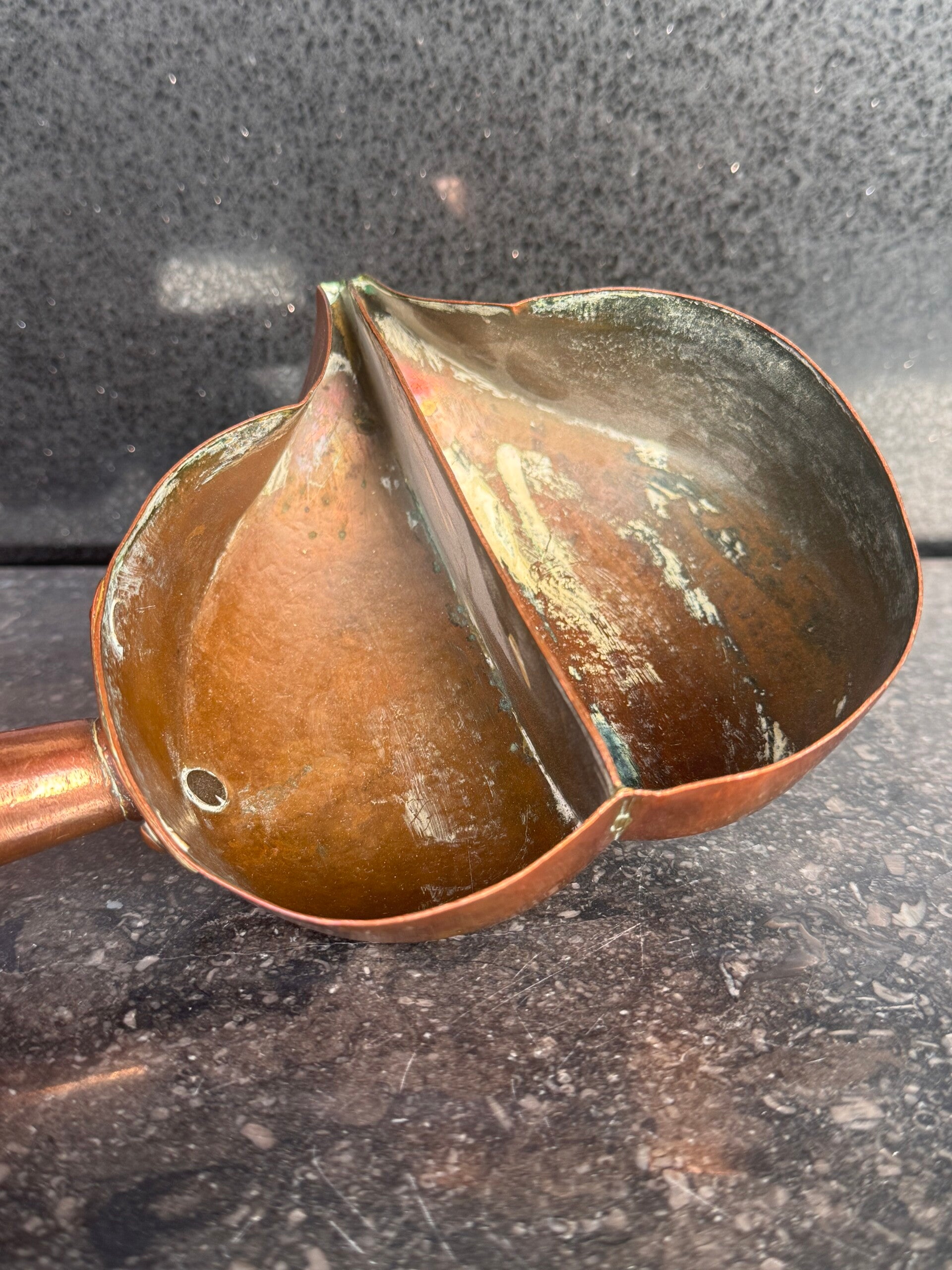
These rare copper tools originate from the private kitchen installed by Baron Maurice de Hirsch at Château de Beauregard in 1872. At the time, it was known as the best copper kitchen outside Versailles. Each piece shows hand forged construction typical of pre-1900 French coppersmithing.
I hope these beautiful antique pieces will remain with us for many years to come, continuing their journey and being passed down through generations. After all, that is what makes them so special they were made to last, and their story does not have to end with us.
Thank you very much for taking the time to read their story.
Sources: Wikipedia - Maurice de Hirsch; Stanford University Press - The Baron by Matthias Lehmann (2022); Jewish Encyclopedia 1901 - Jewish Colonization Association; Ottoman Bank archives - Chemins de fer Orientaux sale 1890 to Deutsche Bank consortium; Wikimedia Commons - List of hôtels particuliers Paris - Hôtel de Hirsch 2 rue de l'Élysée; Musée du Patrimoine - Hôtel du Baron Hirsch. - Letang Fils France
Add comment
Comments
Great story and beautiful copper pieces.