

This copper piece comes from one of the most storied hotels in France.
The Hotel
From Grand Hôtel to Headquarters
The Hôtel du Parc is one of the oldest hotels in Vichy. It already appears on maps from 1844, but was officially named Hôtel du Parc in 1862. It was built by Paris lawyer Joseph Bousquet right in front of the Parc des Sources.
In 1901, everything changed. Joseph Aletti, who ran a Grand Hôtel in Royat, took over as director. He transformed it into a true palace. Between 1905-1907 the hotel got two extra floors, a huge dome with a turret, central heating, bathrooms in all rooms, and shops like Vuitton and Van Cleef & Arpels on the ground floor. For 40 years, Aletti would dominate hospitality in Vichy.
Who was Joseph Aletti, The Emperor of Vichy Hotels?
Joseph Aletti was born on June 2nd, 1864 in Thal, Switzerland, to Italian parents from Parma and Piacenza. His father was a high-ranking servant to the Duchess of Parma.
After a youth as a dandy in London and training in the best hotels of Switzerland, Germany and Belgium, he started his career in the French Riviera. In 1900, he was asked to take over the ageing Hôtel du Parc in Vichy.
He had a vision: Vichy had no real palaces like Paris or the Côte d'Azur. From 1904 he completely rebuilt the Hôtel du Parc, adding two floors, a turret with a dome, bathrooms, central heating, and shops like Vuitton and Van Cleef & Arpels. In 1907 he built the adjacent Majestic Hotel.
He founded the Société des Grands Hôtels de Vichy, which at its peak had 750 rooms and more than 2500 employees, including 700 in the kitchens. He personally controlled every detail, even checking dishes leaving the kitchen.
He also ran the Claridge on the Champs-Élysées in Paris, the Négresco and Majestic in Nice, and built the Aletti complex in Algiers in 1930.
He died suddenly on July 9th, 1938 in Vichy at age 74, at the height of the season. His funeral was grandiose. Today you can still see his bust and portrait in the Aletti Palace Hotel in Vichy, and Place Joseph-Aletti is named after him.
His hotel empire did not survive the Second World War, when all the grand hotels were requisitioned as ministries for the Vichy regime.
Vichy at that time was the Queen of the Spa Towns. The grand hotels rivaled the grand hotels of Paris and the Côte d'Azur.
Why every piece of copper was stamped
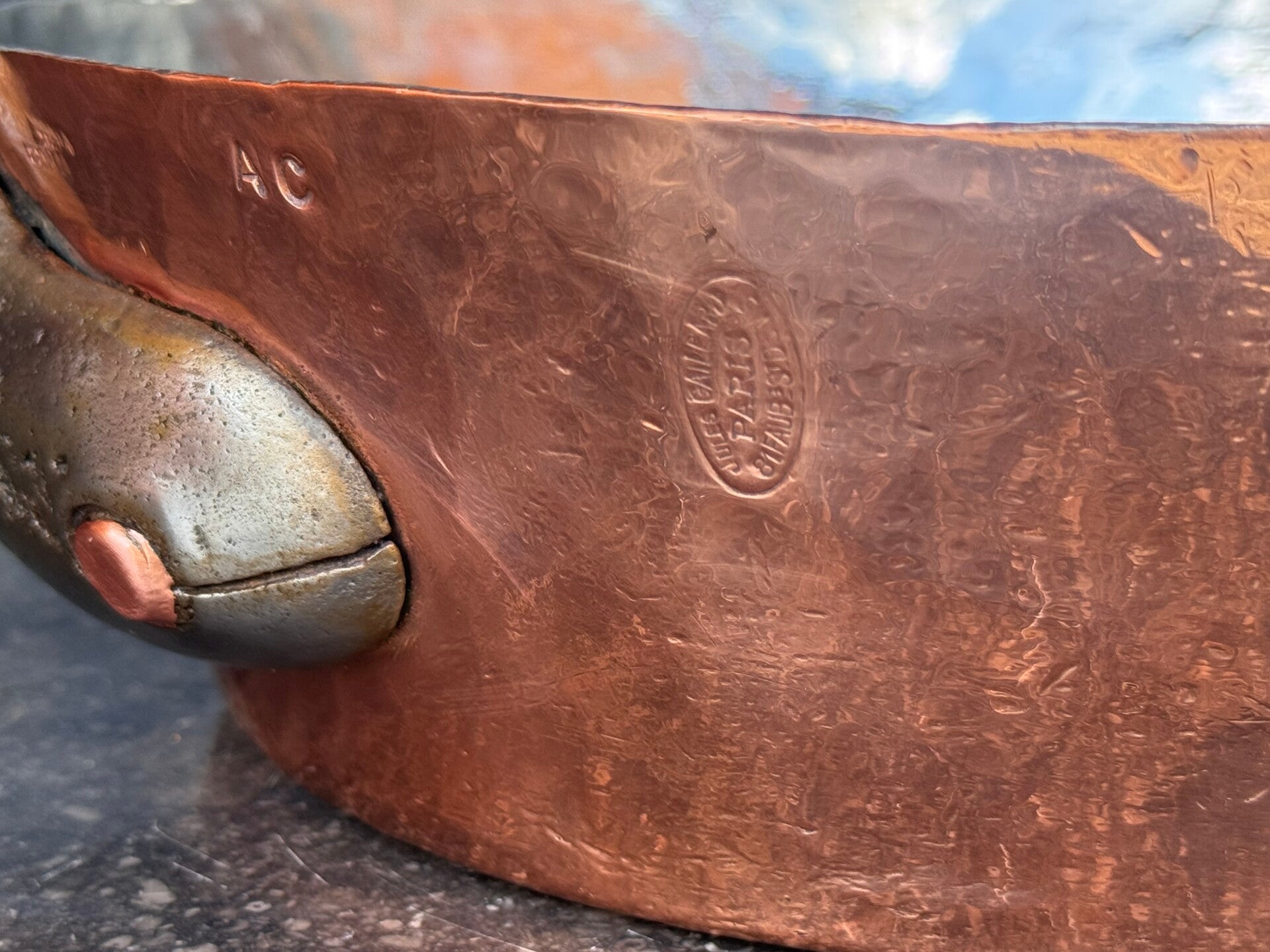
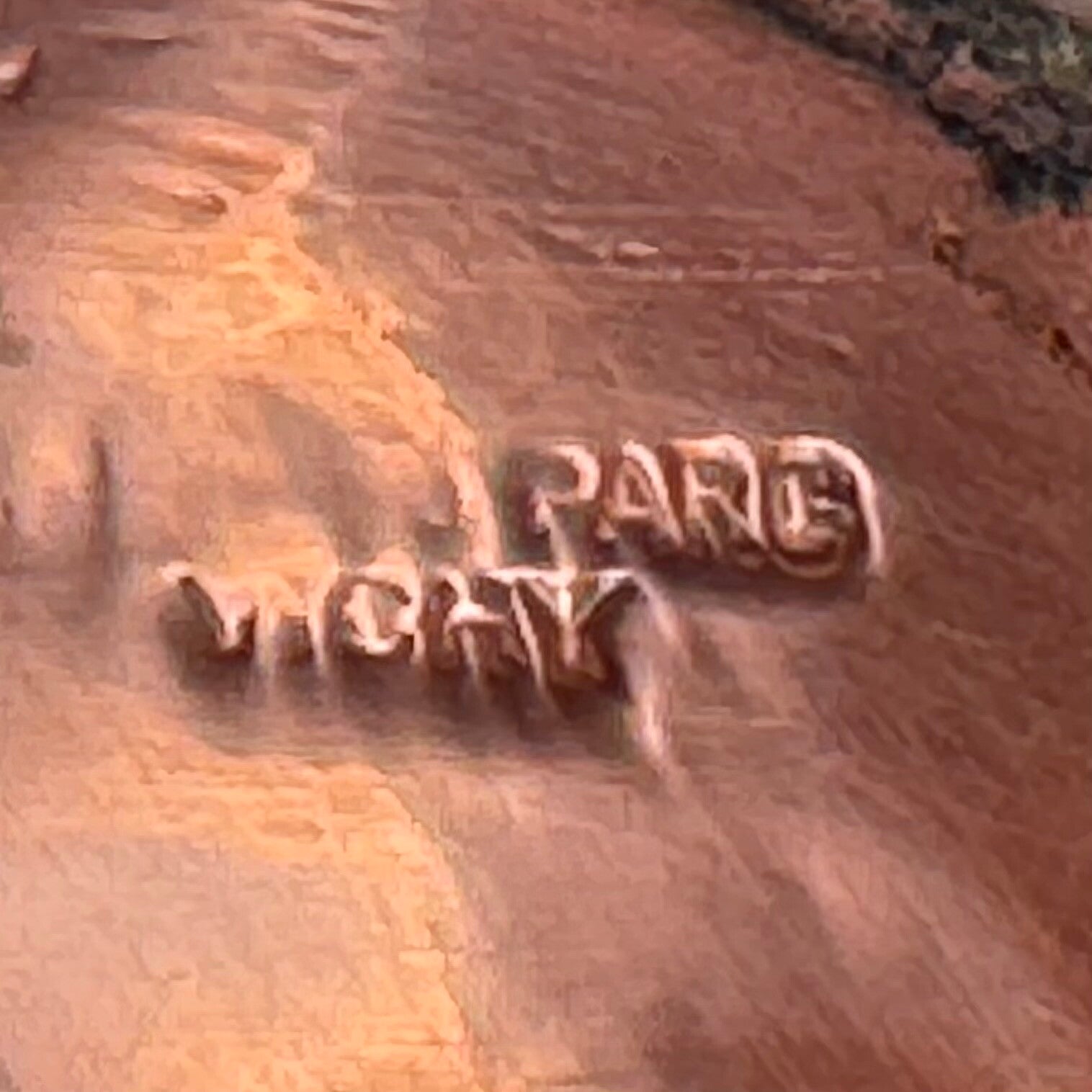
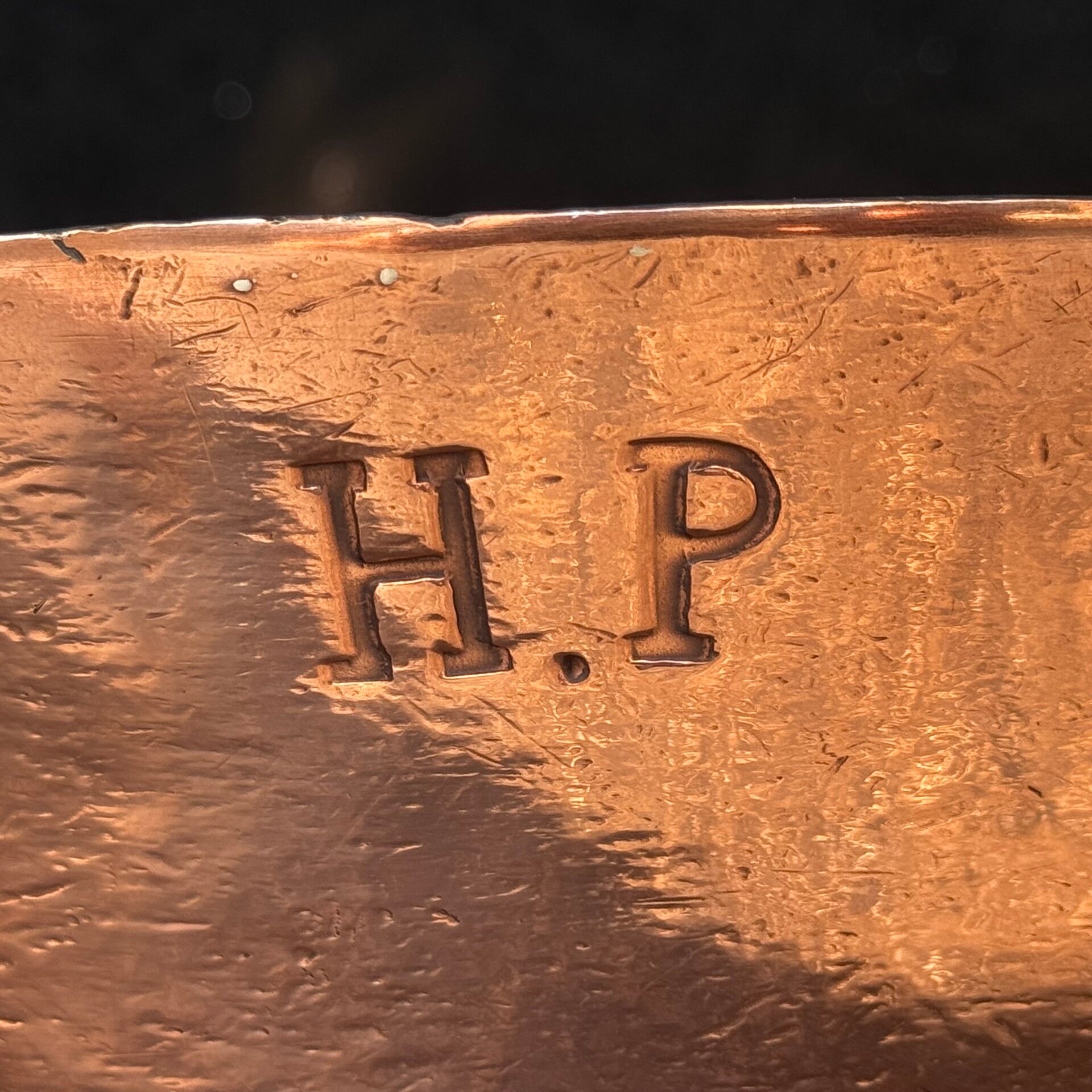
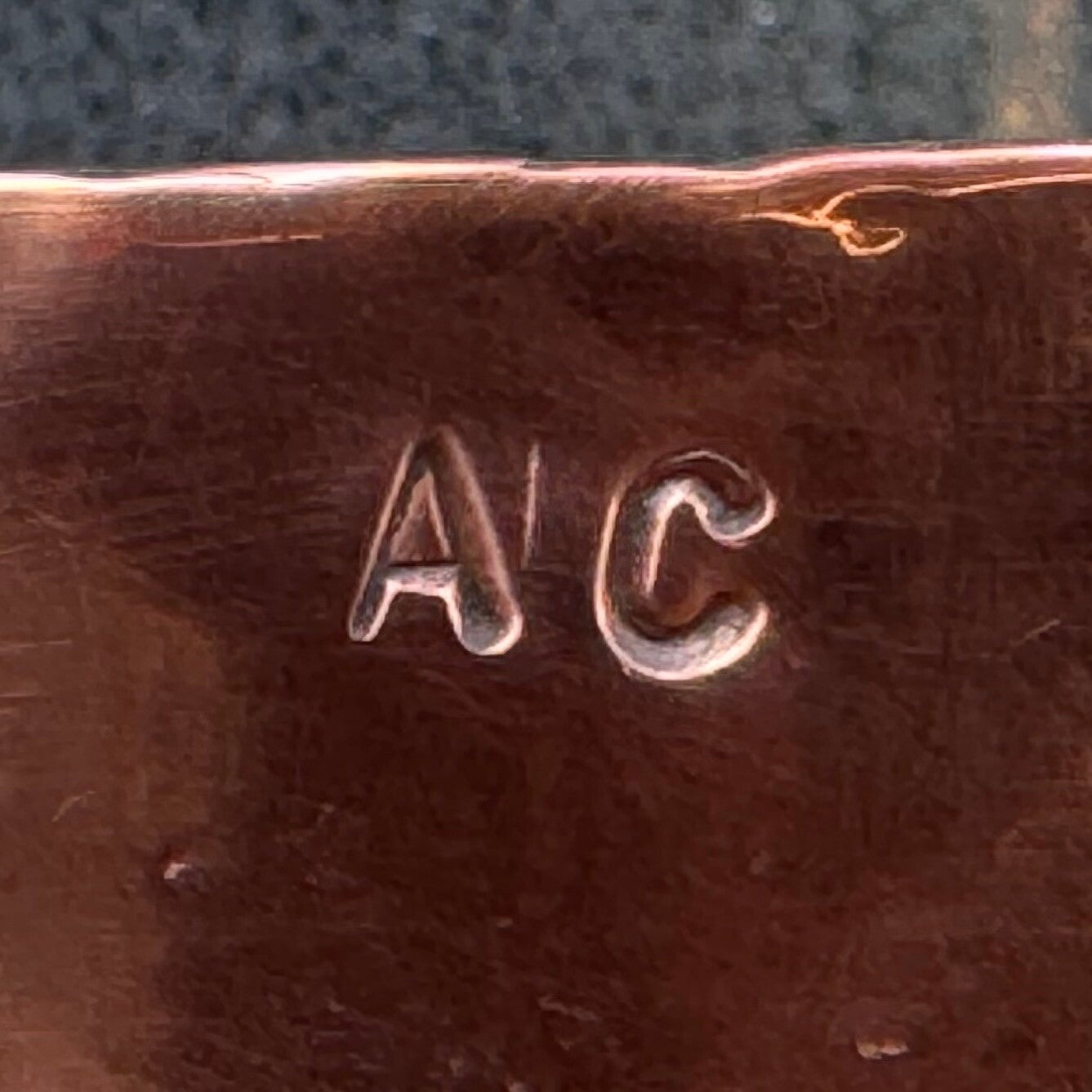
A Grand Hôtel like the Parc had a massive brigade. Hundreds of copper pans, sauté pans and tools. To prevent theft and to keep inventory, everything was stamped with the hotel's name. That is the stamp you see on this piece. It is not a maker, it is an owner stamp.
In July 1940, after the armistice, the French government moved to Vichy because of its huge hotel capacity and telephone exchange.
The Hôtel du Parc became the center of history:
Marshal Pétain installed his private apartments and offices on the 3rd floor, rooms 124 and 125. He lived there from July 1940 until his forced departure in August 1944.
In 1942, Pierre Laval and his cabinet moved to the 2nd floor. It was from this hotel that Laval broadcast his infamous speech: "Je souhaite la victoire de l'Allemagne..."
The hotel housed the foreign affairs secretariat, the military command, and information services.
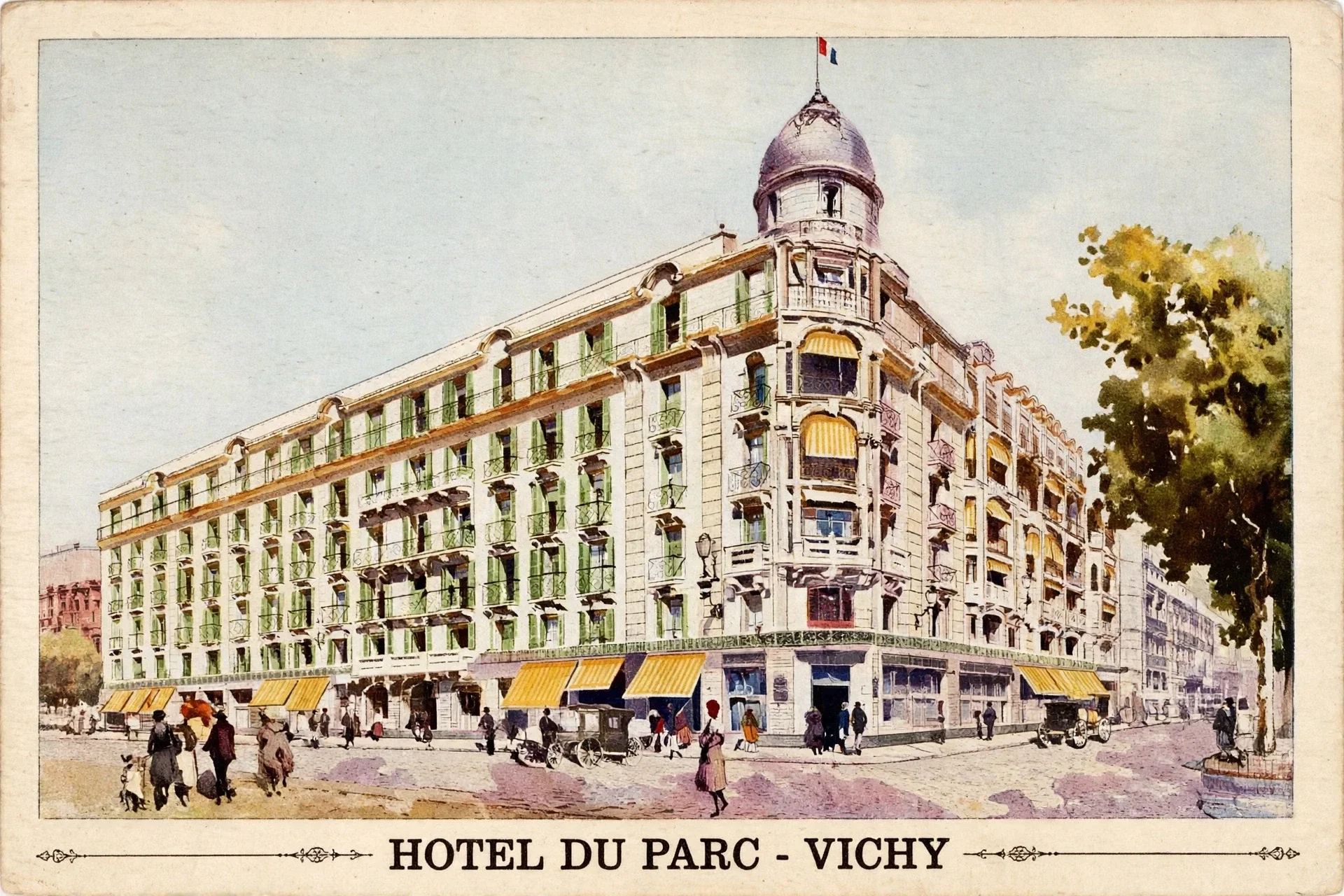
Hotel du Parc Vichy 1900 postcard
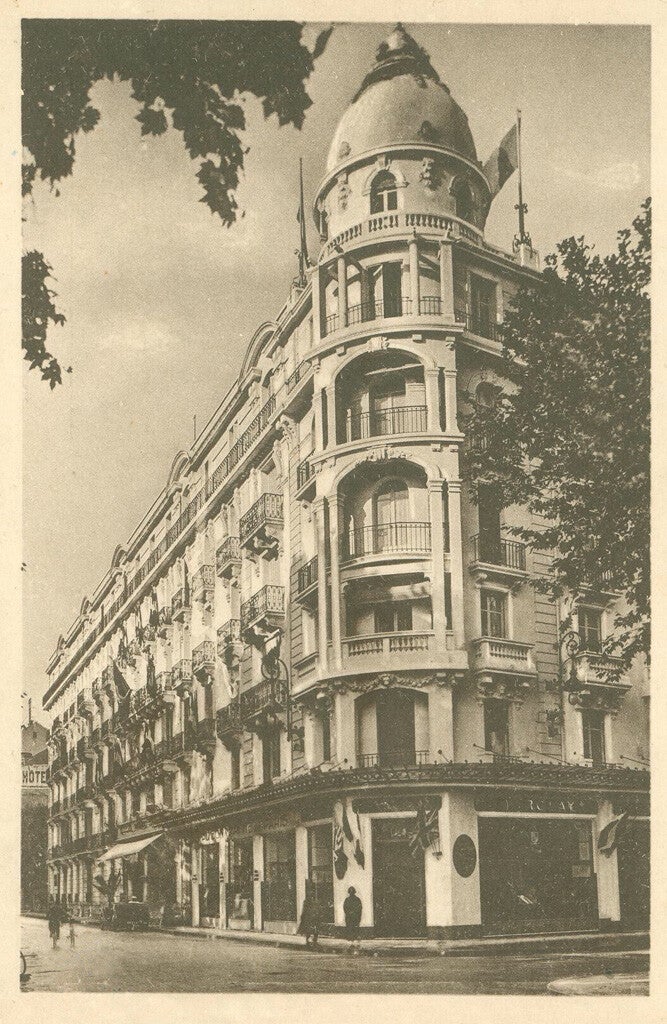
Hôtel du Parc in Vichy, residence of the French Head of State (10 July 1940 – 20 August 1944) - 3rd floor, rooms 124 and 125. Today Résidence Le Parc, 21-23 rue du Parc
After the war, the hotel never reopened. The building was too damaged and its image too heavy. In 1956 it was sold in lots and became a private residence, Résidence Le Parc, with 101 co-owners. The dome was demolished in the 1960s.
Today there is almost no trace left. "L'hôtel du Parc a été vendu en appartements. Plus aucune trace de son histoire.
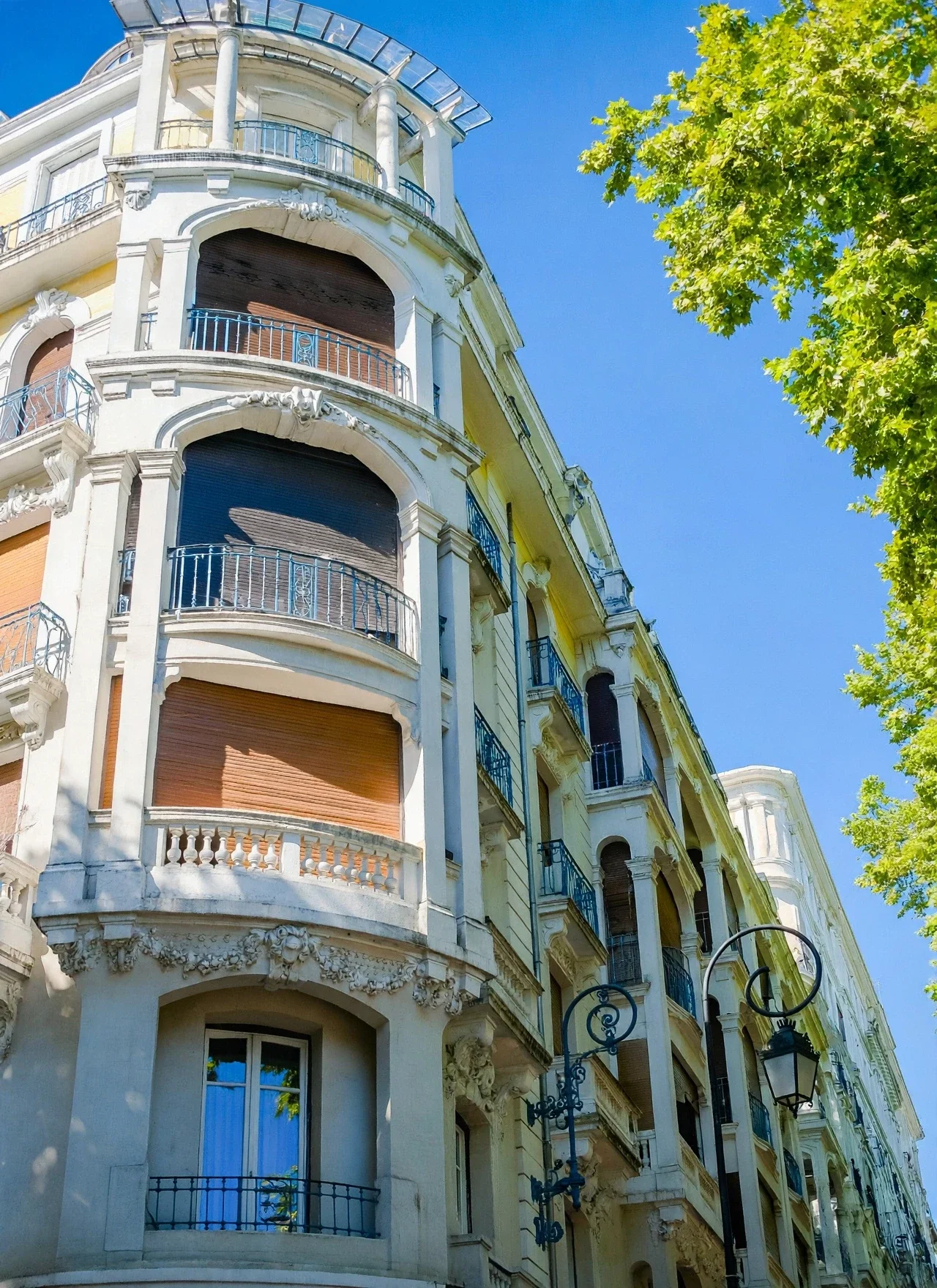
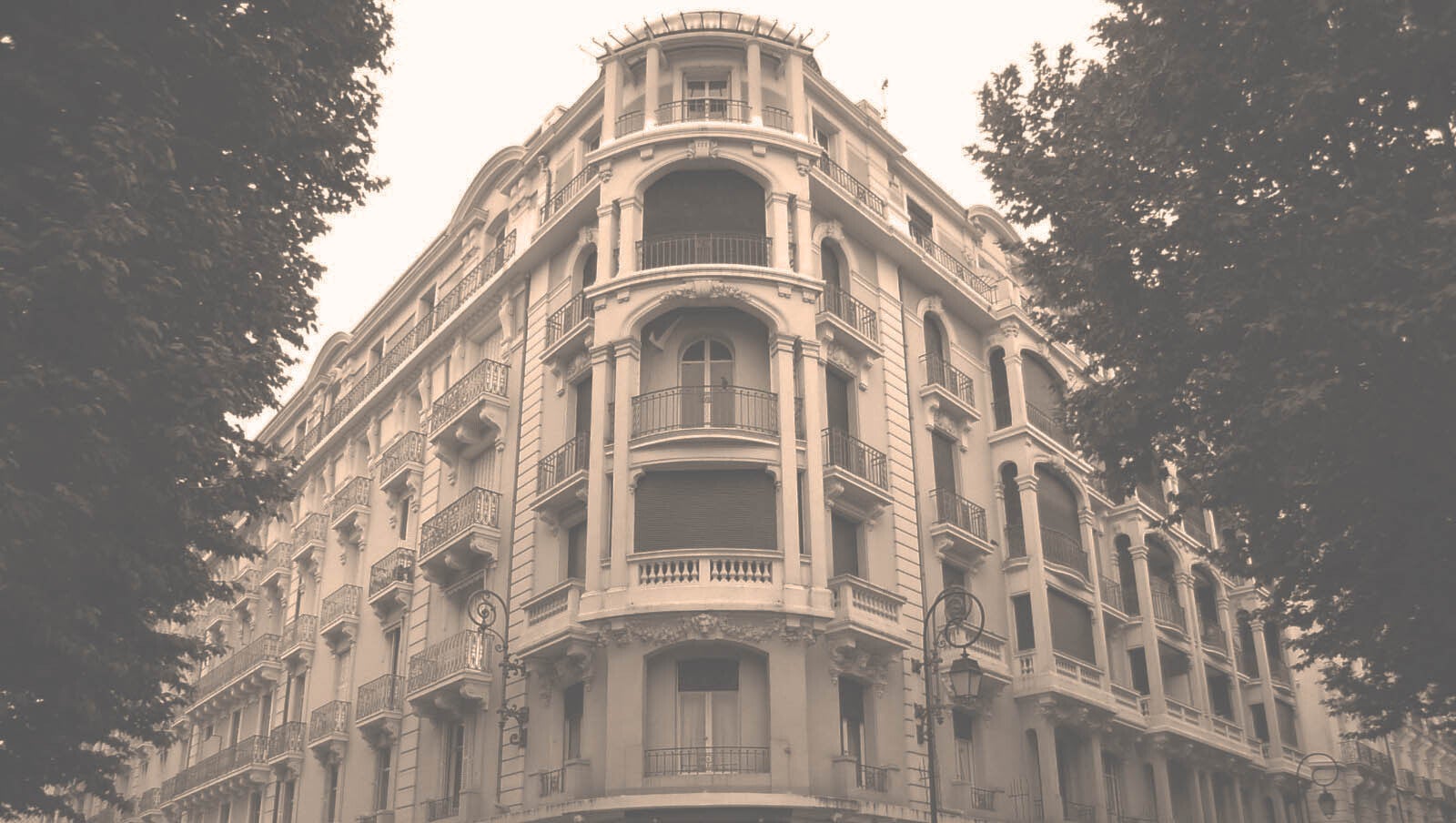
Present day: Résidence Le Parc, Vichy
Former Hôtel du Parc, residence of the French Head of State (10 July 1940 – 20 August 1944). Today divided into 101 private apartments.
Hôtel du Parc Vichy: A Windsor Pan with 100 Years of History
Une casserole Windsor avec une histoire
Some pans are made for a kitchen. This one was made for a Grand Hôtel.
New copper is shiny. Old copper tells a story.
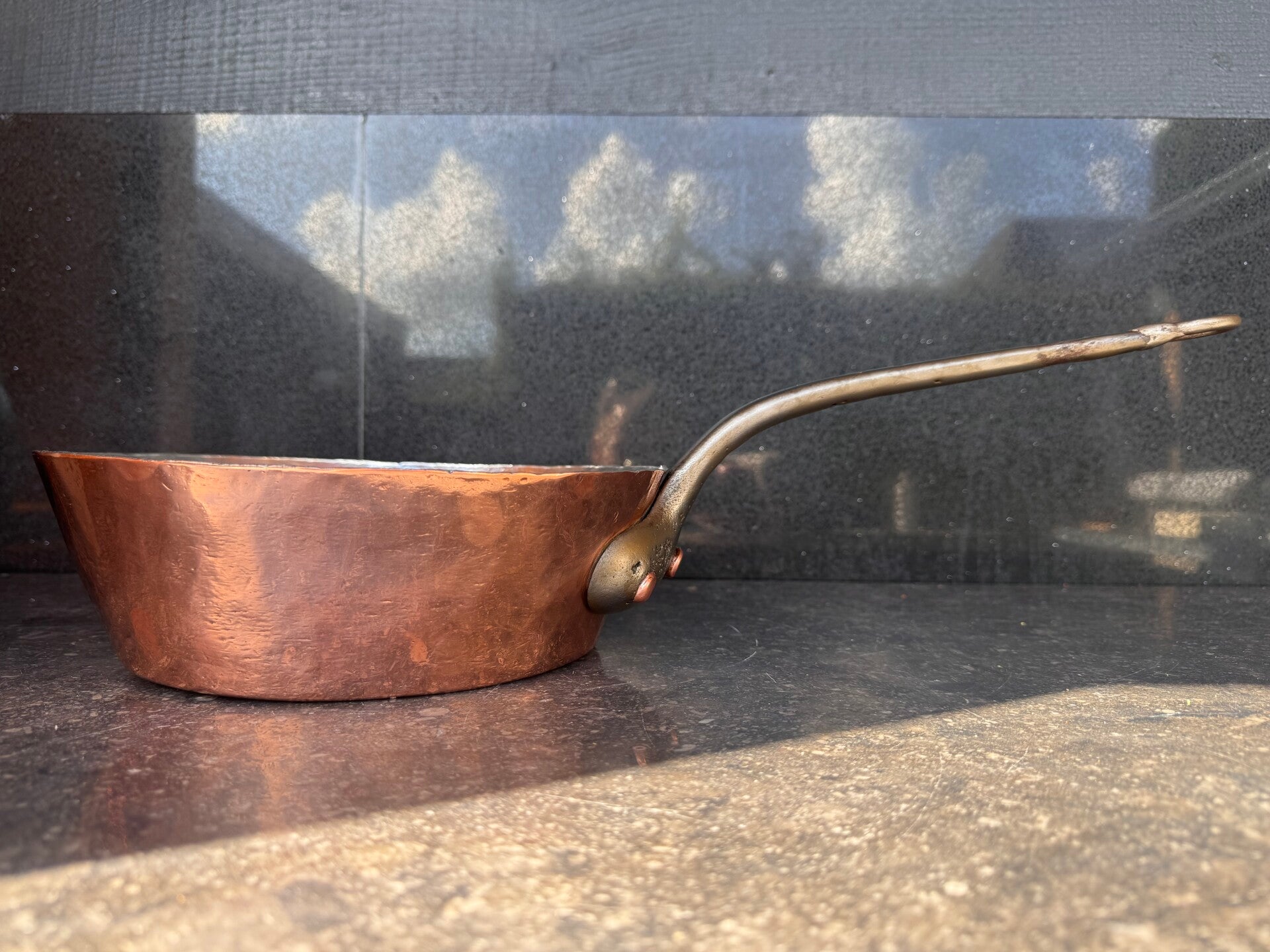
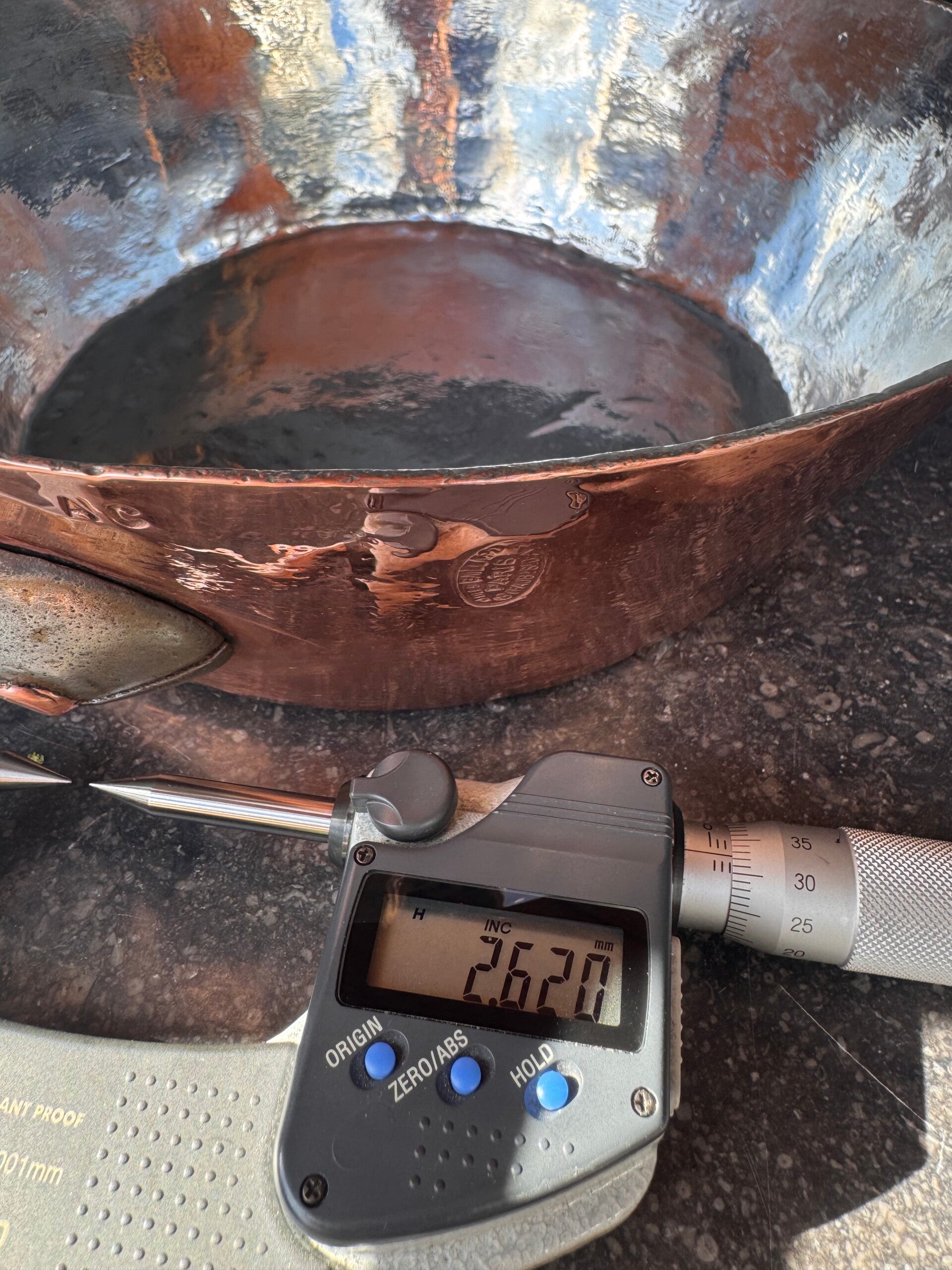
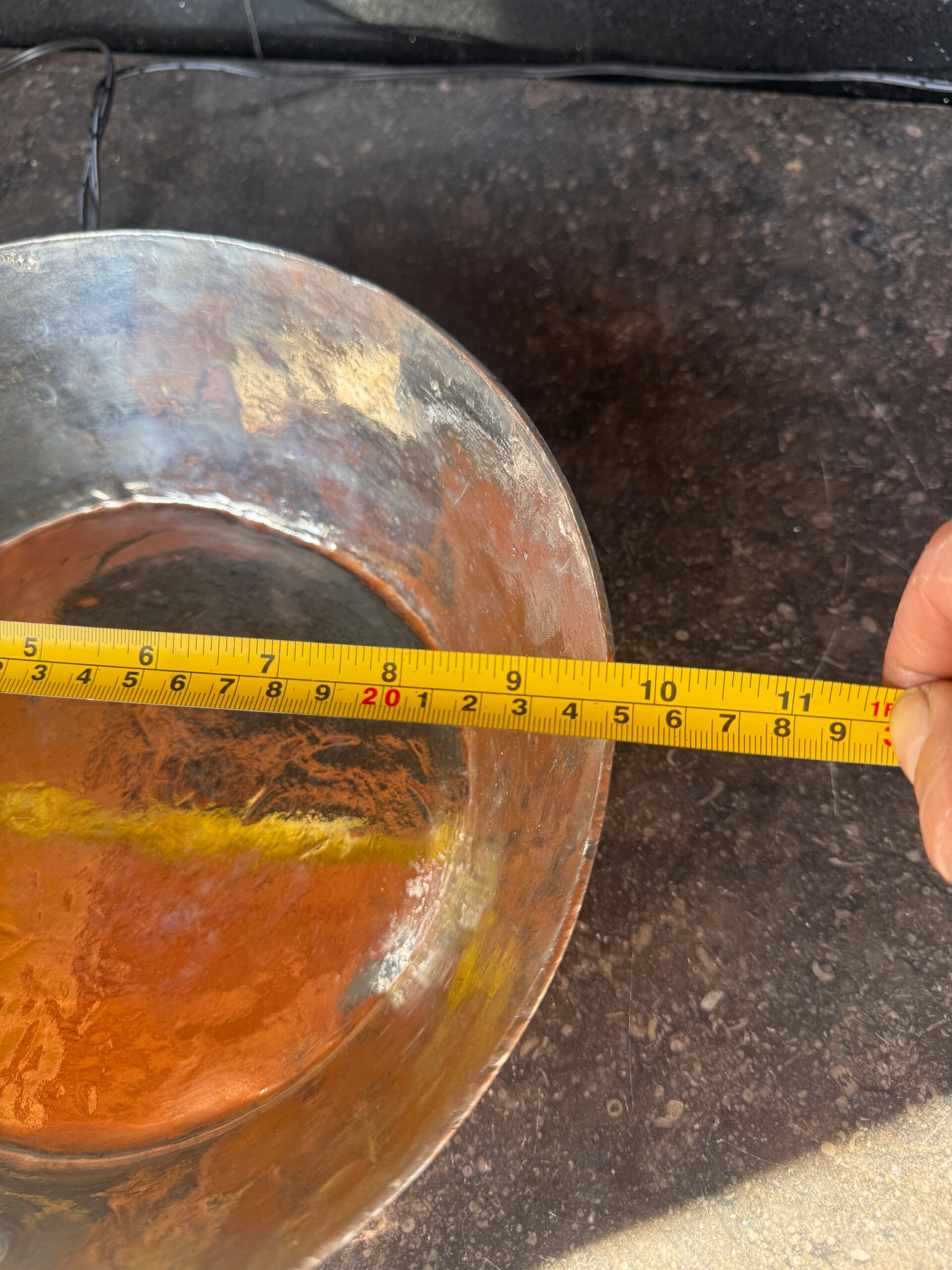
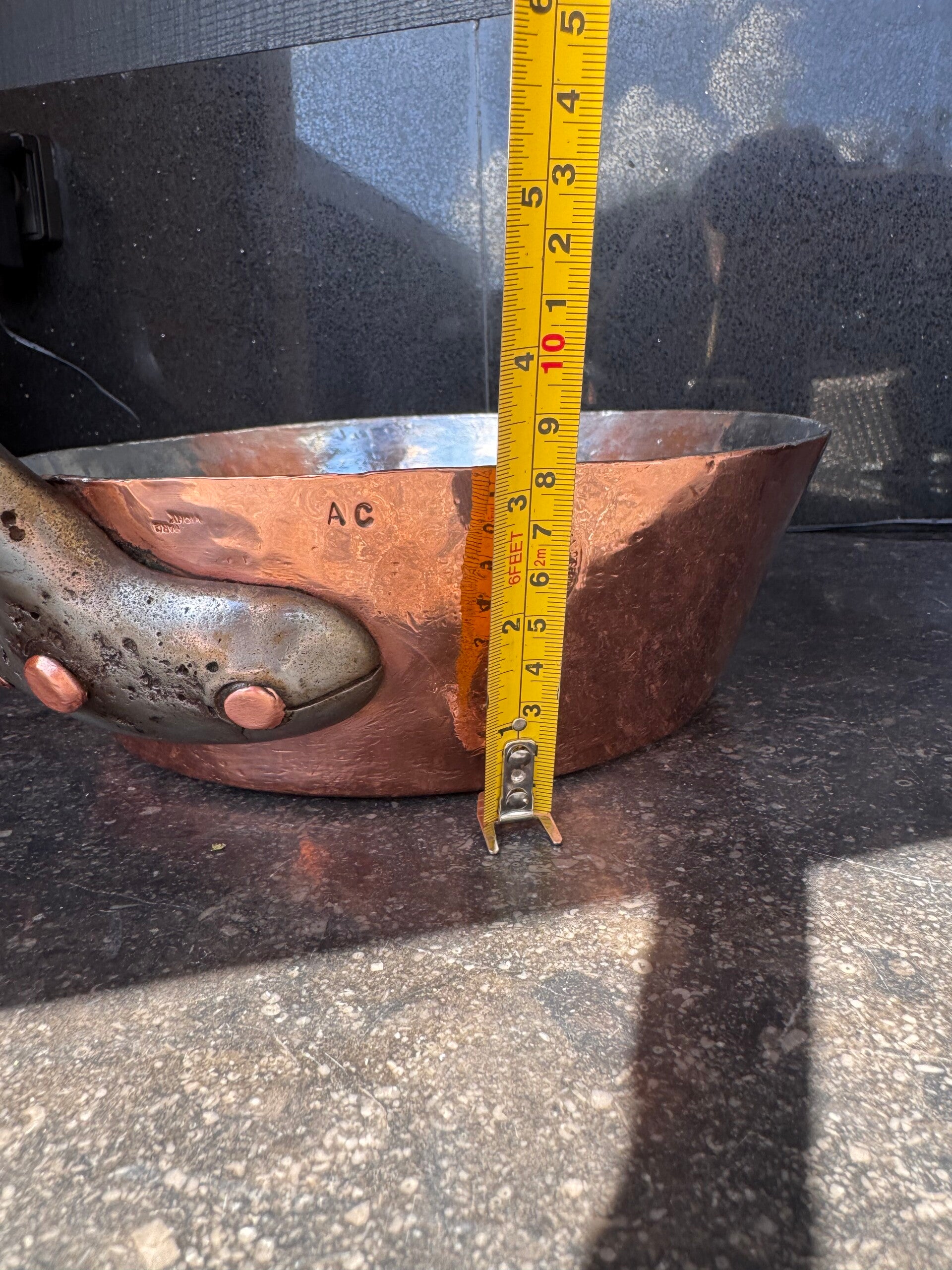
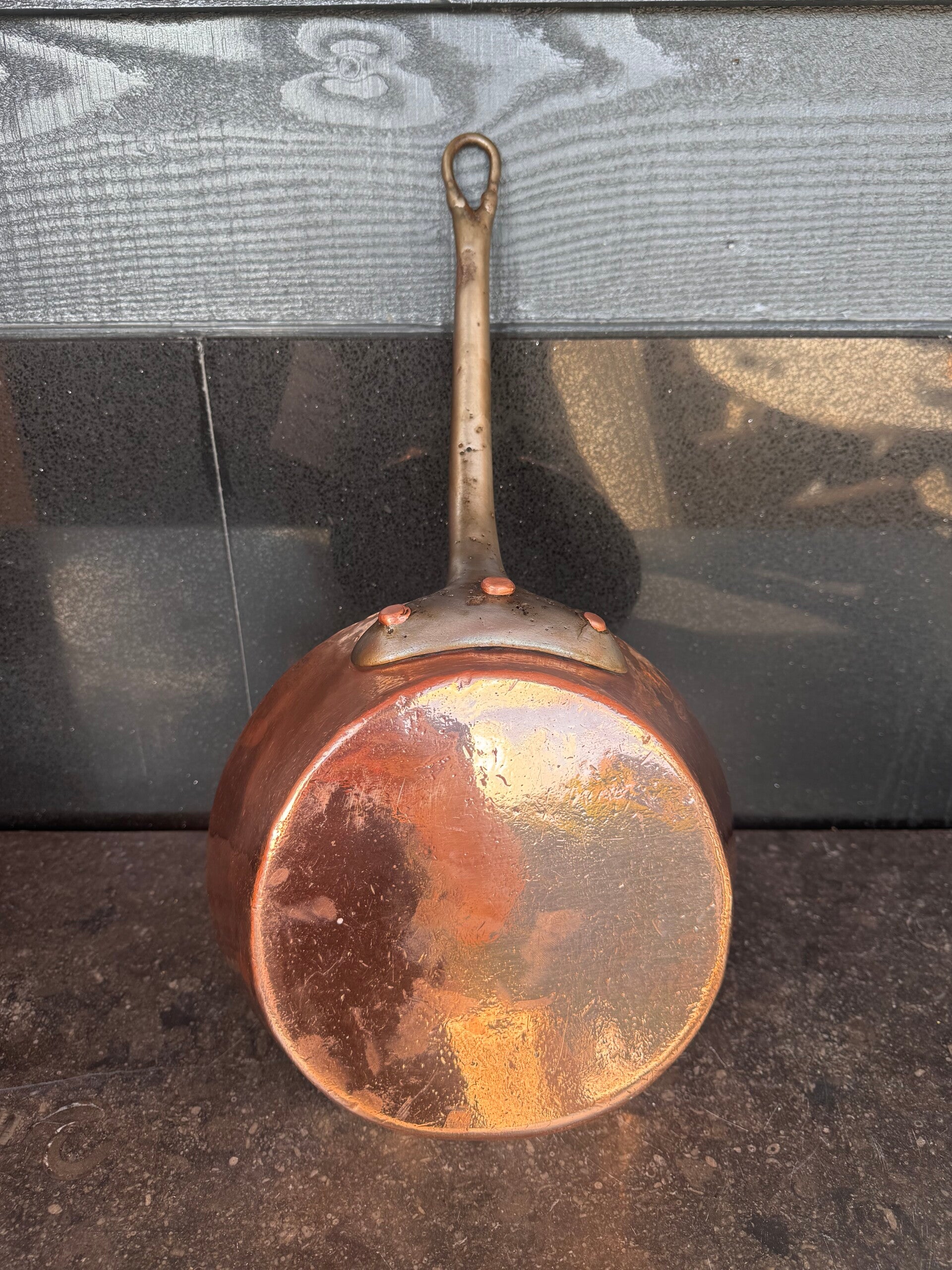
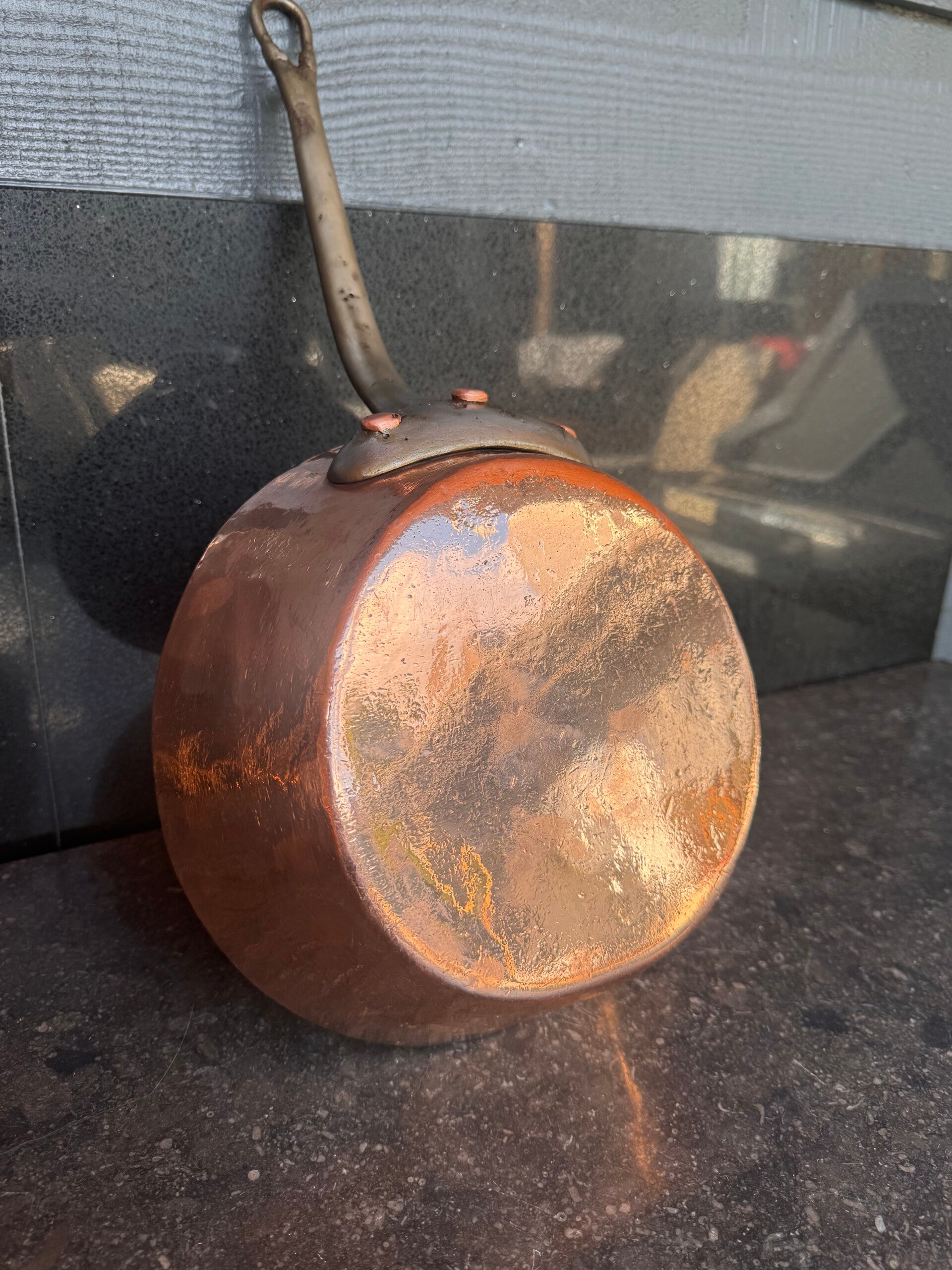
This is a classic Windsor pan - 24.5cm wide, 8cm deep, forged from 2.6mm thick copper. Not the thin decorative copper you see today, but the heavy, professional gauge that a hotel like Hôtel du Parc demanded for its kitchens. Heavy enough to hold heat for hours, to simmer a sauce without catching, to survive a hundred years of daily service.
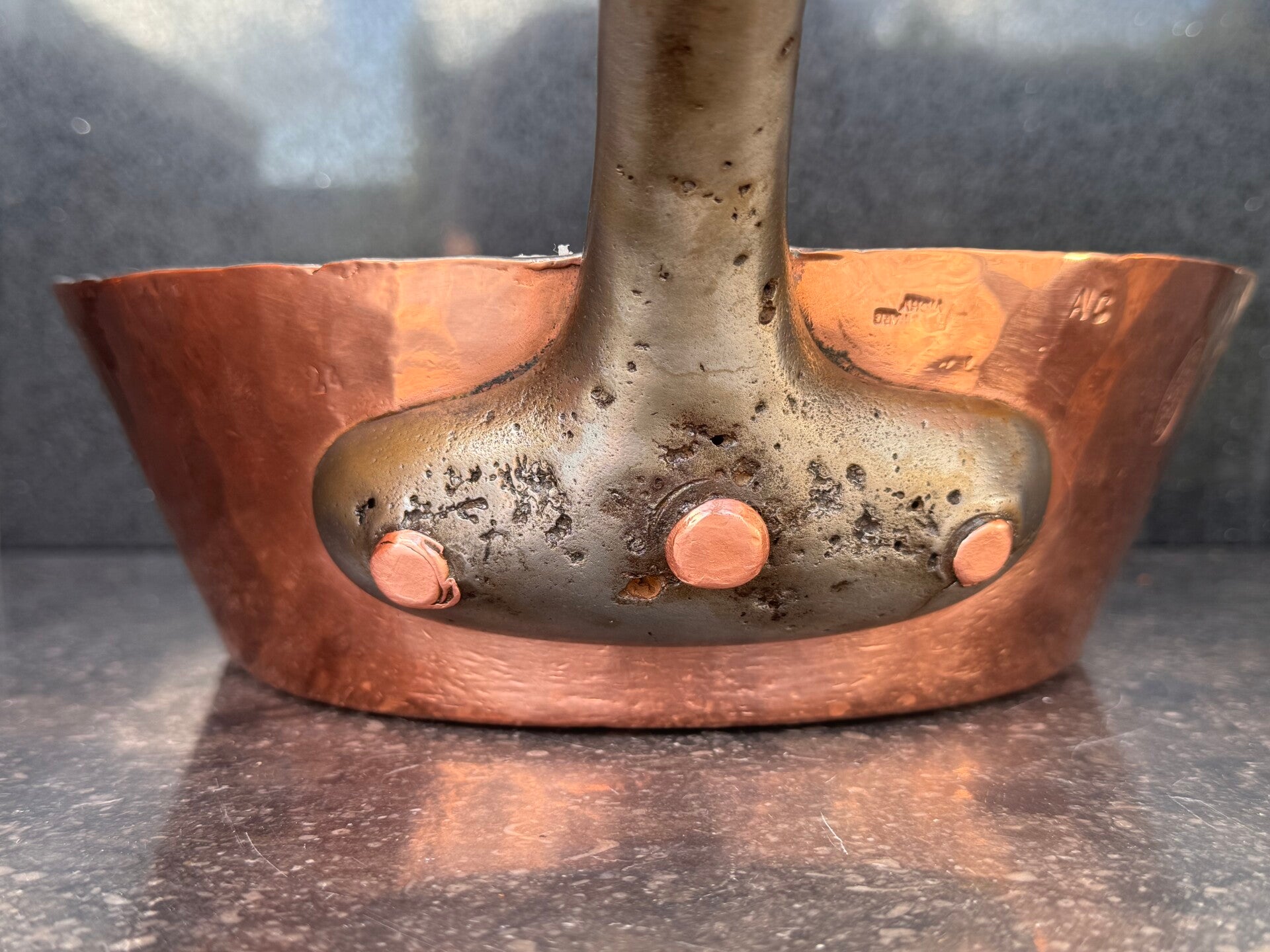
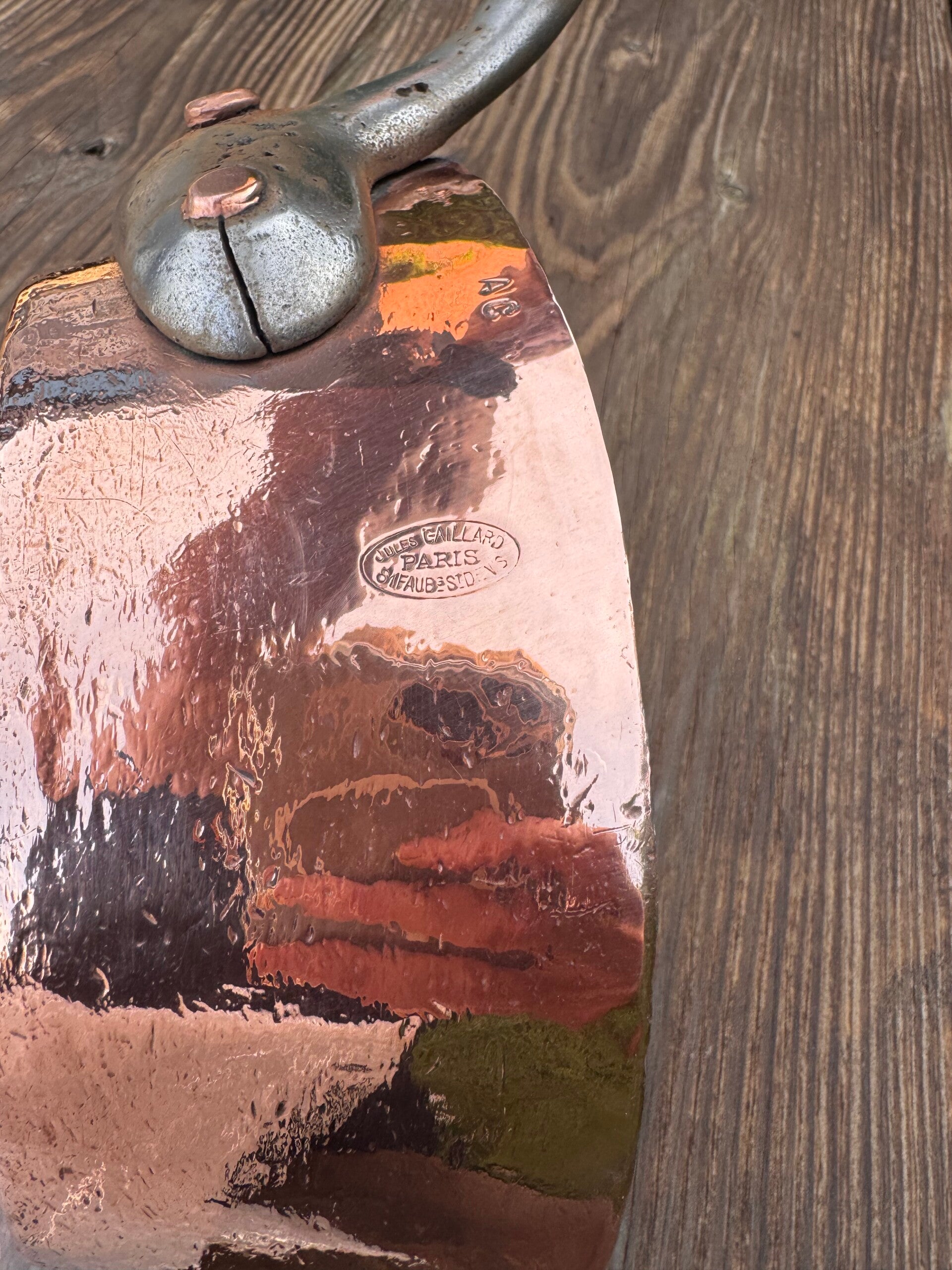
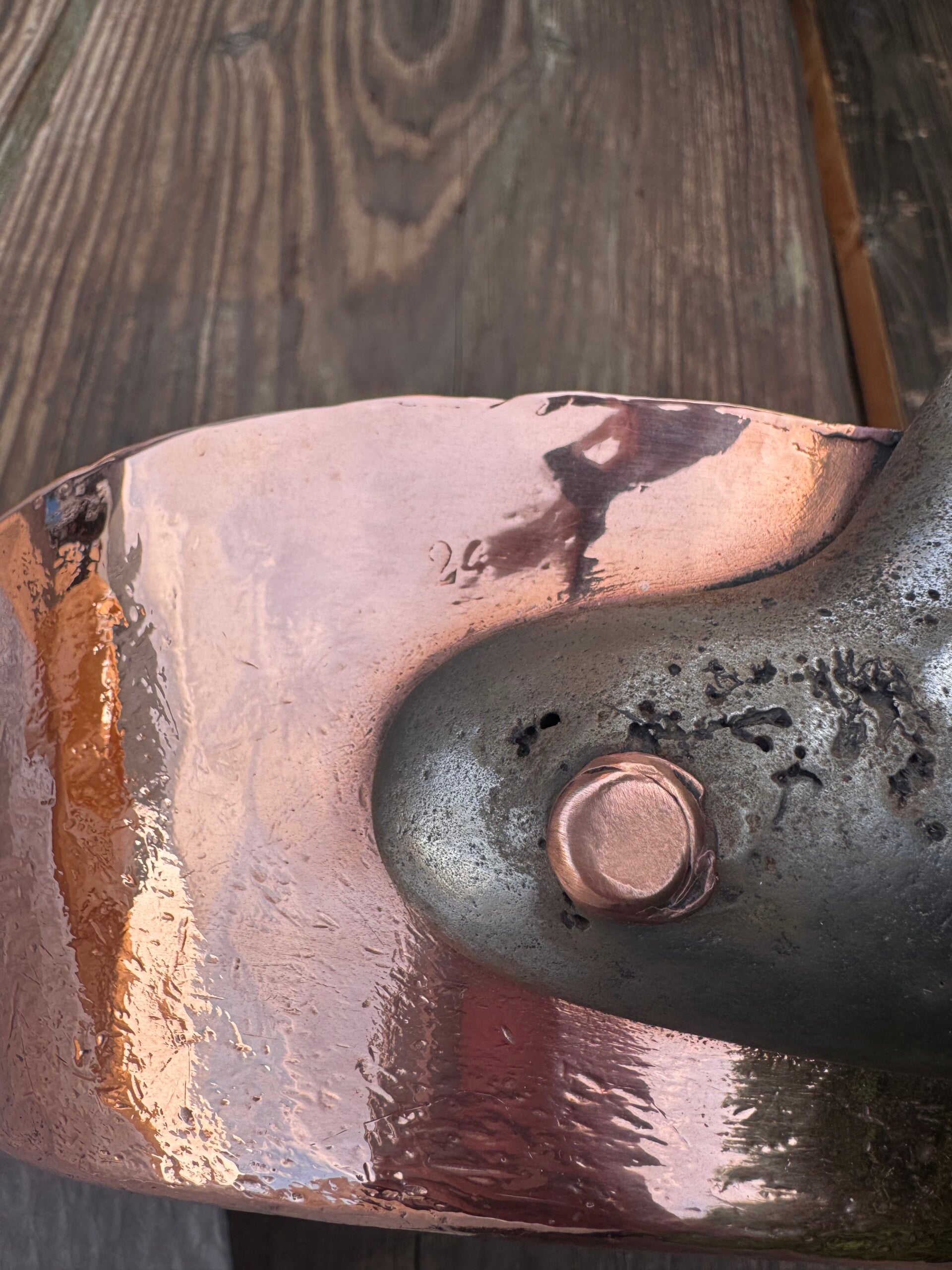
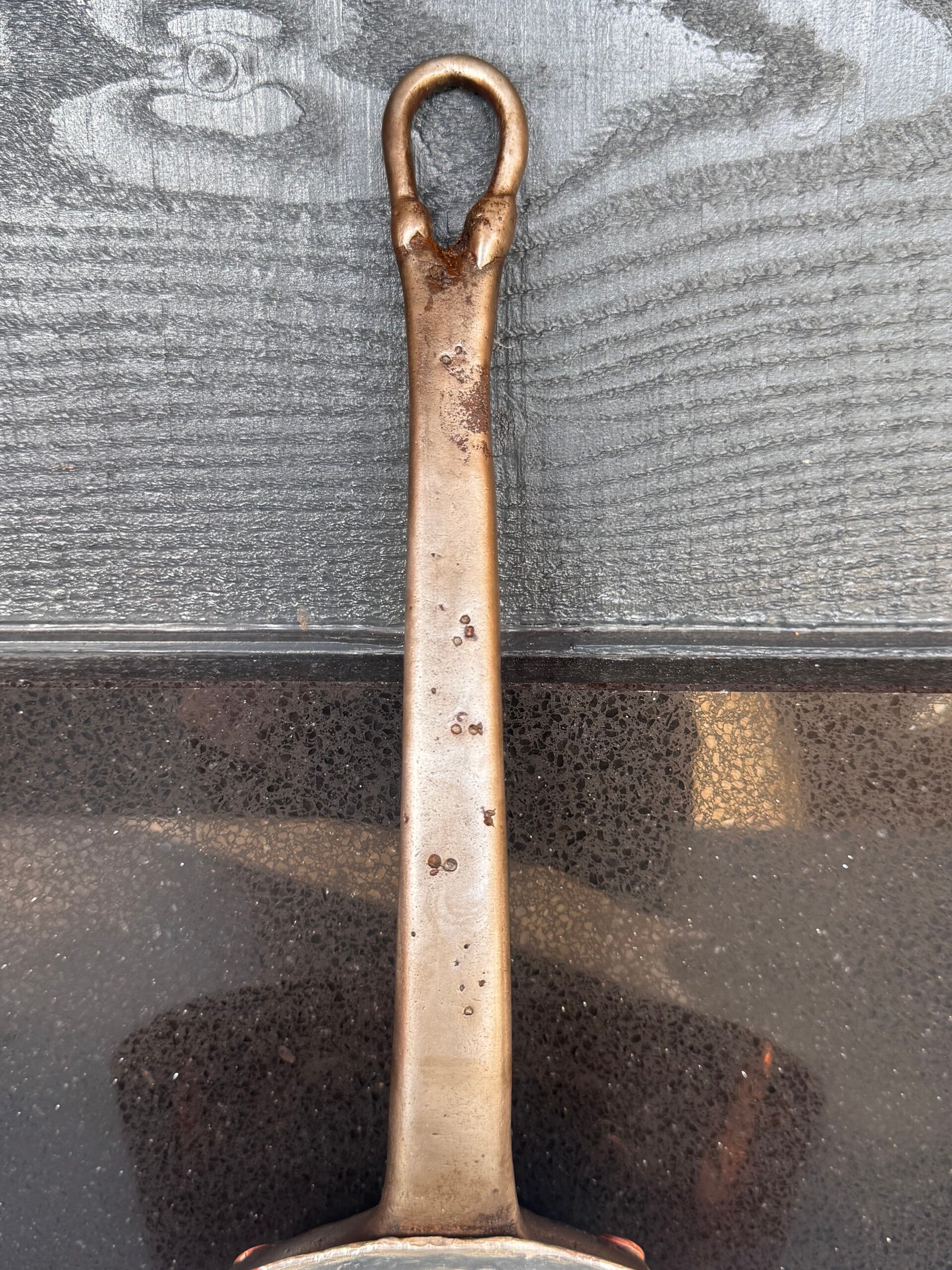
At 3074 grams (6.67 lb) you feel it immediately. The balance of the long wrought cast iron handle, the small repair at the hanging eye, the hairline crack that was stabilized decades ago - all signs of a pan that was never put on a shelf. It was used, repaired, and used again, just as it should be in a working kitchen.
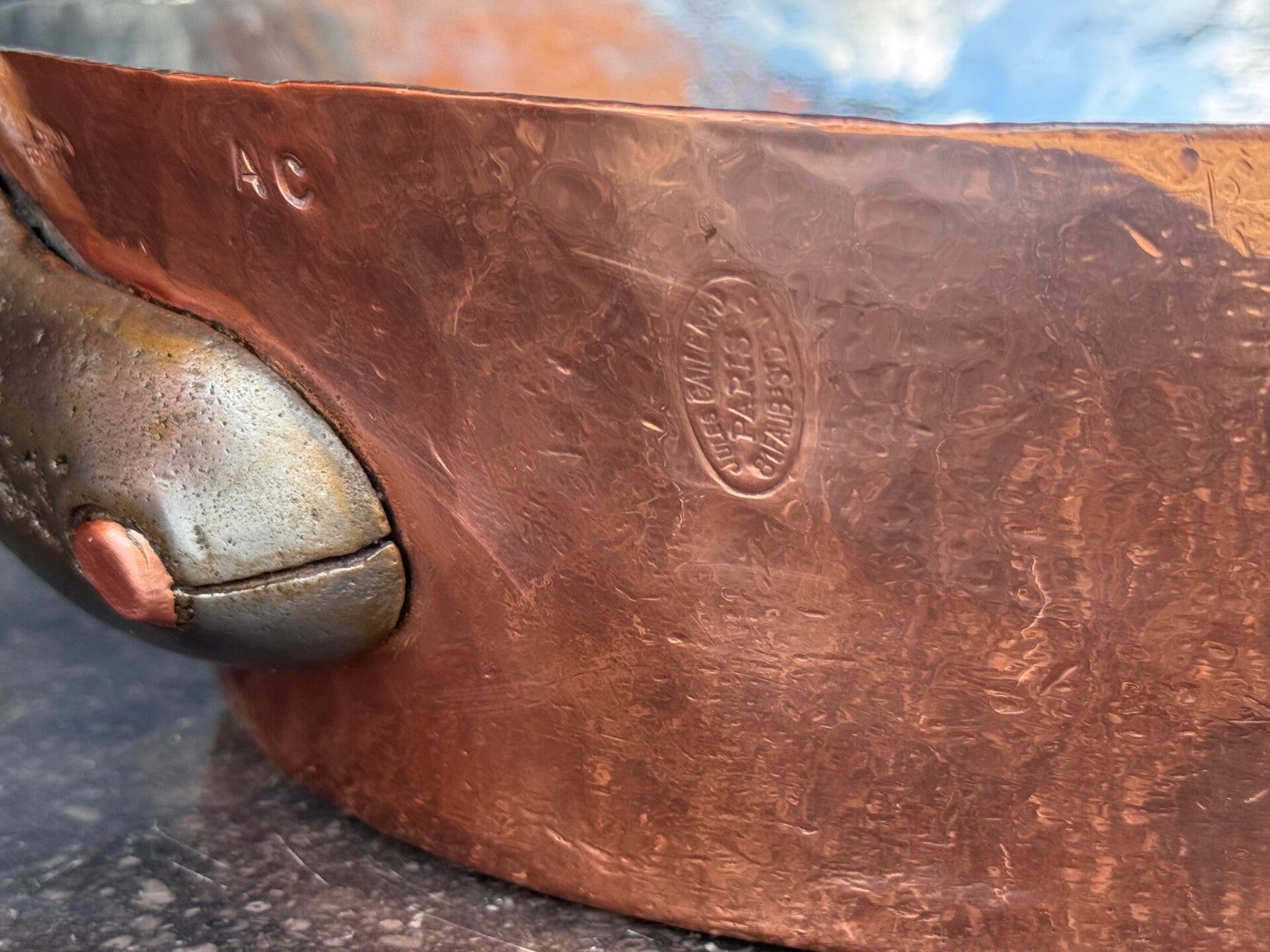
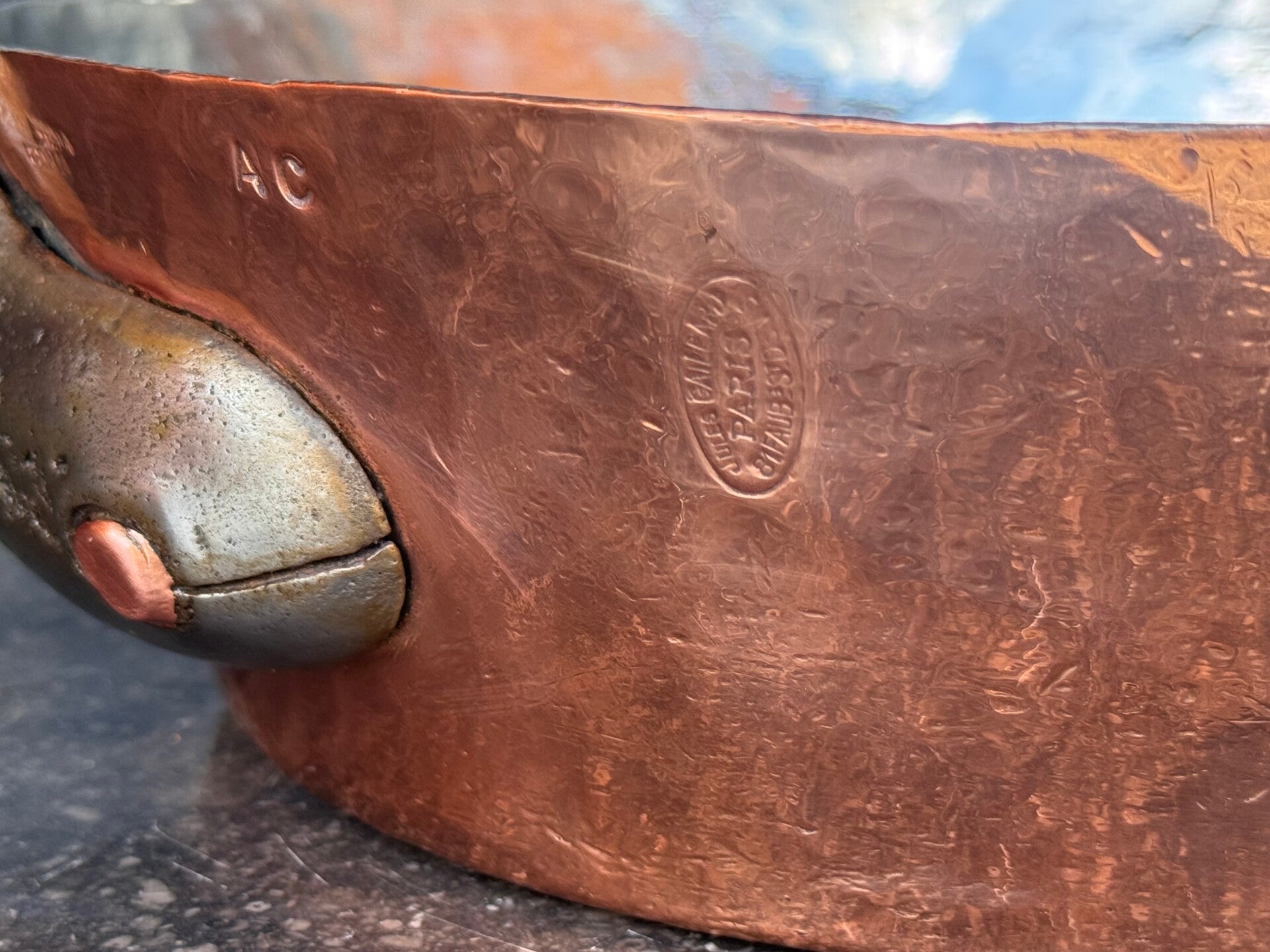
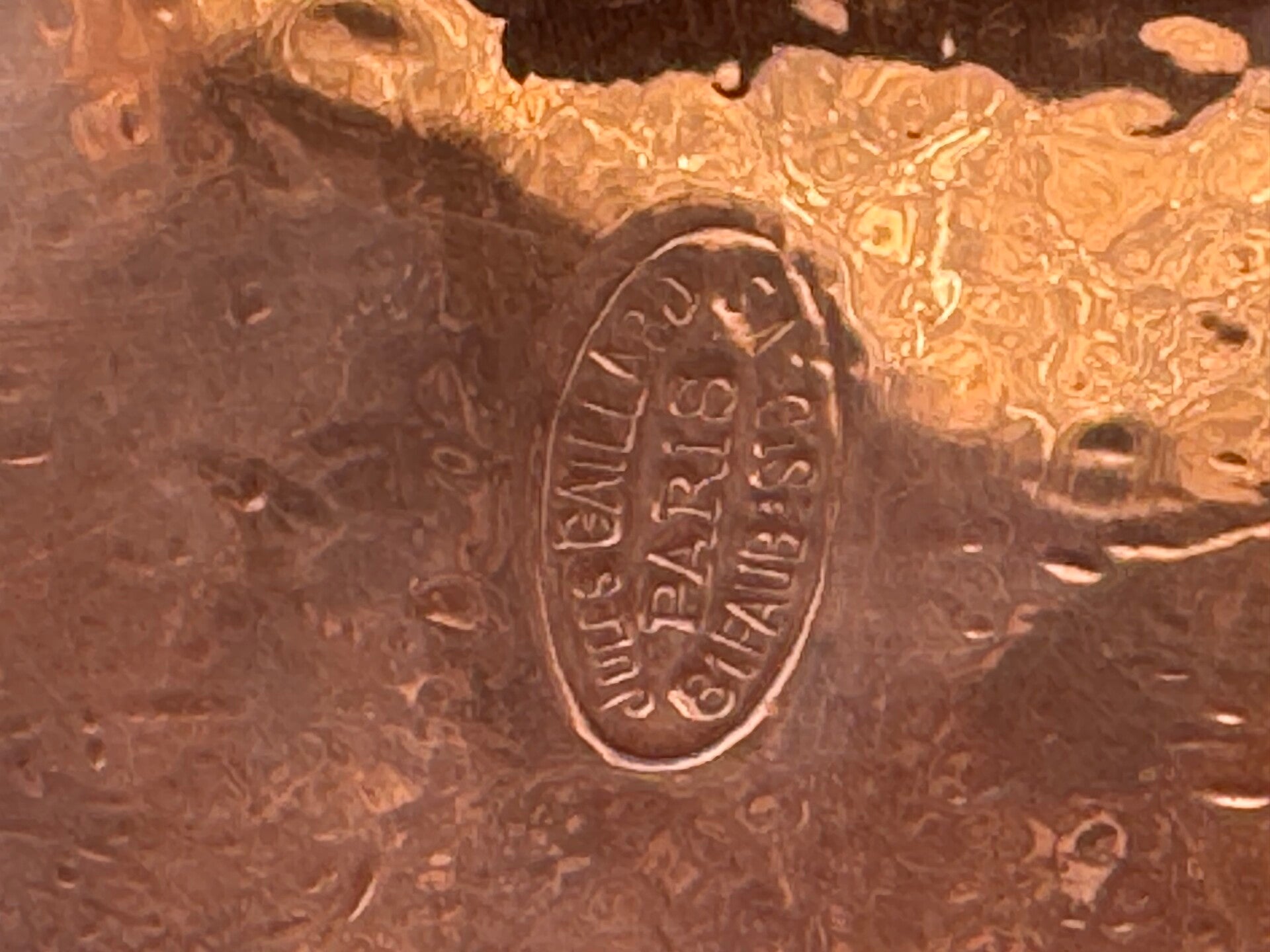
Made by the renowned Parisian coppersmith Jules Gaillard between 1918-1920 and stamped HOTEL DU PARC VICHY on the bottom. Not a show piece. A workhorse. A rare survivor from one of France's most storied grand hotels.
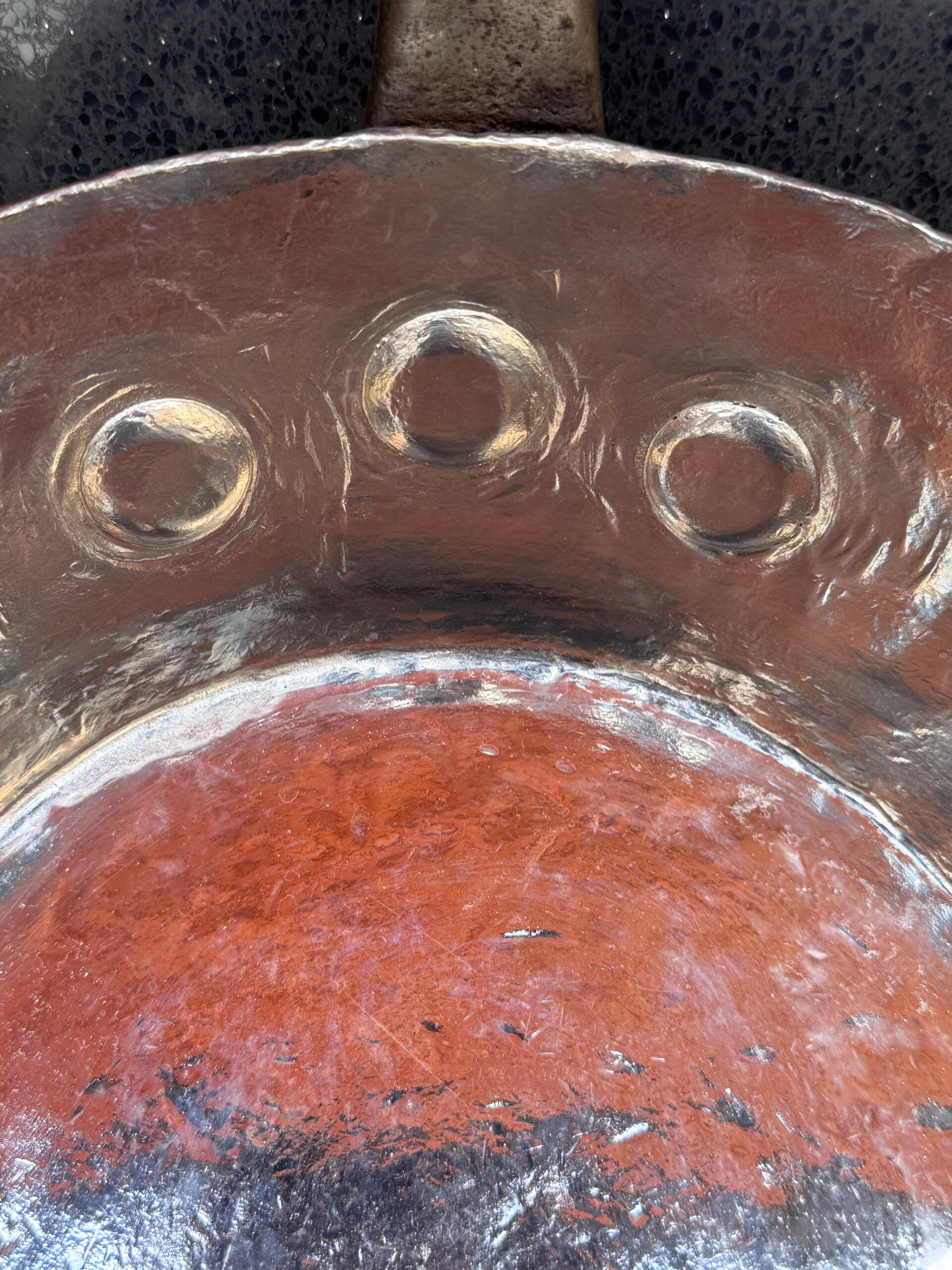
Condition: Honest and heavily used, as it should be. Thick 2.6mm copper with a beautiful patina. Wrought cast iron handle shows a historic hairline crack with an old repair at the hanging eye, stable and part of its story. Well-tinned interior ready for a new chapter or to display.
Specs:
Maker: Jules Gaillard, Paris (1918-1920 stamp)
Size: 24.5cm x 8cm
Thickness: 2.6mm
Weight: 3074g / 6.67lb
Stamps: HOTEL DU PARC VICHY + JULES GAILLARD
Handle: Wrought cast iron with historic repair
Add comment
Comments