

A rare piece of Dutch coppersmith history
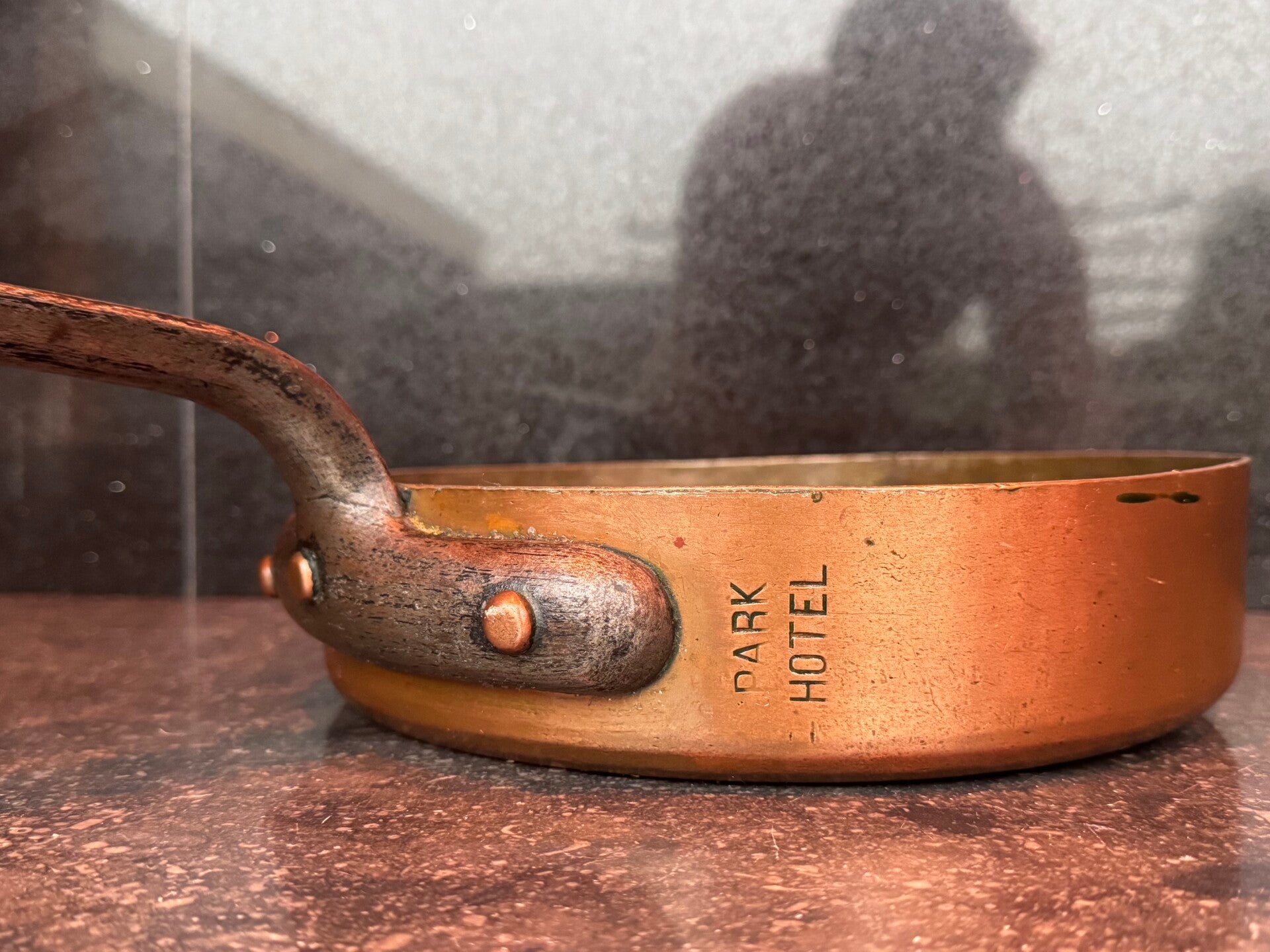
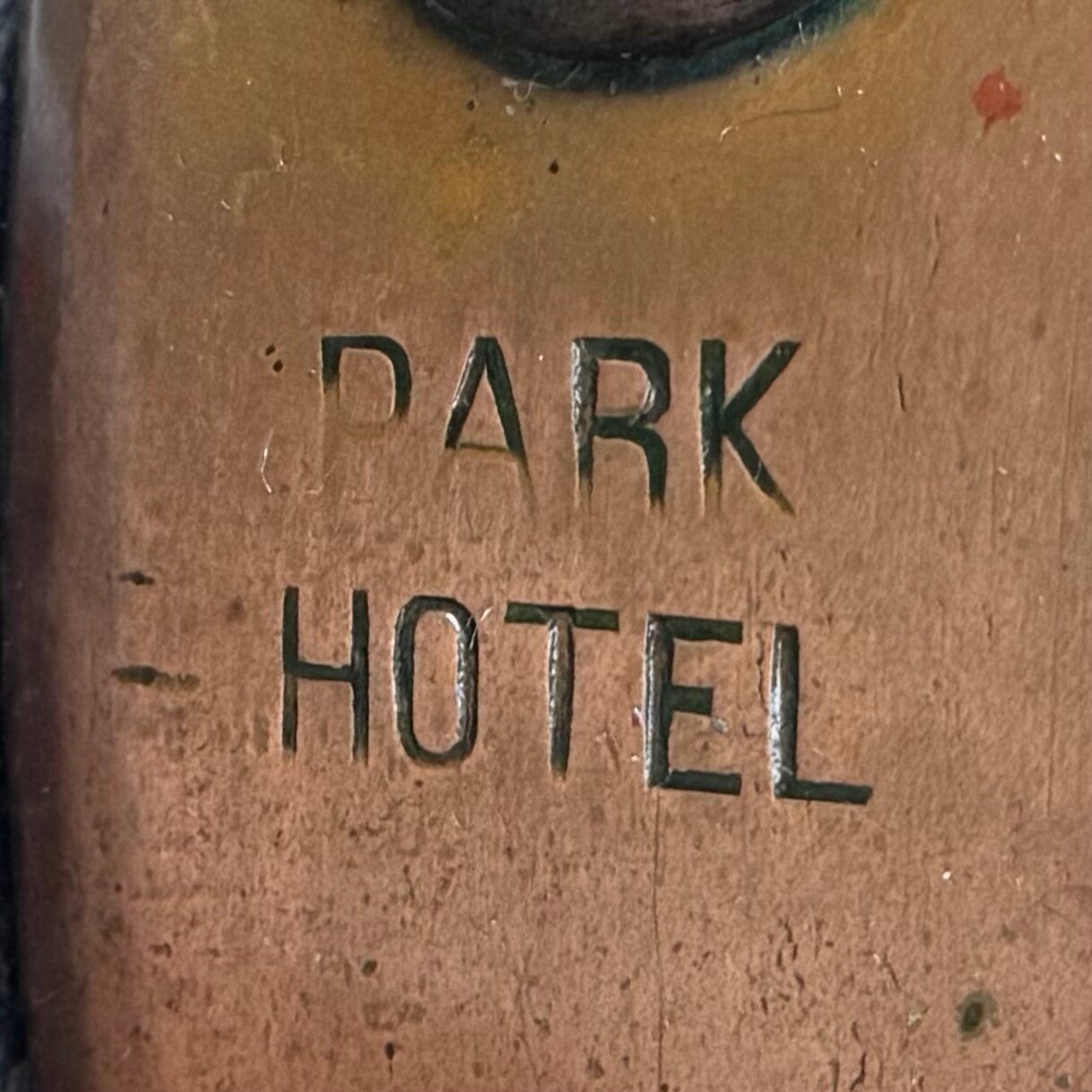
If you had asked me a week ago whether there was ever a Park Hotel in Scheveningen, I wouldn't have had the answer straight away. Then I found this pan, with a maker completely unknown to me and yes, there was. The former Parkhotel in Scheveningen was located at Parkweg 13 in Van Stolkpark, built in 1893 in Neo-Renaissance style. It was part of the expansion of Scheveningen as a seaside resort.
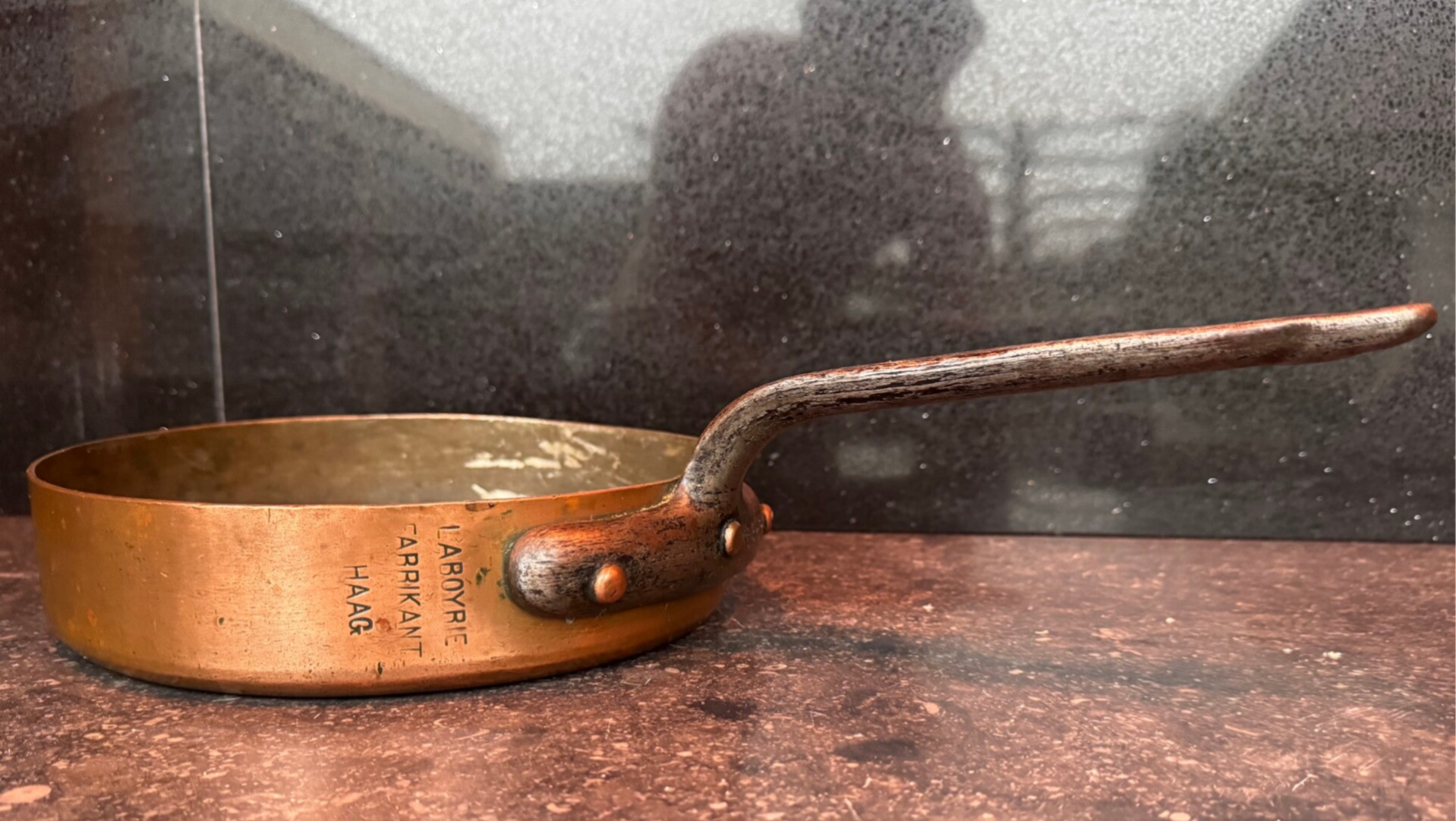
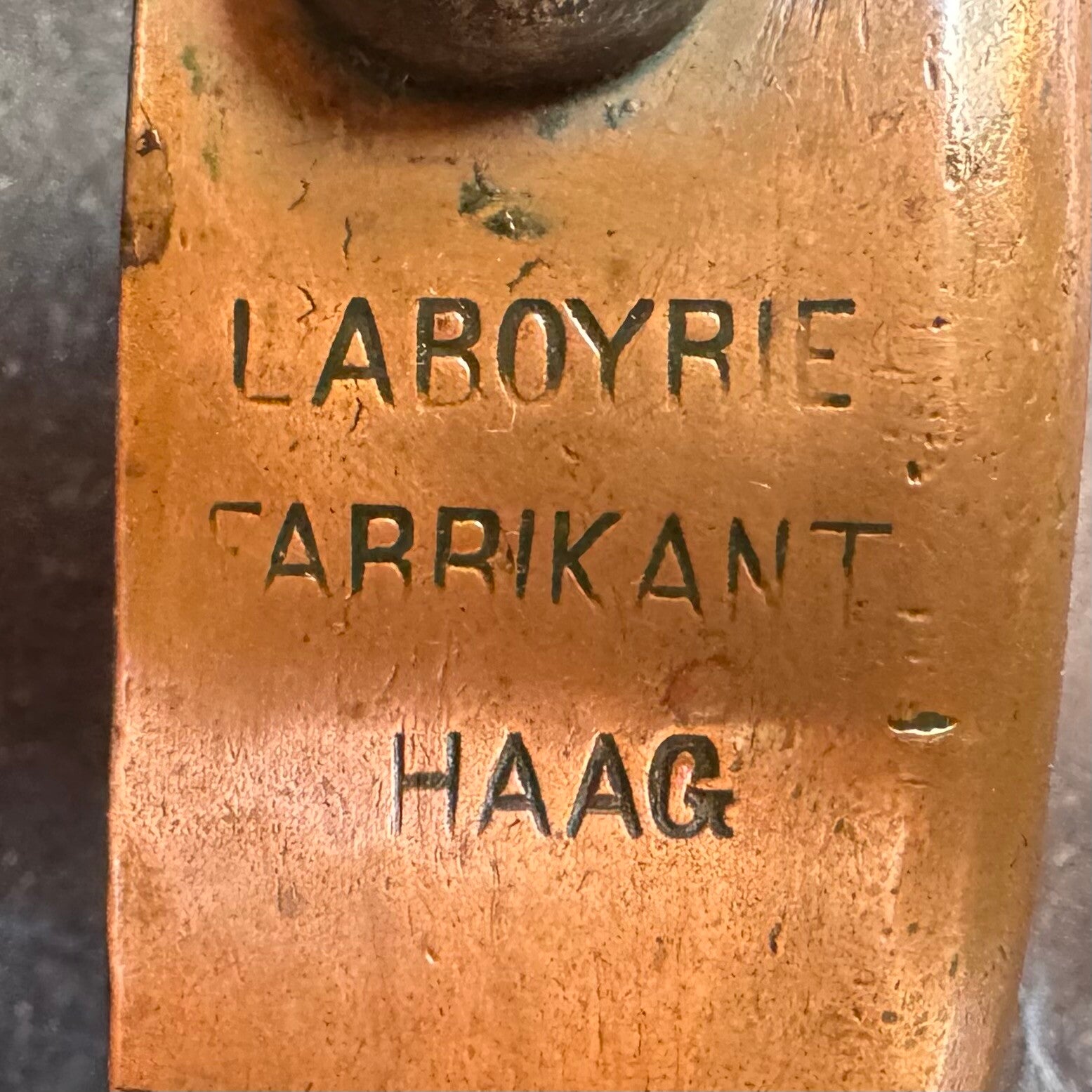
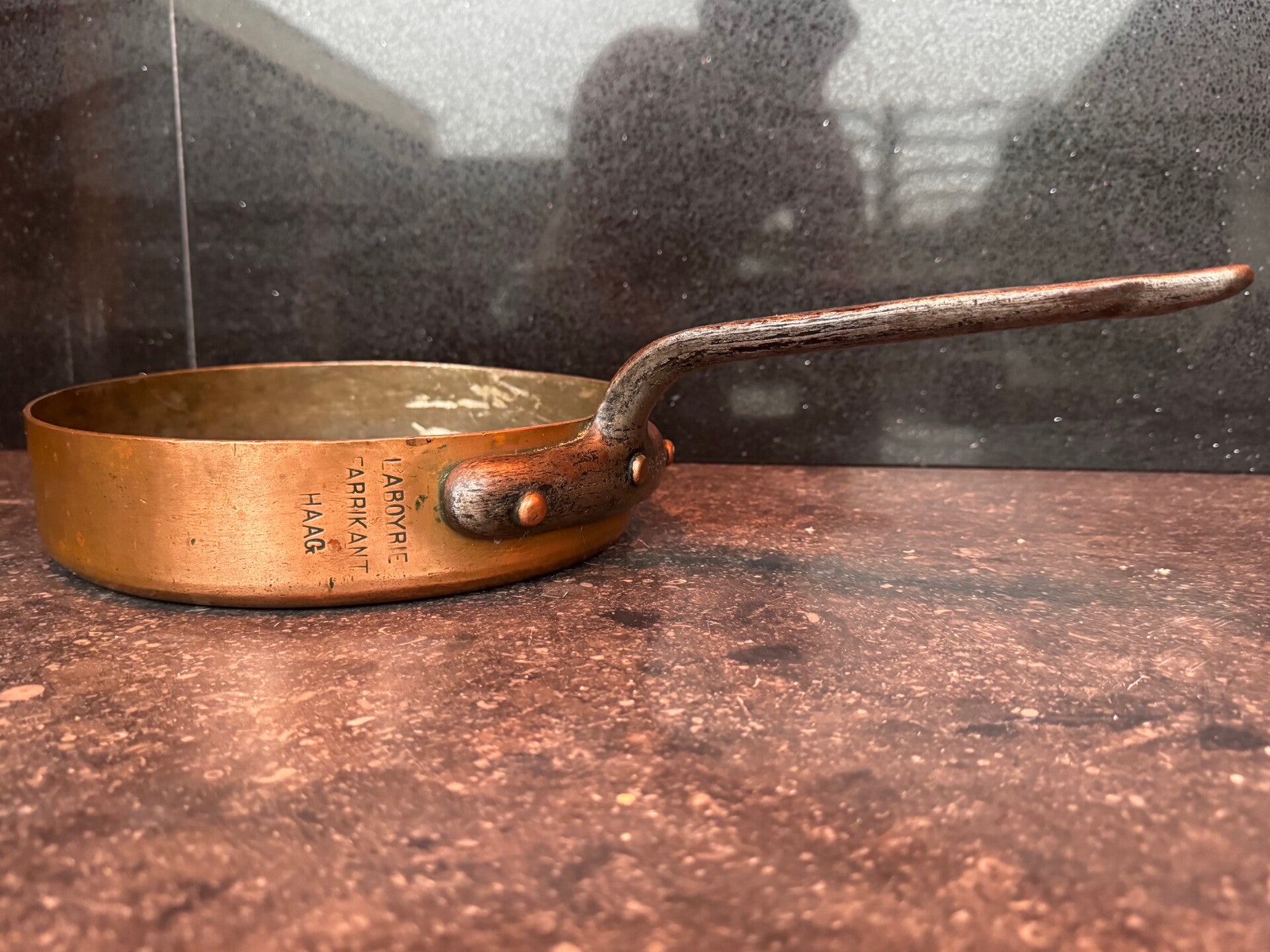
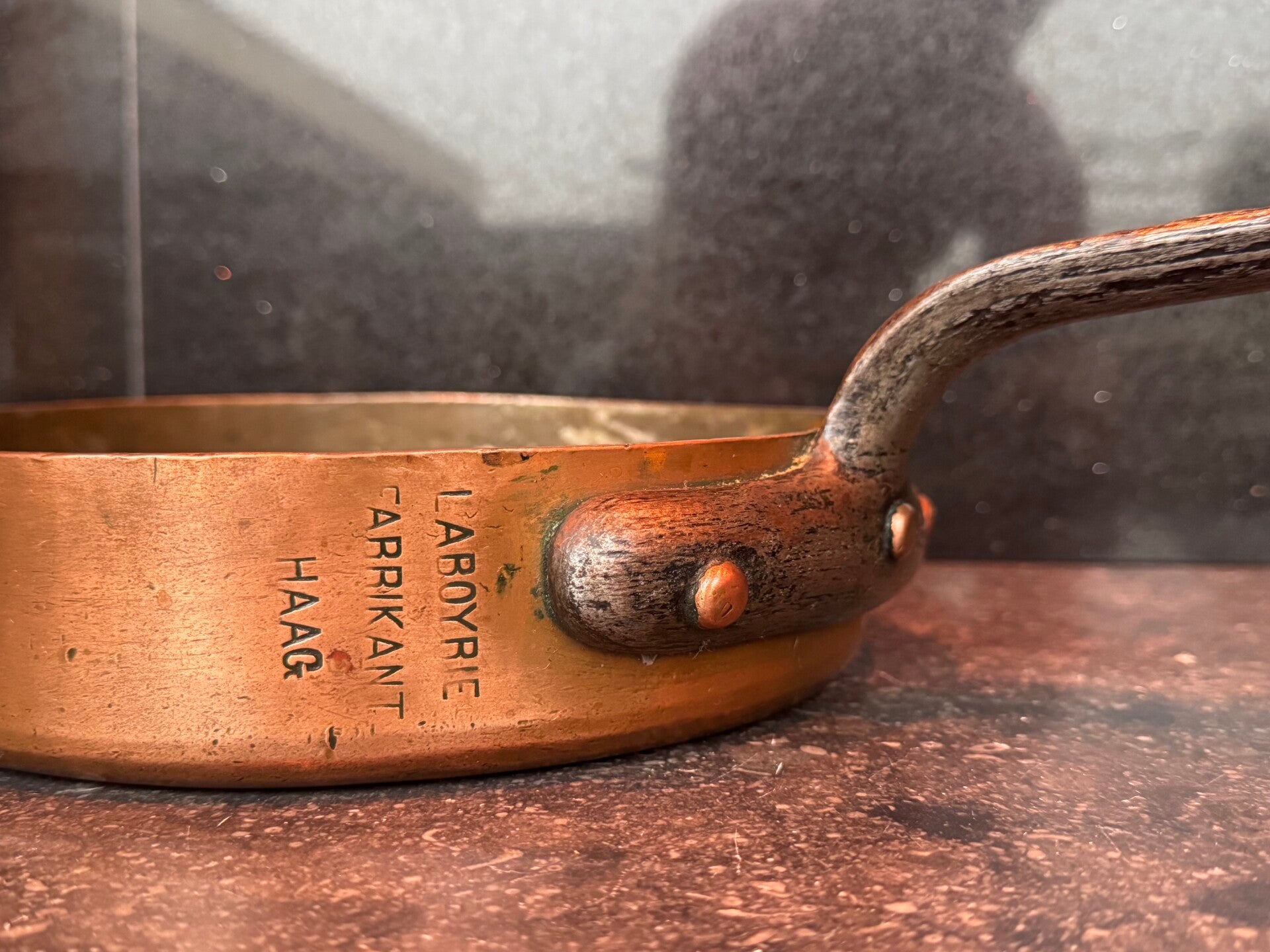
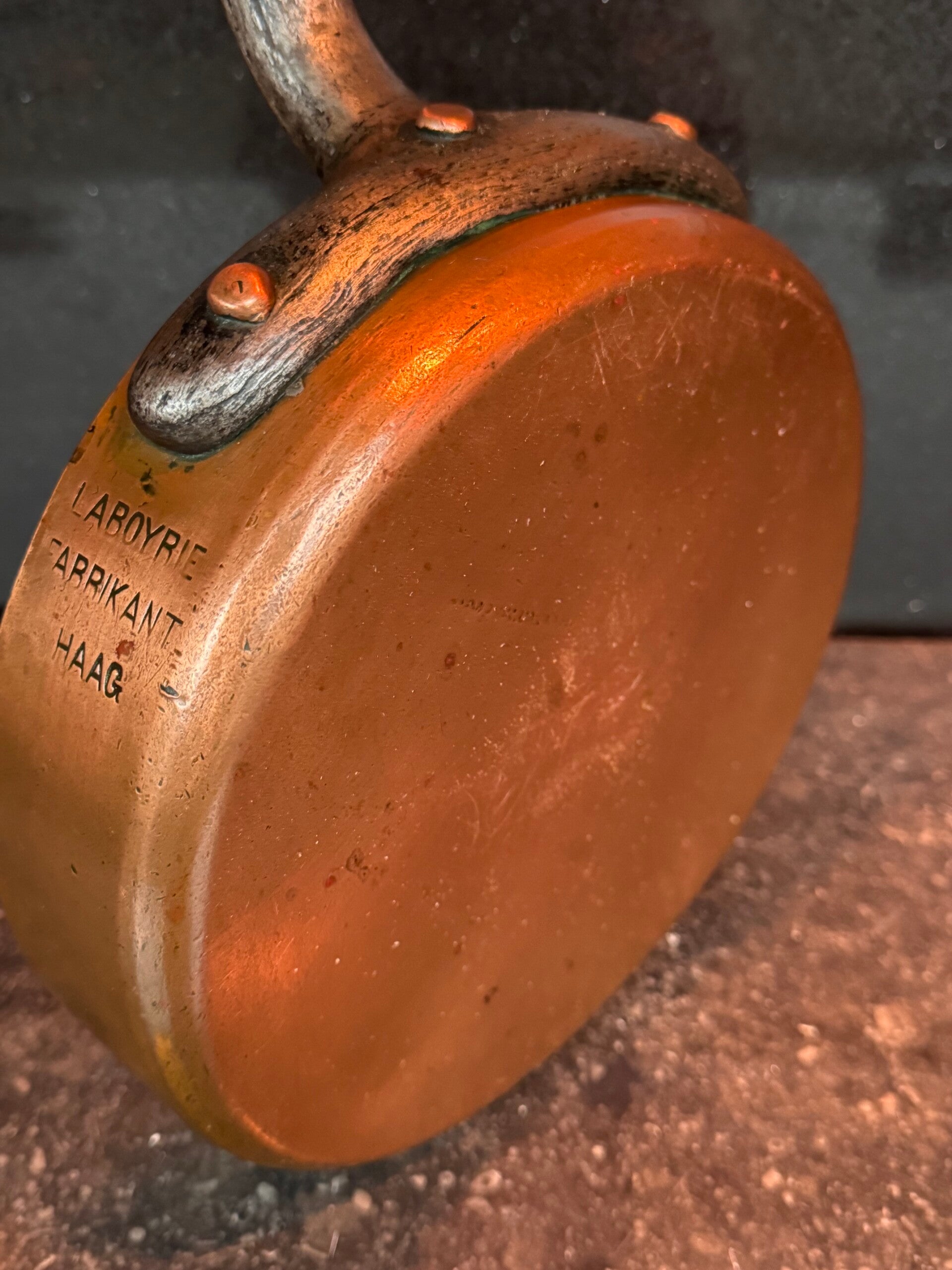
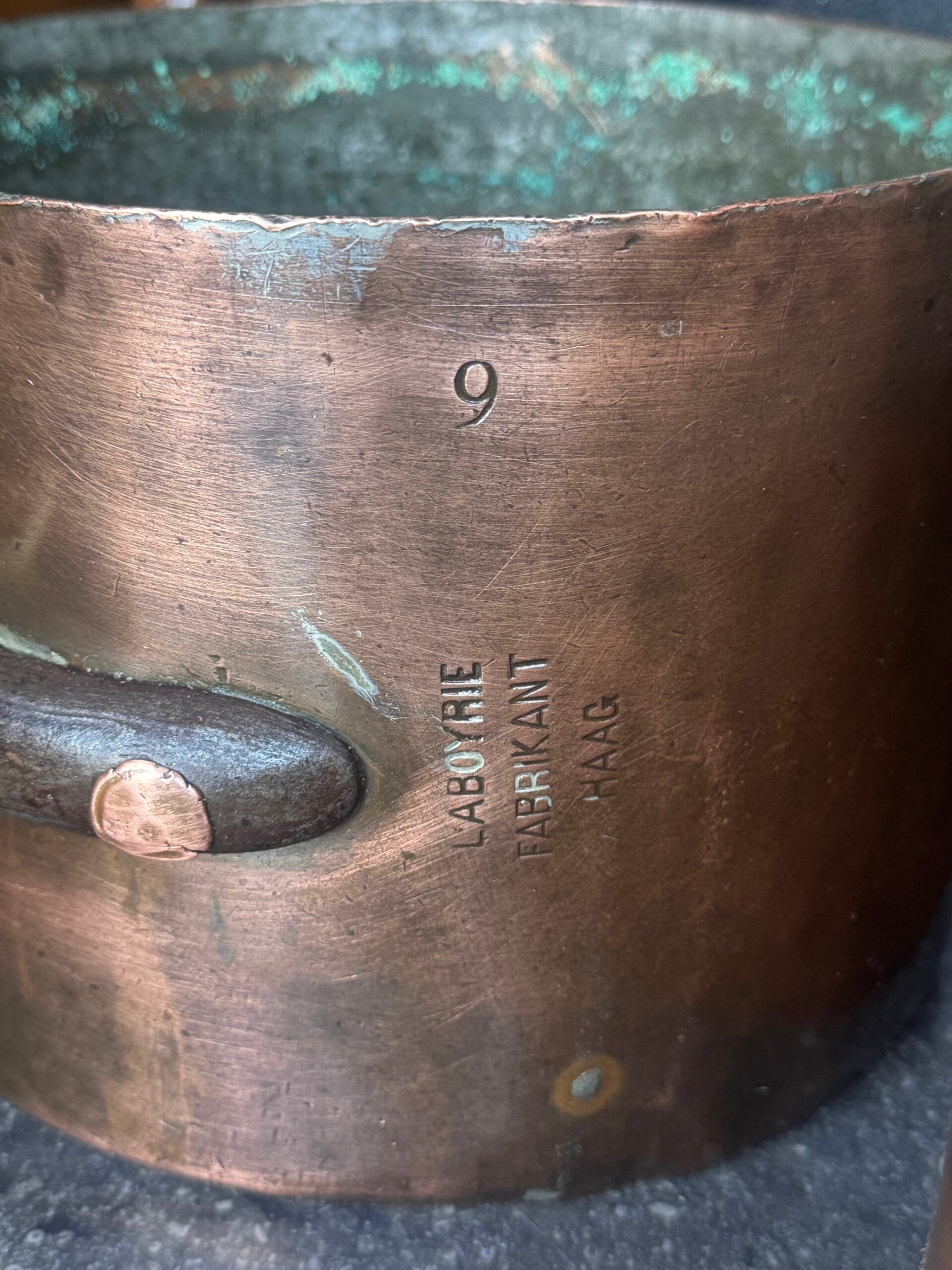
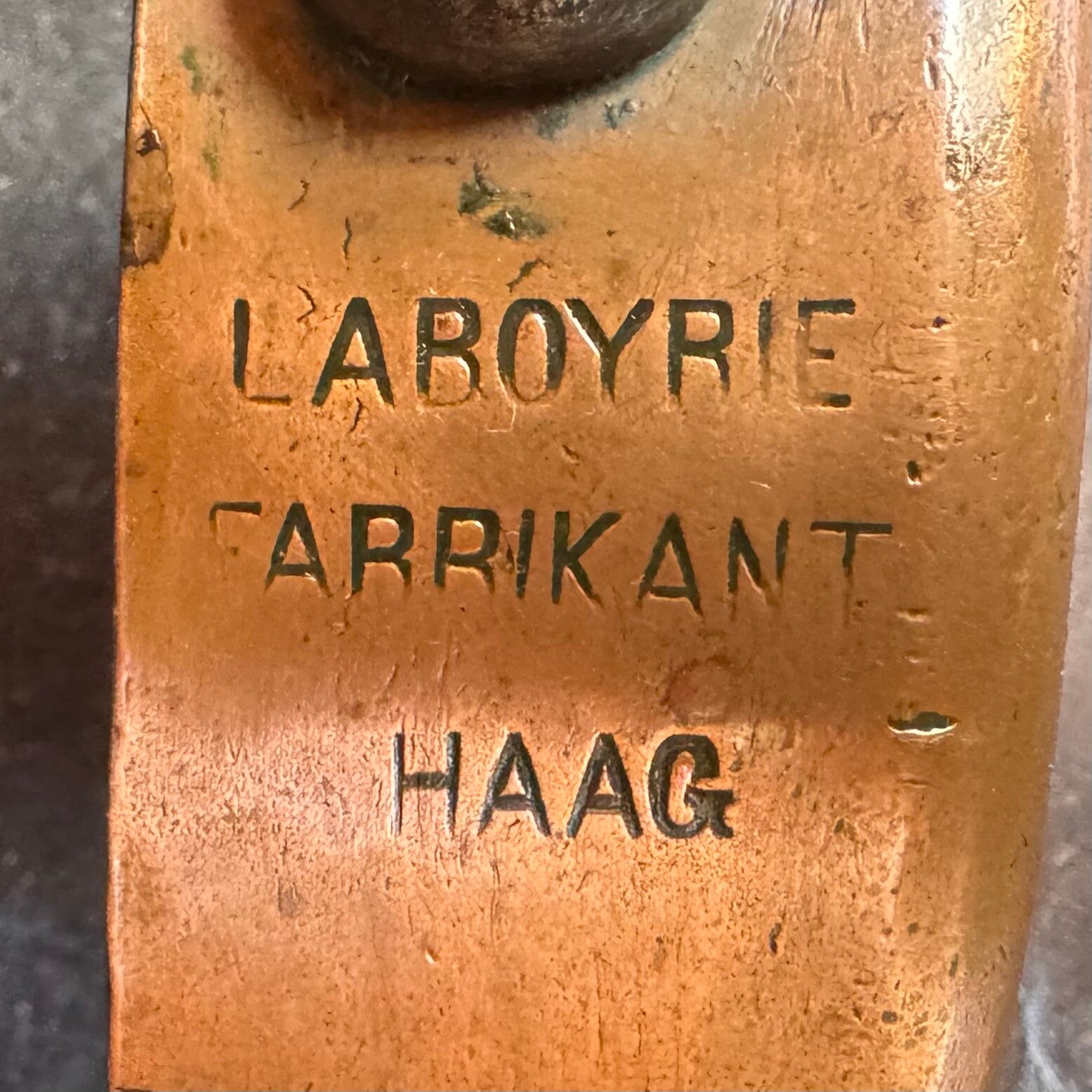
It was only after finding the stamp LABOYRIE FABRIKANT HAAG on one of the pans I recently bought that I started to research who he was. Not a French import, but made right here in the Netherlands — The Hague, to be precise.
To begin with, WHO WAS LABOYRIE?
was not one man, but a dynasty of coppersmiths. And their story does not start in The Hague. It starts 900 km south, in the mountains of Auvergne, France.
If you look deep into the genealogy, the name Laboyrie keeps coming back to one place: Escladines and Chaussenac, Cantal, France.
Jeanne Laboyrie was born around 1657 in Escladines. Louis Laboyrie was born on August 13, 1797, in Escladines. For centuries, the Auvergne was home to travelling coppersmiths — rétameurs. When there was no work in winter, they left their mountain villages with their tools on their backs and travelled across Europe to repair pots and pans.
One of those families was the Laboyries. In the family notes it is written: Three sons of Pierre Laboyrie and Jeanne Breuil from Chaussenac came via Dordrecht to The Hague.
Dordrecht was the entry port for French metalworkers in the early 1800s. From there, they moved to Rotterdam and The Hague.
Settling in The Hague
The man who really established the name in Holland is Pierre Michel Alexandre Laboyrie, born around 1785 and listed in the archives as koperslager (coppersmith) by profession. He married a Dutch woman, Barendina van der Ven, and all his children were born in The Hague.
Both his sons, Antoine Laboyrie (1810-1865), Joseph Laboyrie (1814-1888) and Henri "Hendrik" Laboyrie became coppersmiths themselves. In a single generation, the family went from French itinerant tinker to respected Hague craftsman family.
With a name like Laboyrie, many wonder about a possible Jewish origin. I have looked into that separately.
Many people ask this, but in all the birth, marriage and death records we found, there is no indication of a Jewish background. The early Laboyries from Chaussenac married in the Catholic church of Chaussenac, for example on February 16, 1775, in Chaussenac. In The Hague they married into Dutch families like Van der Ven and Van Rooij and integrated into the local guild. The dynasty is a classic Auvergne Catholic craftsman family that became Dutch.
From Atelier to Factory
The SHIE (Stichting Haags Industrieel Erfgoed) summarizes it perfectly:
1810 – Foundation of the Laboyrie coppersmith atelier
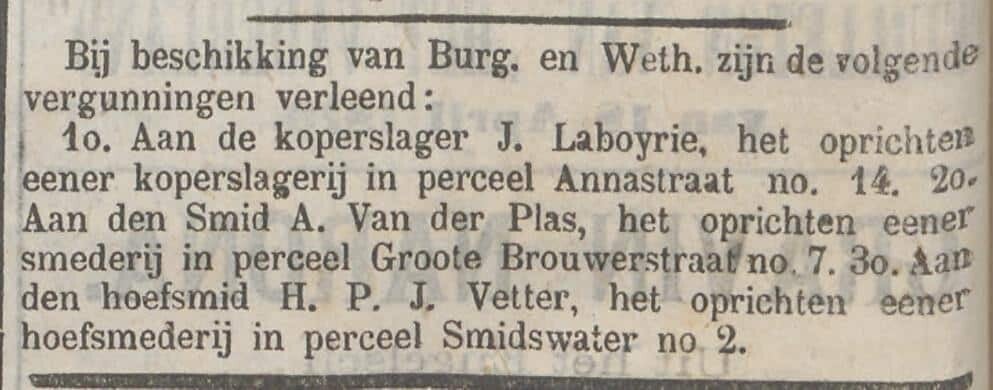
1879 – J. Laboyrie opens his own koperslagerij at Annastraat 14, The Hague
1905 – Expansion to koperslagerij and blikemballagefabriek (tin packaging factory)
1915 – The company moves to Calandplein in Laakhaven, the new industrial harbour of The Hague
Annastraat 14 was a small workshop in the city centre. By 1915, on Calandplein, it was a real factory with machines for spinning copper and making tin cans. That move tells you everything: from repairing pans for neighbours to supplying the hotels and factories of Scheveningen.
And that is exactly why your stamp says FABRIKANT HAAG. This was a factory that could supply a hotel like the Parkhotel on Parkweg 13.
Old newspaper announcements of the opening, succession and closure of the Laboyrie coppersmith workshop in The Hague
AI-generated illustration - An impression of how the coppersmith workshop of Laboyrie - Fabrikant Haag may have looked around 1905-1915 at Annastraat and later Calandplein, based on archive descriptions from that period.
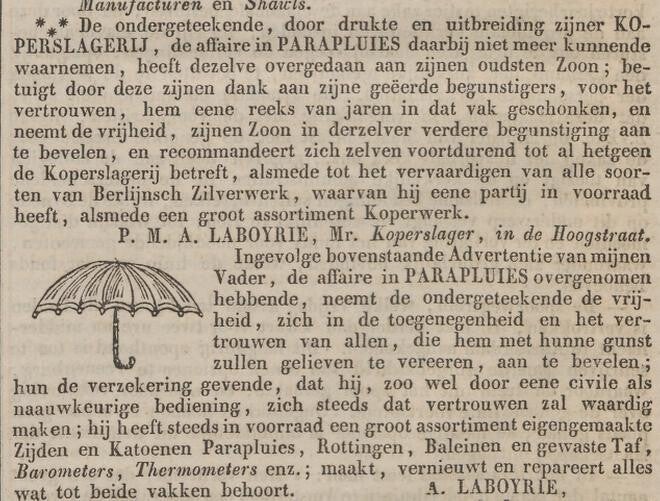
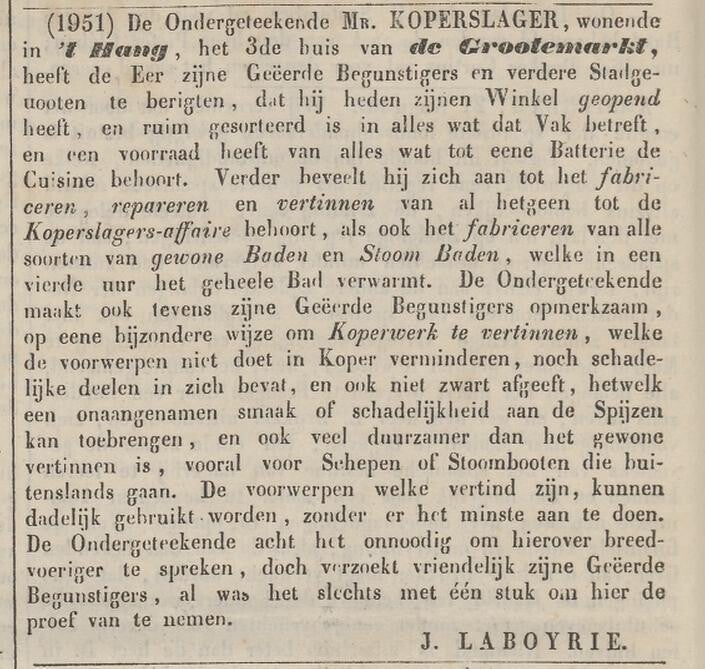
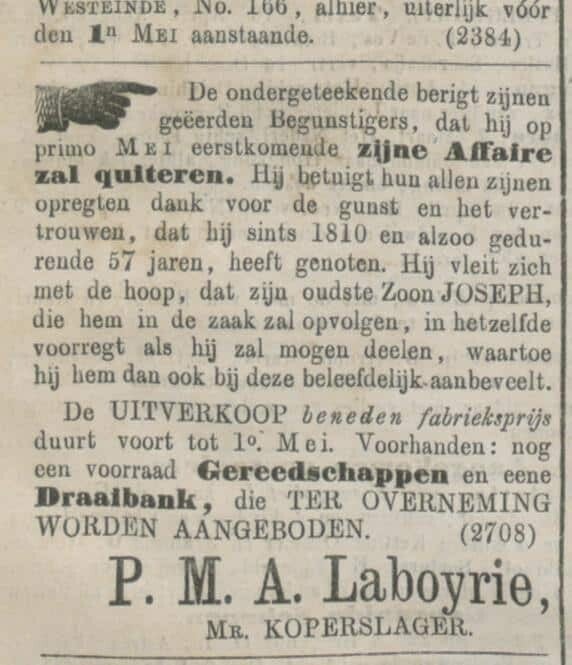
Old newspaper announcements of the opening, succession and closure of the Laboyrie coppersmith workshop in The Hague
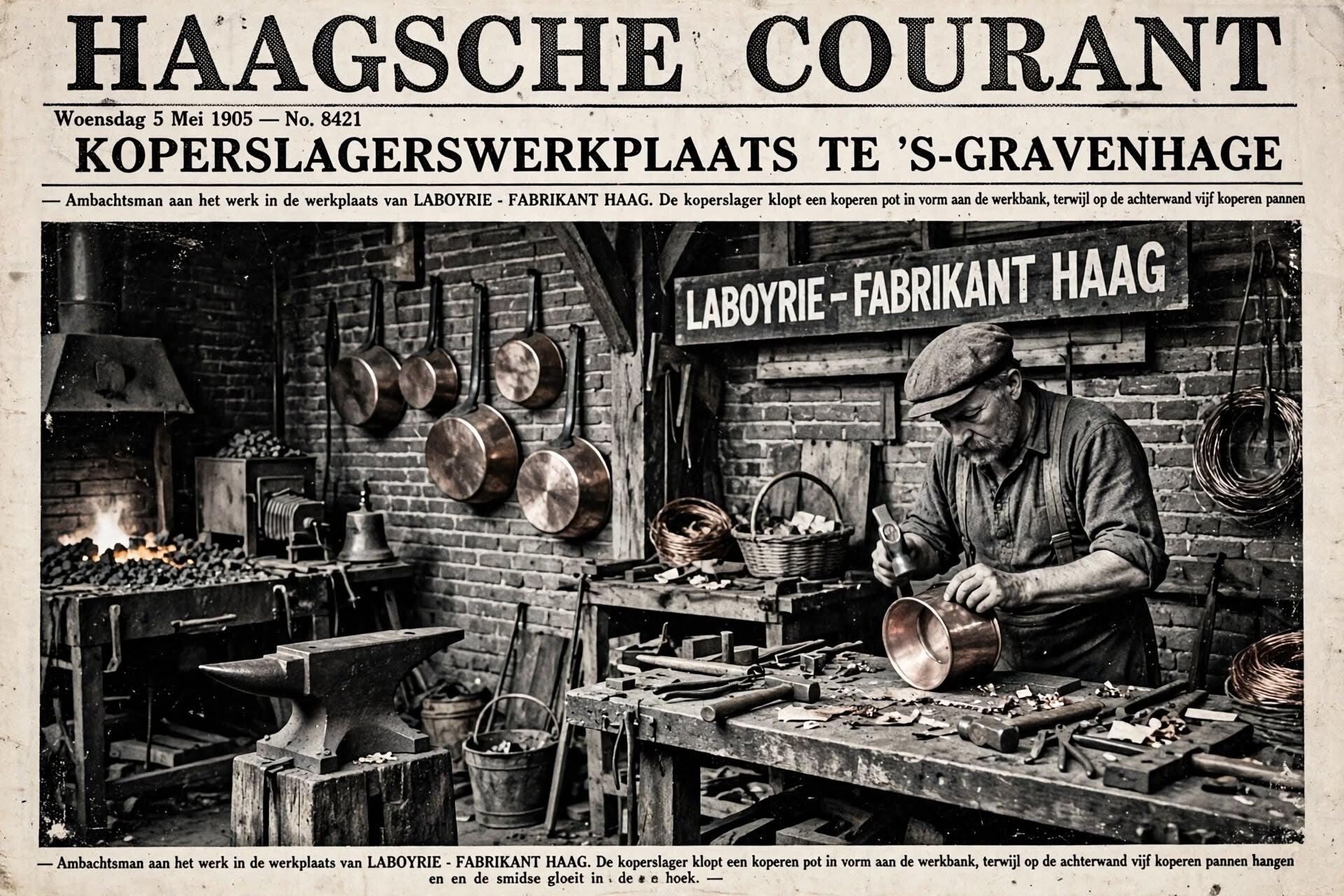
AI-generated illustration - An impression of how the coppersmith workshop of Laboyrie - Fabrikant Haag may have looked around 1905-1915 at Annastraat and later Calandplein, based on archive descriptions from that period.
THE LINK WITH SCHEVENINGEN'S PARKHOTELS
Around 1900, Scheveningen exploded as a resort. After the horse-tram connection in 1864 and the opening of the new Kurhaus in 1885, The Hague's coastline transformed from a fishing village into an international seaside resort for European nobility.
Grand hotels followed quickly: Hôtel des Galeries (1875), the Kurhaus with its huge French-style kitchens, and along the new boulevards the Parkhotel on Parkweg 13. Closer to the city centre, on Molenstraat 53, another Parkhotel opened its doors in 1912 as Hotel Pomona — today Park Centraal Den Haag —
These were not kitchens that ordered from a catalogue. French haute cuisine was the standard, and that required serious professional kitchenware. For that, they didn't go far. A few streets away at Annastraat 14, and after 1915 at Calandplein in the new industrial Laakhaven, Laboyrie had his coppersmith workshop and later tin-packaging factory.
Hotel chefs walked in and had their pans made to measure: heavy copper, thick base for even heat, iron handles that could take the punishment of a wood and coal-fired range all day long. Stamped with the hotel's name, like our Park Hotel sauteuse, and with Laboyrie's own mark — FABRIKANT HAAG — as guarantee.
For these end-users, this proximity was a huge advantage. Pans were fabricated nearby and maintenance — retinning, a new handle, fixing a dovetail — could be done quickly. No need to send heavy copper to Belgium or France and wait weeks. In a hotel kitchen that runs day and night, that local service was worth more than any catalogue.
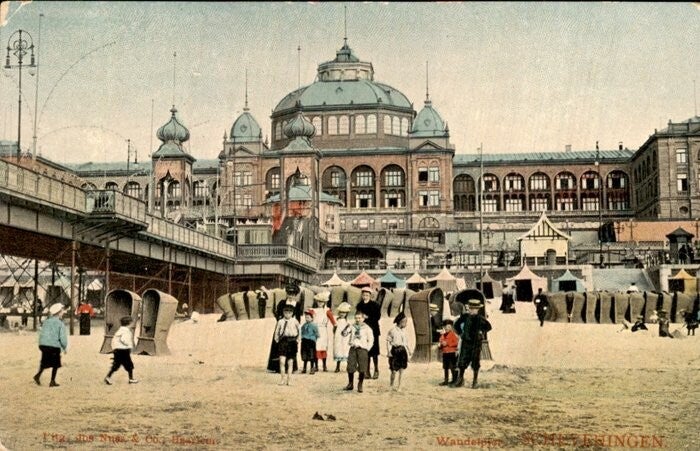
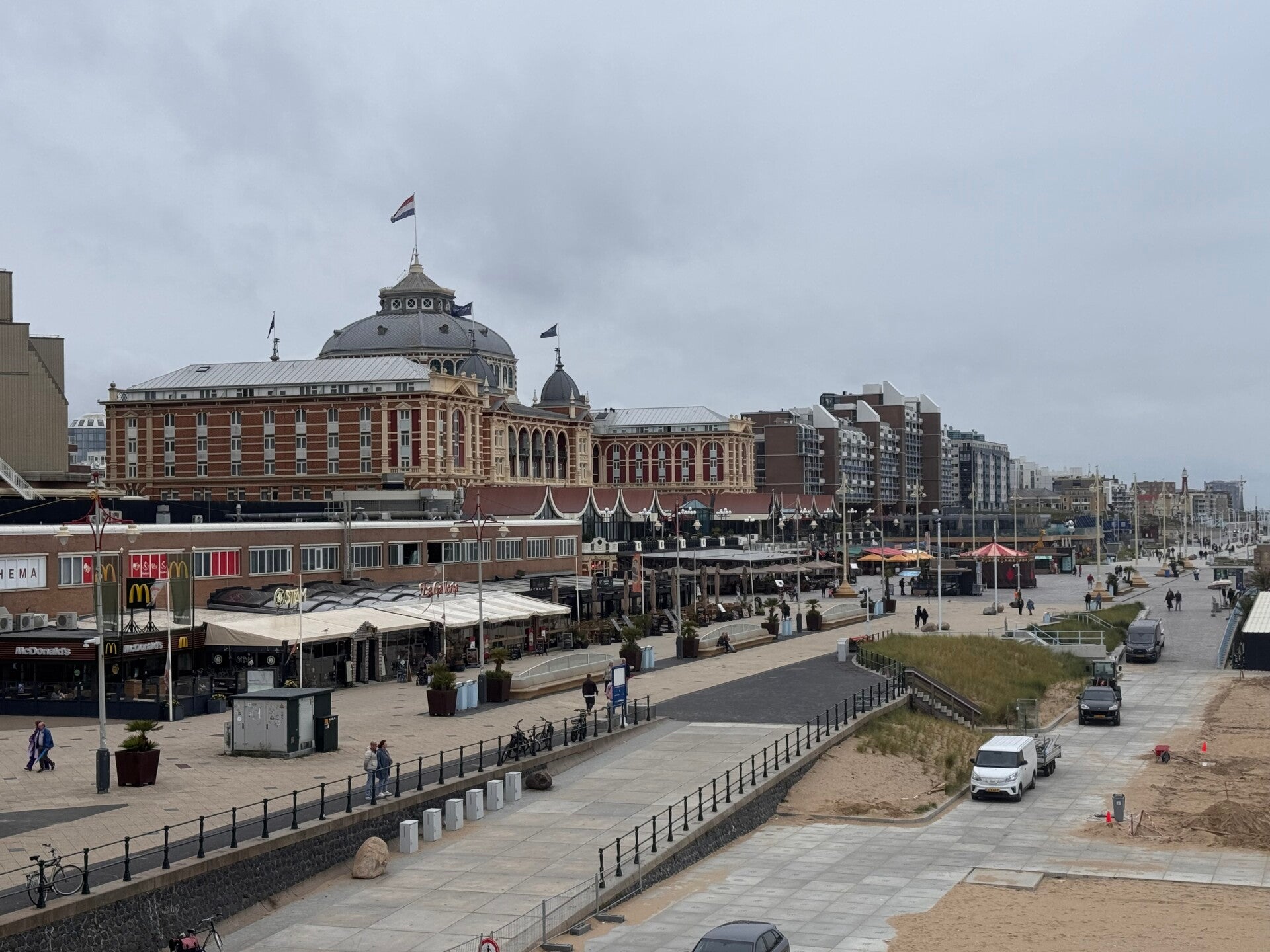
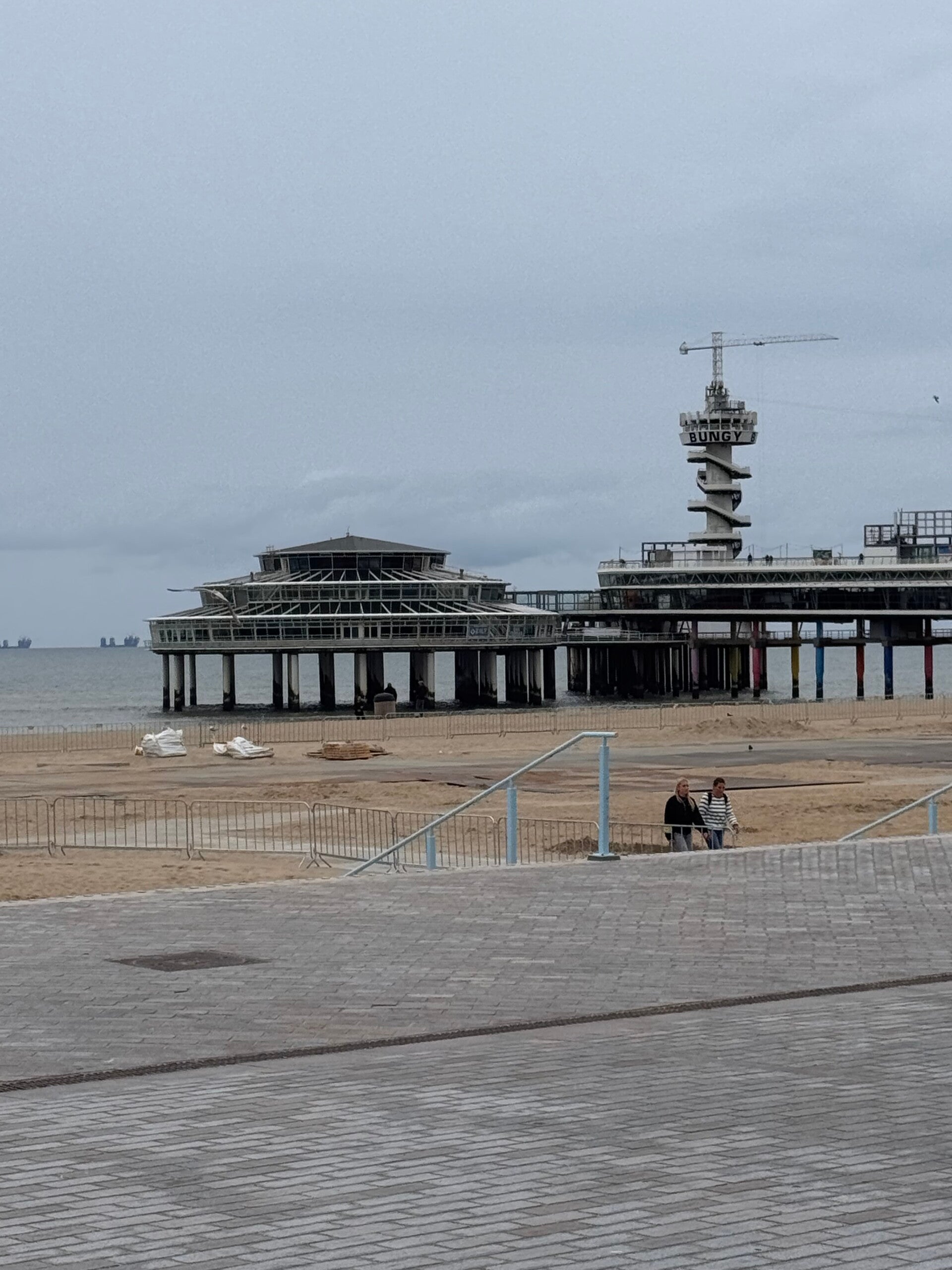
See pictures: old postcards of the Kurhaus with the first pier — the Queen Wilhelmina Pier, opened by Prince Hendrik on 6 May 1901 — and the Scheveningen boulevard circa 1904-1906.
This is the exact Belle Époque period when Laboyrie supplied his copper pans to the hotels on the boulevard.
The first cards show the new wooden pier stretching into the North Sea, with the grand hotels along Parkweg including Parkhotel Parkweg 13 lining the promenade behind it. Further inland, on Molenstraat 53, Hotel Pomona — today Park Centraal Den Haag — opened in 1912 with the same need: heavy, professional kitchenware for French haute cuisine.
Compare that to the present-day photo of the Pier: more than 120 years later it still stands, but the kitchens have changed.
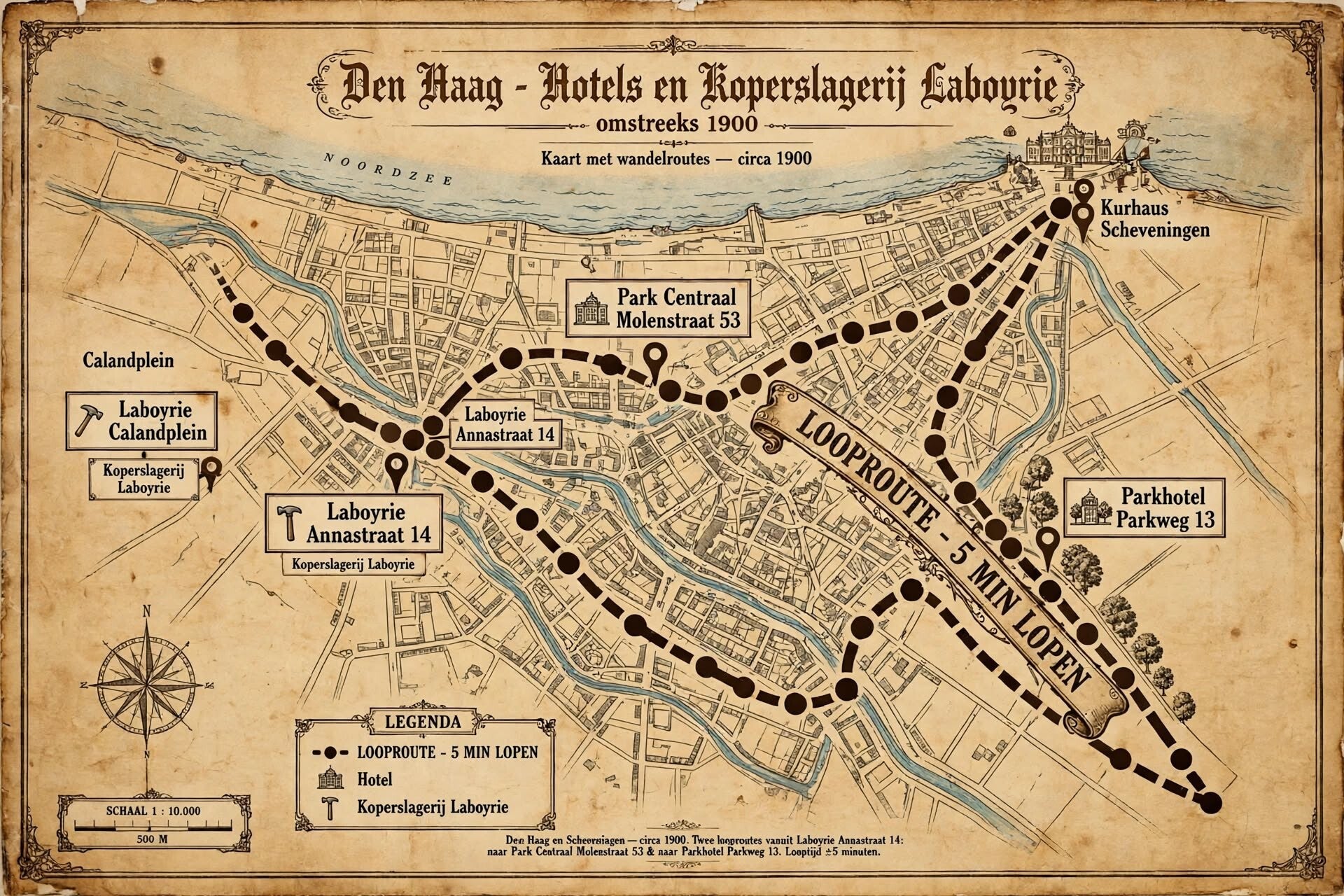
And then look at the map with the short distance between the locations. From Annastraat 14, and later Calandplein, Laboyrie's coppersmith workshop was only a 5-minute walk from Molenstraat and a short horse-tram ride from the boulevard. For the hotels this proximity was everything: pans were made to measure nearby, and maintenance like retinning or a new iron handle was done quickly, instead of sending heavy copper to Belgium or France for weeks.
The Coppersmith's Work: Laboyrie
Most hotel pans we find in the Netherlands carry Belgian stamps like Falk — still active today with stainless-lined copper pans, a modern induction copper line (Fusion) and even its own tinning department — or Verbeelen from Antwerp, the latter declared bankrupt on 19 February 2026, as well as French makers like Gaillard and Dehillerin. This one is different.
FABRIKANT HAAG means it was fabricated in The Hague. For the grand hotels and restaurants, that was a mark of quality from a local craftsman who could repair, re-tin and supply directly to the hotel kitchen.
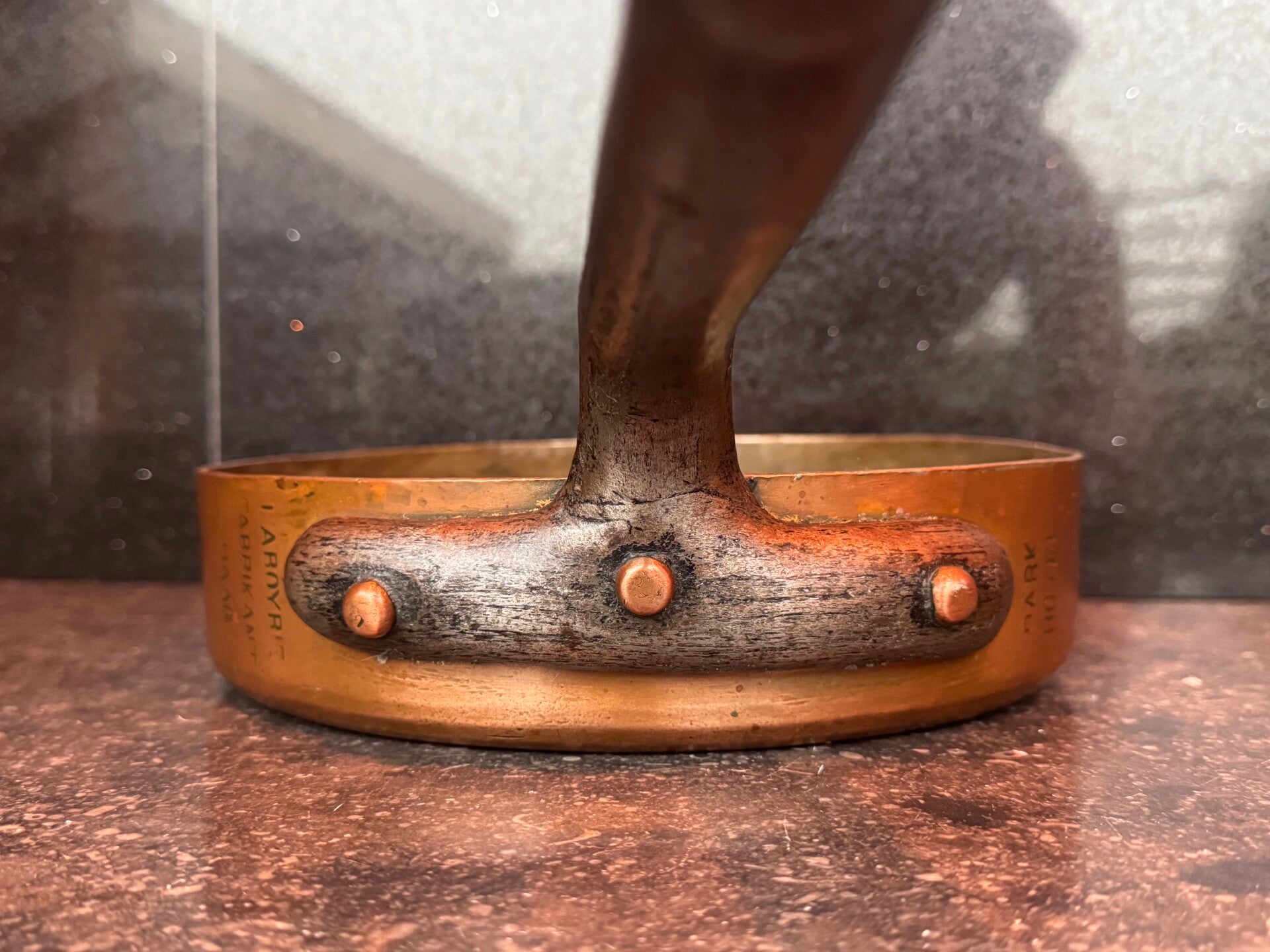
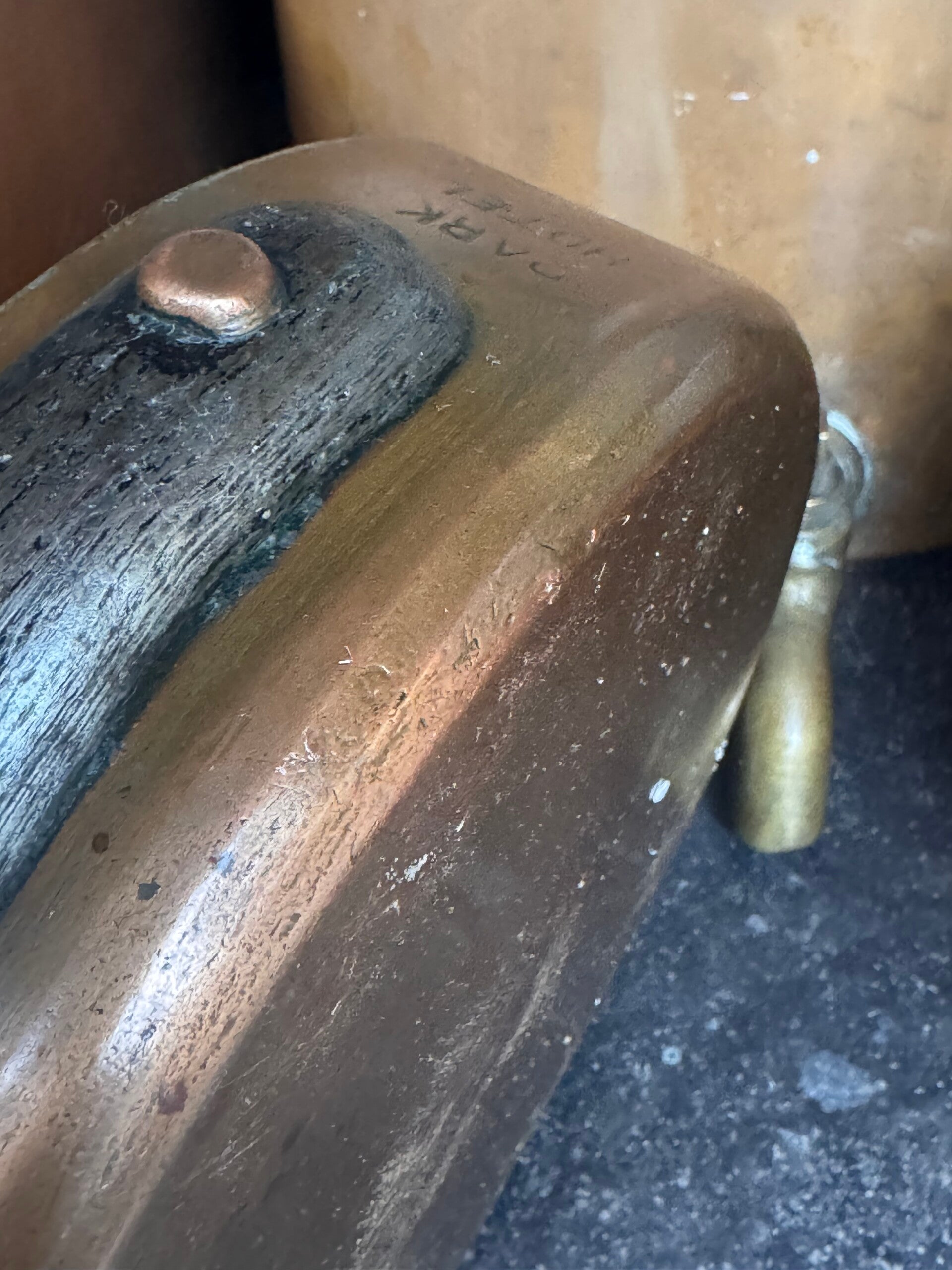
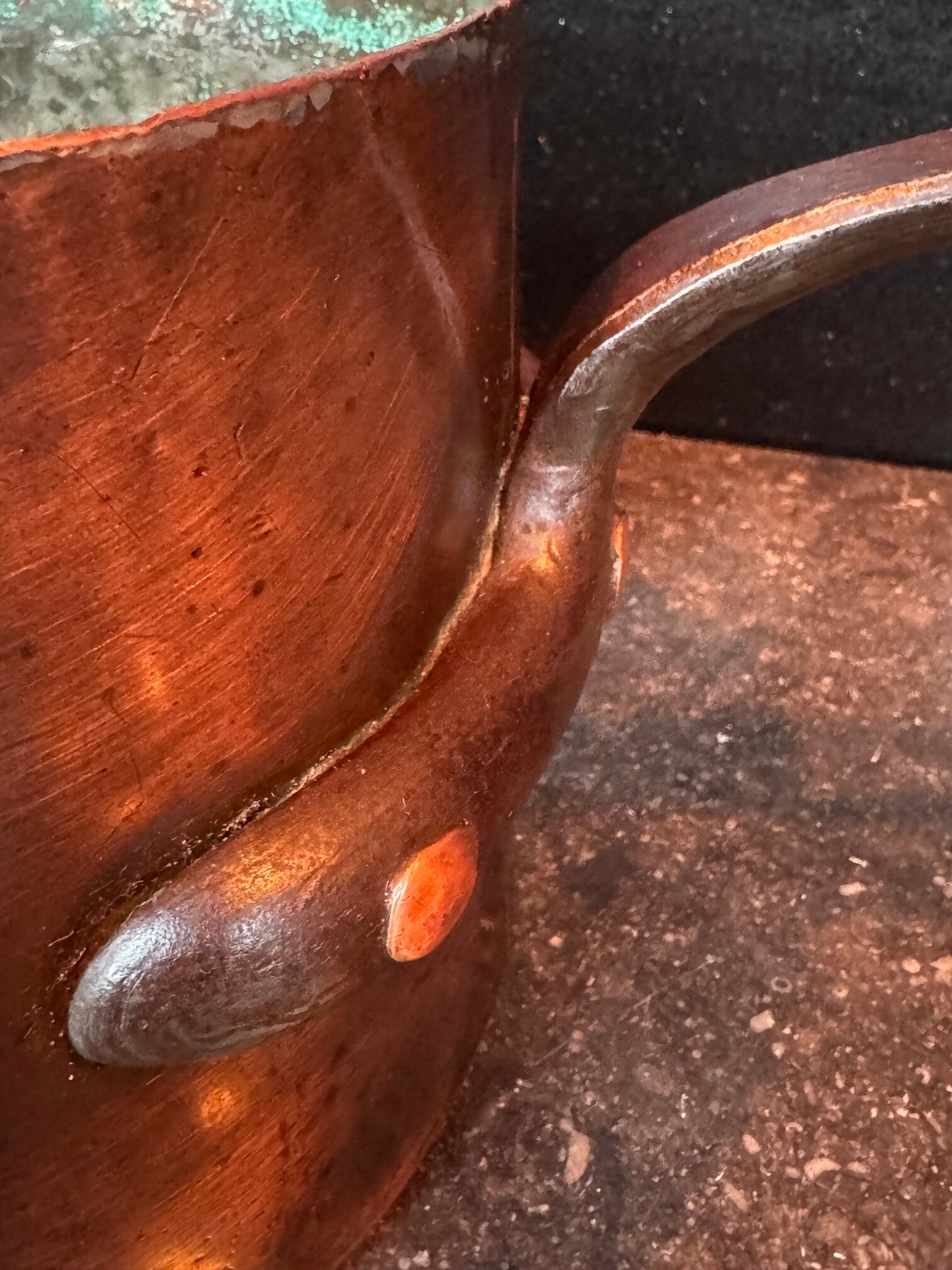
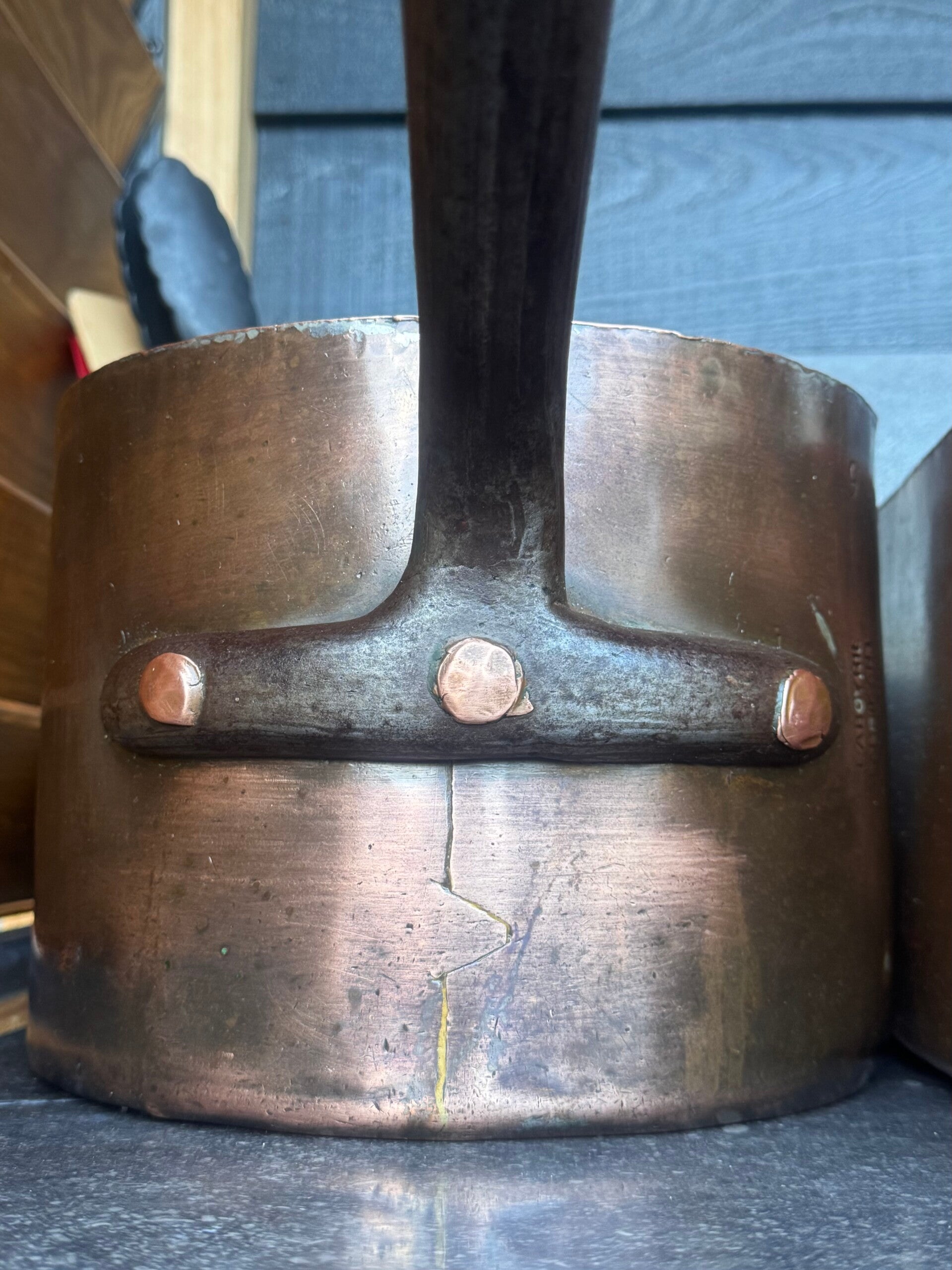
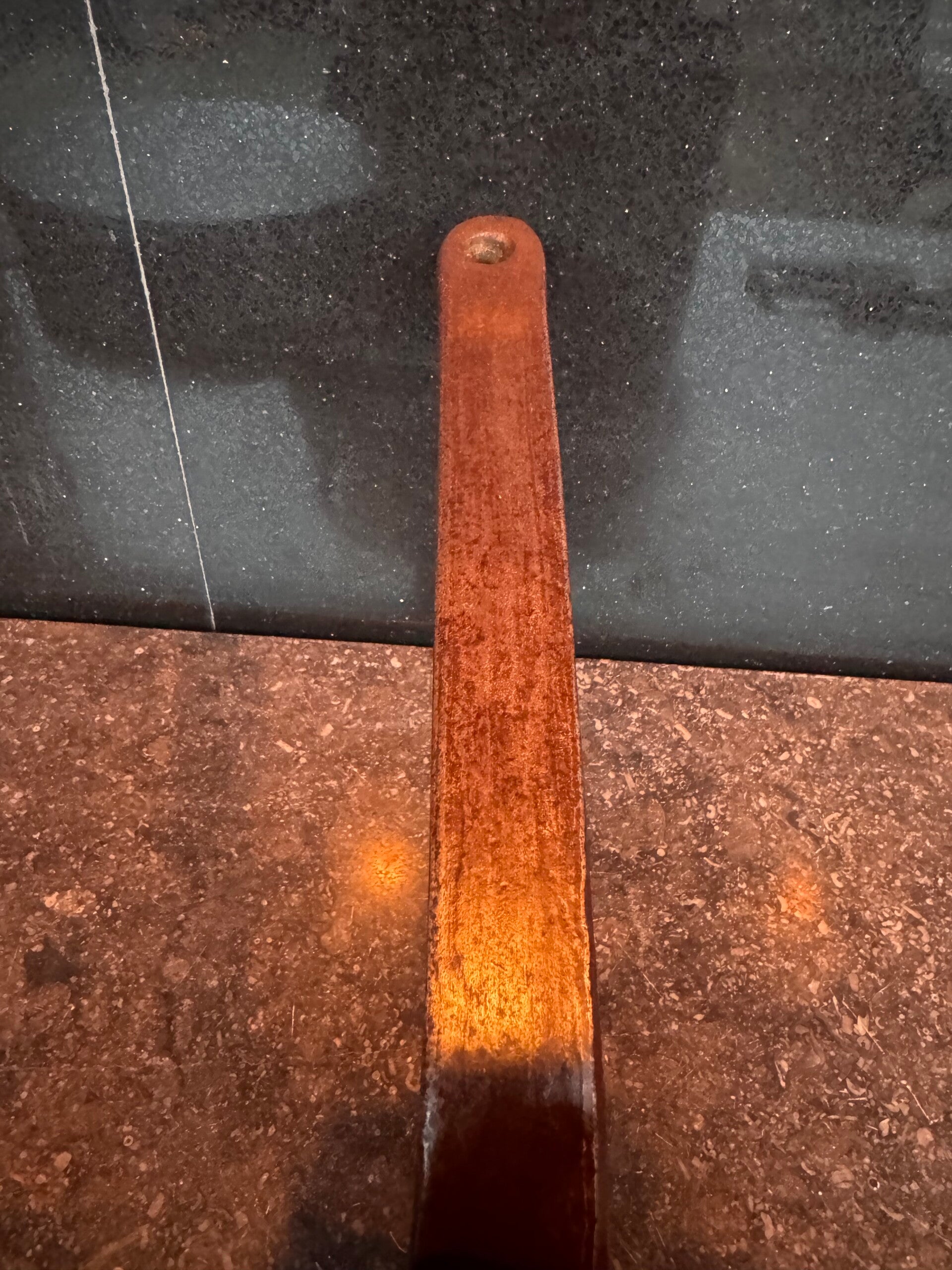
These two pans below in the pictures both bear the Laboyrie stamp, and the small sauteuse additionally carries the Park Hotel stamp.
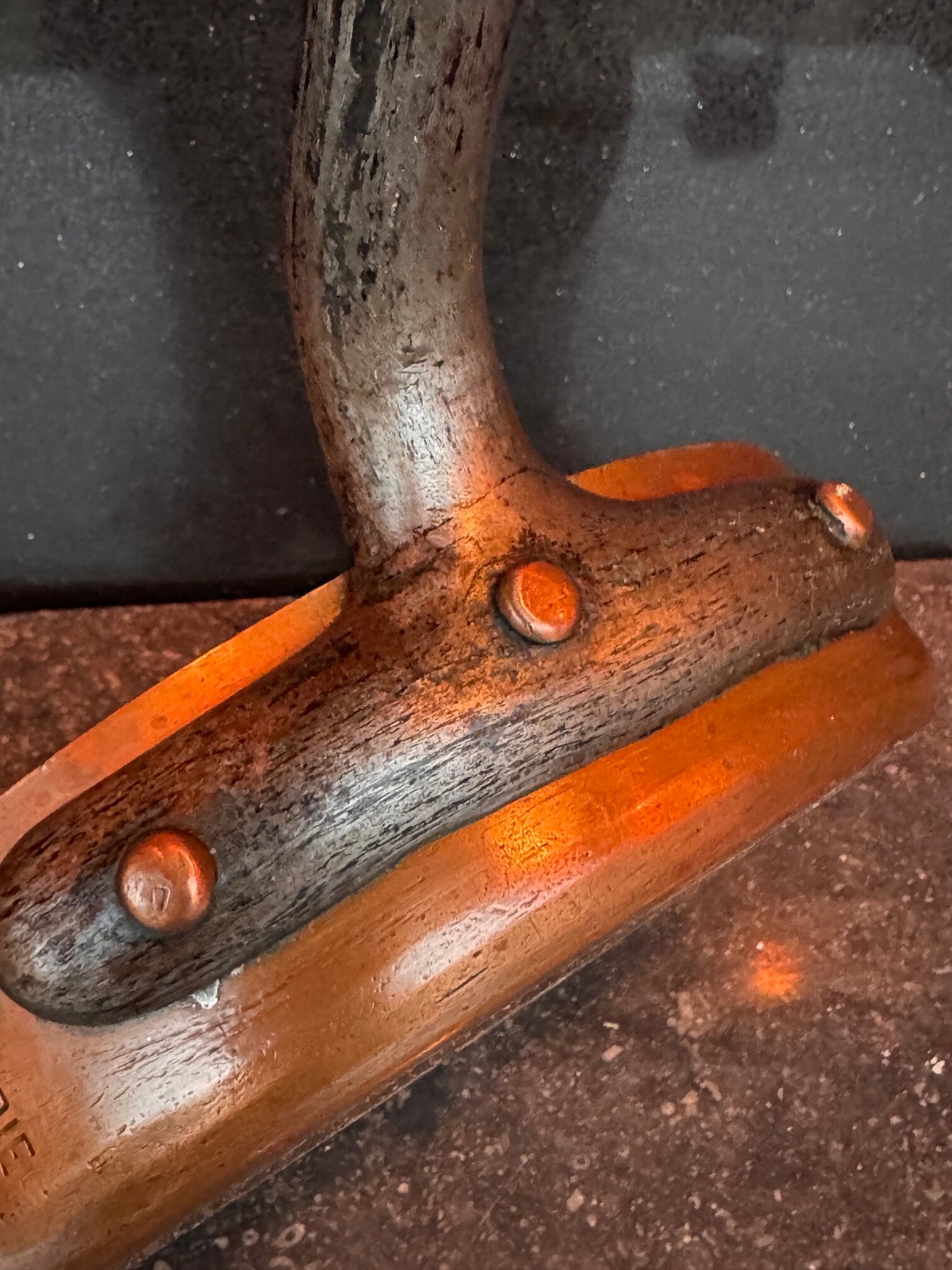
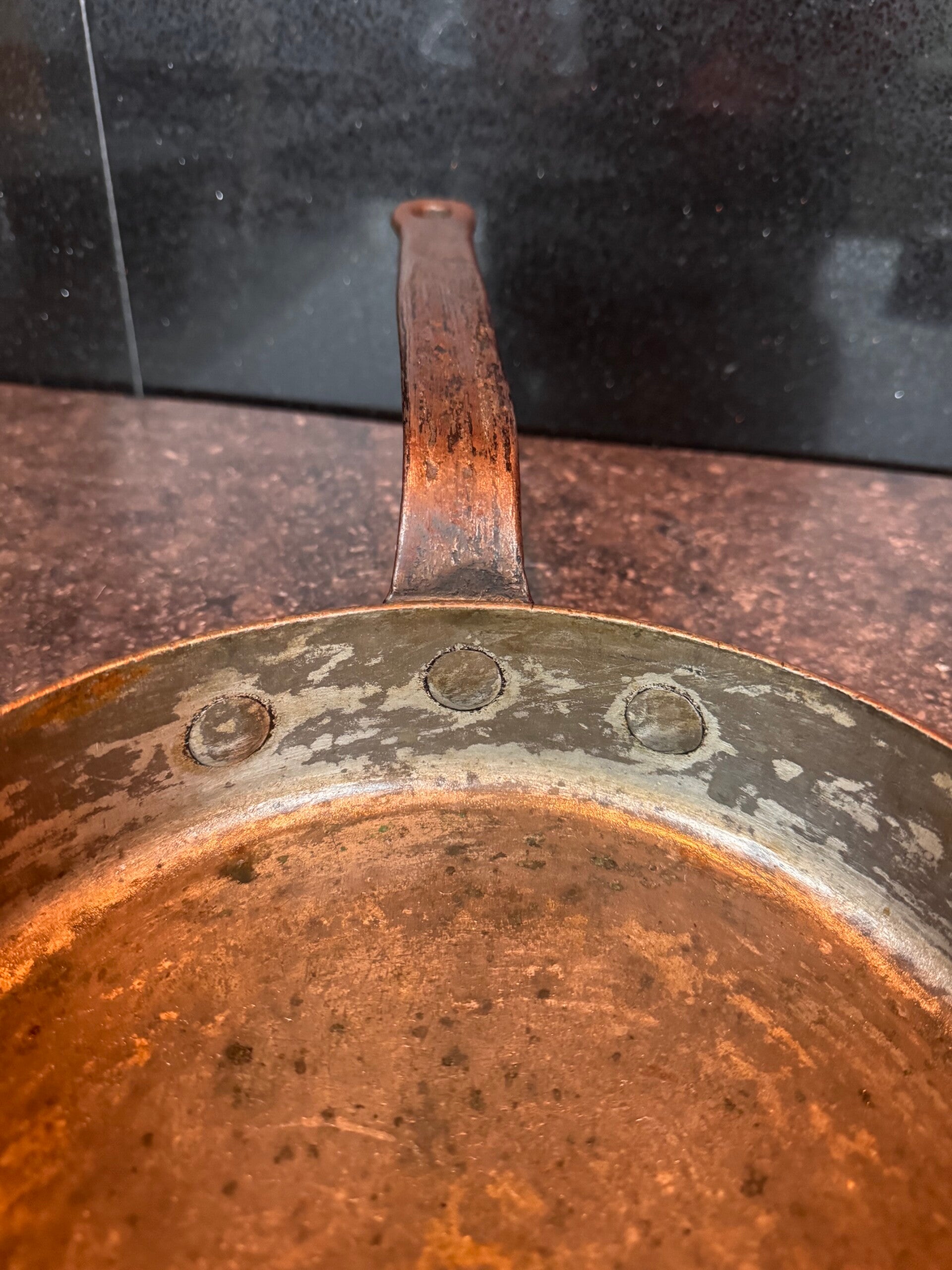
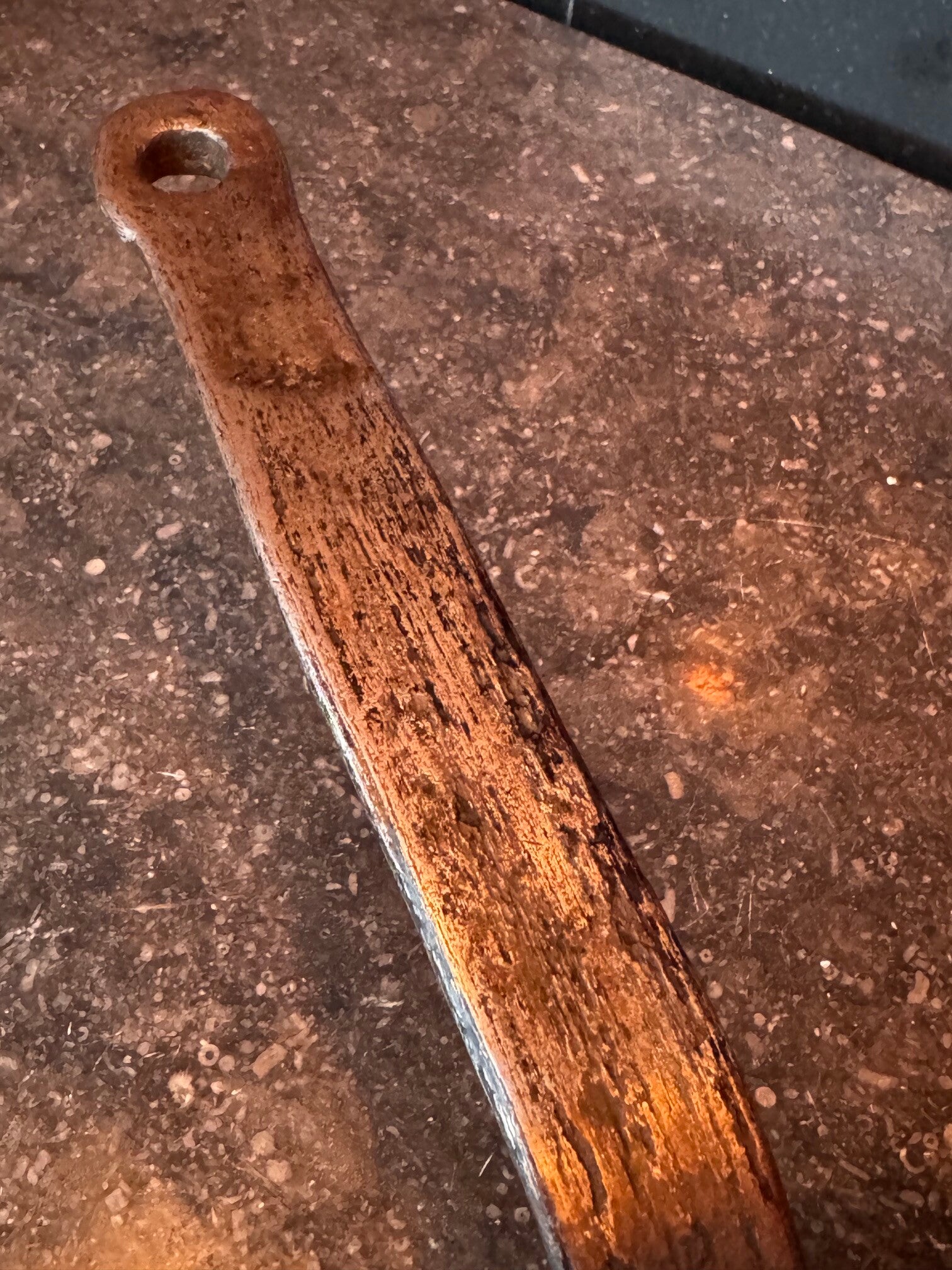
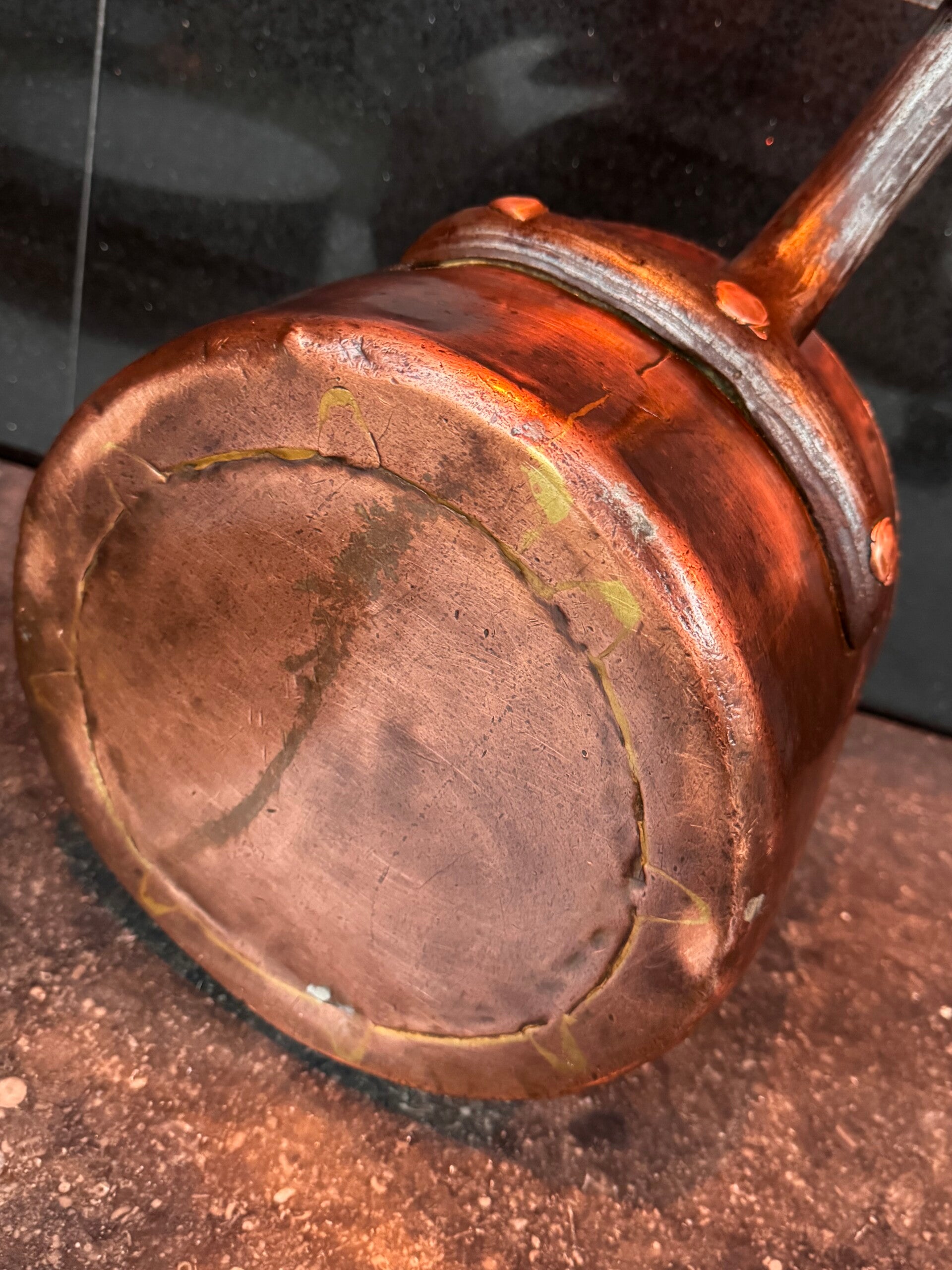
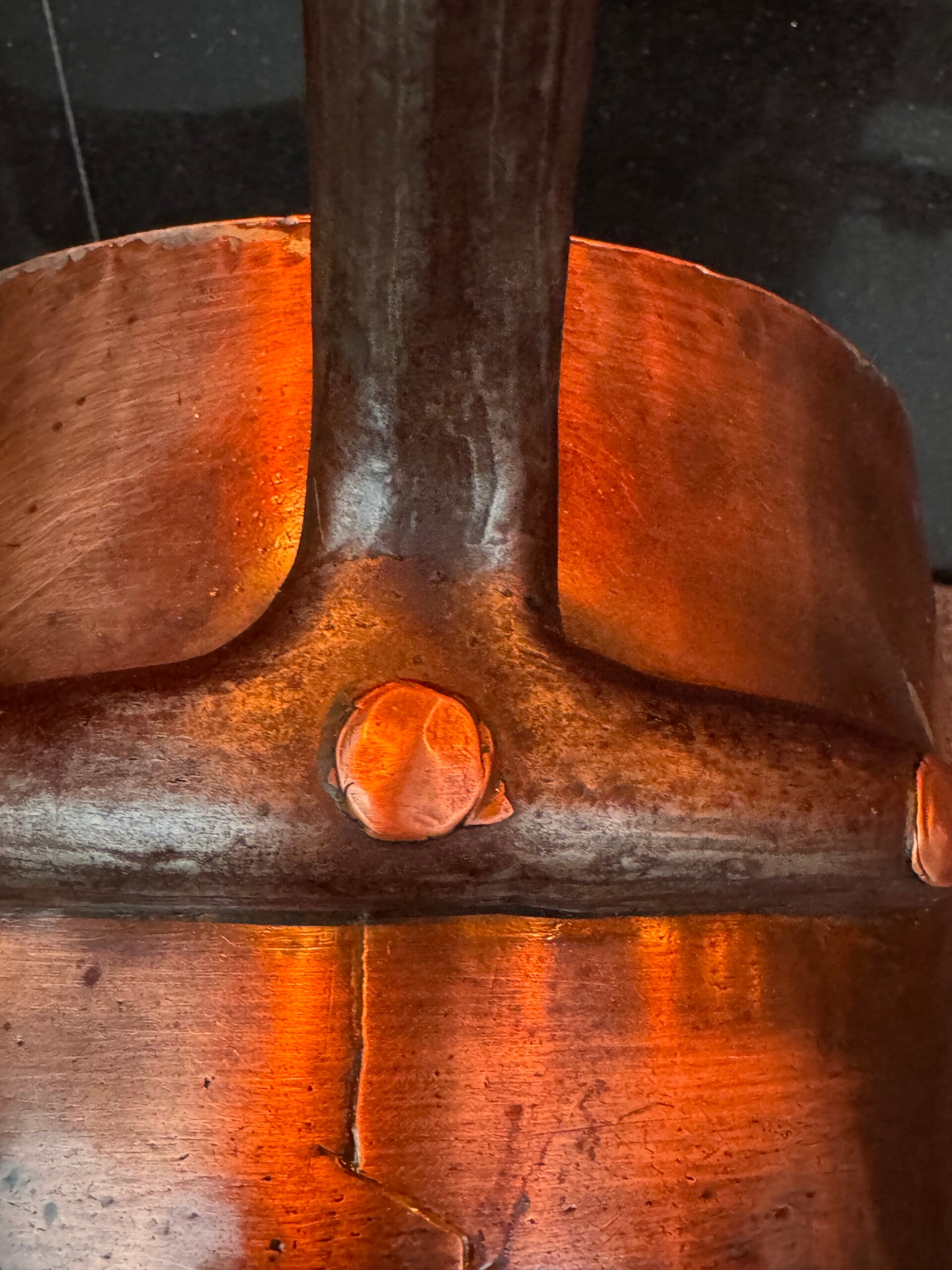
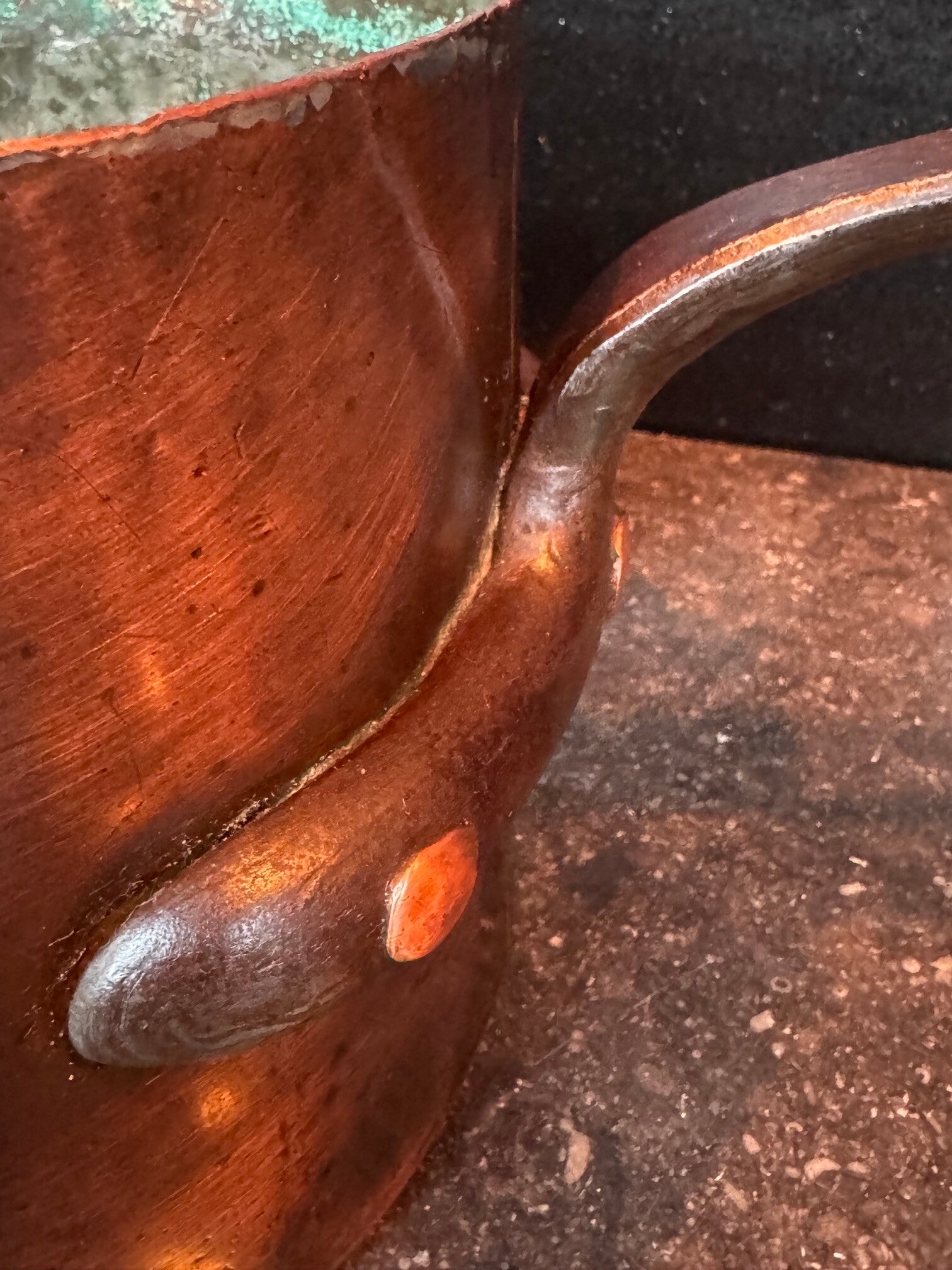
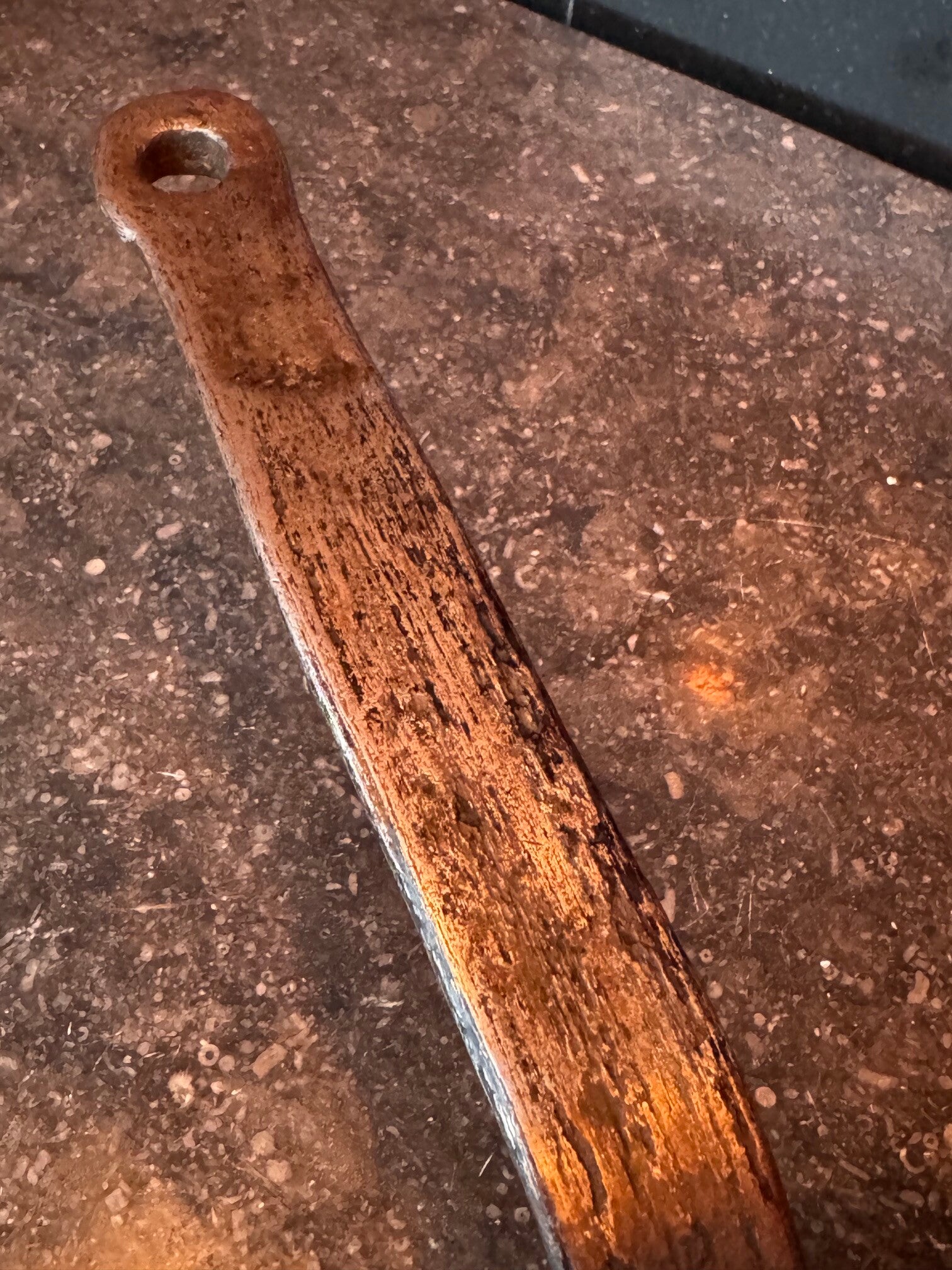
What really stands out is the construction. I have rarely seen such beautiful work in handmade iron handles — it is truly a joy to look at. The hand-hammered copper rivets, dovetail construction and beveled seams are real craftsmanship. This is high-end craftsmanship at its best, and you can tell these pans were laboured over with care and pride.
Take a close look at the photos — they are well worth your time.
Thank you for taking the time to read this, i hope you enjoyed it.
Sources: Stichting Haags Industrieel Erfgoed SHIE - J. Laboyrie koperslager 1879-ca.1925; Monumenten in Nederland Zuid-Holland - voorm. Parkhotel Parkweg 13, 1893; Haags Gemeentearchief - beroep koperslager Laboyrie family.
Add comment
Comments