

Maintandance
Proper maintenance is essential to preserve the beauty and performance of tin-lined copper cookware. Whether you own a modern copper pan or an antique French copper piece, understanding how to clean, use, and maintain copper cookware will help it last for generations. This guide covers everything from daily care and heat management to re-tinning and long-term storage. Caring for tin-lined copper cookware may seem daunting. Surrounded by myths and outdated assumptions, these pans are often seen as fragile or merely decorative. In reality, tin lined copper is made to be used. With a few clear, time tested guidelines, caring for these pans is no more complicated than maintaining any high quality non stick cookware. Understanding how to cook, clean, and treat them with respect is all it takes to enjoy them for decades.
Tin lined copper cookware has been trusted for centuries and has earned its reputation as one of the finest cooking surfaces available. Long before modern coatings existed, tin provided a naturally non-stick, food safe surface paired with copper’s unmatched heat conductivity. These pans heat quickly, respond instantly, and cook evenly, giving the cook complete control. Unlike modern non-stick coatings, tin can be restored and re-lined, allowing a well-made copper pan to be passed down rather than replaced. Durable, honest, and endlessly serviceable, tin-lined copper cookware remains a true working tool just as relevant today as it was generations ago. Making it an excellent choice for both professional chefs and home cooks alike.
Cleaning the tin lining:
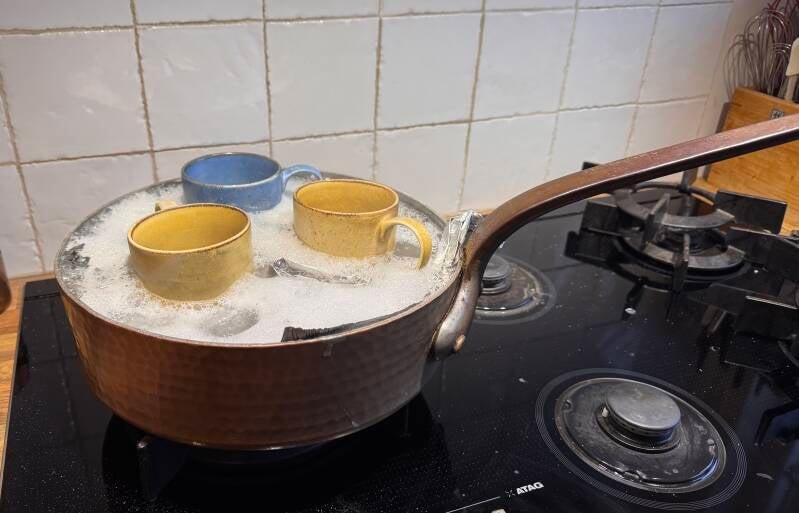
Over time, tin naturally oxidizes and changes color. This is a normal process and does not indicate that the lining is unsafe. Dark spots and streaks are common signs of use and age. If you prefer to restore the pan’s original shine, you can easily remove oxidation by boiling water with a few tablespoons of baking soda and crumpled aluminum foil. Simmer the mixture for a few minutes, then rinse the pan thoroughly. Repeat the process as necessary. However, avoid scrubbing the lining in an attempt to make it "shiny"—this will only scratch and wear down the tin, ultimately shortening its lifespan.

Avoid metal utensils:
One of the most important rules when cooking with tin-lined copper cookware is to avoid using metal utensils. Although tin is a safe and highly effective cooking surface, it is much softer than stainless steel and can be scratched or worn down by metal spoons, whisks, spatulas, or tongs.
To protect the lining, it is best to use wooden, silicone, or other non-abrasive utensils. These materials are gentle on the tin surface and help preserve the integrity of the lining for many years of regular use. Just as with modern non-stick cookware, a little care during cooking can significantly extend the life of the pan.
Minor marks and signs of use are normal and part of the character of a traditional tin-lined pan. However, deep scratches can expose the copper underneath and may eventually require the cookware to be professionally retinned sooner than necessary.
By choosing the right utensils and treating the cooking surface with care, your tin-lined copper cookware can provide decades of exceptional cooking performance while maintaining its beauty and functionality for future generations.
Cook with control
Tin lined copper pans are designed for precision cooking, but they also require a slightly different mindset than modern non stick or stainless steel cookware. One of the most important rules is to avoid preheating the pan on high heat. Excessive temperatures can damage the delicate tin lining, which has a relatively low melting point of around 232°C (450°F). Keeping your heat at a gentle to moderate level will preserve both the performance and lifespan of your pan.
A simple and reliable way to gauge temperature is the butter test. Add a small knob of butter to the pan if it melts slowly and foams gently, you’re in the right range. If it browns too quickly or starts to smoke immediately, the pan is too hot and should be cooled down. This method helps you develop an intuitive sense of heat control without relying on guesswork.
Tin-lined copper pans perform best at low to medium temperatures, which often surprises people. Many assume higher heat equals better browning, but in reality, controlled heat encourages a more even and consistent Maillard reaction. This results in deeper flavor development, better texture, and less risk of burning.
It’s also important to understand a common misconception: the burner setting does not directly equal the pan’s internal temperature. When food is added to a hot pan, moisture is released instantly, temporarily cooling the cooking surface. This natural temperature balance is part of proper cooking technique, and as long as your food is not burning or sticking excessively, you are cooking within a safe and effective range.
Start low and slow
If you are new to tin lined copper cookware, begin with a smaller burner and a low heat setting. Copper is extremely responsive, meaning it heats up quickly and reacts instantly to adjustments. This sensitivity is one of its greatest strengths, but it also means there is a learning curve.
By starting gently, you give yourself time to understand how quickly the pan responds and how small heat changes affect your cooking. Once you become familiar with this responsiveness, you will naturally develop better control and confidence making it much easier to avoid overheating and achieve consistent, professional results every time.
For a brand new or freshly retinned pans: water once or twice with a splash of vinegar or lemon juice, rinse well, dry, then cook normally. This helps remove any residual tin taste.
The exterior:
The exterior of your copper pan will naturally oxidize and change color over time due to heat exposure. This is one of the reasons copper cookware is so highly regarded for its aesthetic appeal. If you prefer to maintain a shiny, bright exterior, clean the outside with a mixture of lemon juice and the abrasive side of a sponge. Just be sure never to use the abrasive side on the interior, as it can damage the tin lining.

Overheating:
Accidentally overheating your tin lined copper pan is common, especially for new users (it have happend to me also). If this happens, don’t worry small beads of tin or lighter streaks in the pan are normal signs of overheating. While this will change the appearance of the pan, it doesn’t significantly affect performance. These beads are non-toxic and will not impact the taste of your food, but they do indicate that the pan has been overheated and may need re-lining in the future
When to re-tin:

One of the greatest advantages of tin lined copper cookware is its remarkable longevity. Unlike most modern cookware, a quality copper pan can be restored rather than replaced. Both the tin lining and the handles can be renewed, allowing a well made piece to remain in service for generations. Many of the copper pans still used today are already 50, 100, or even more than 150 years old.
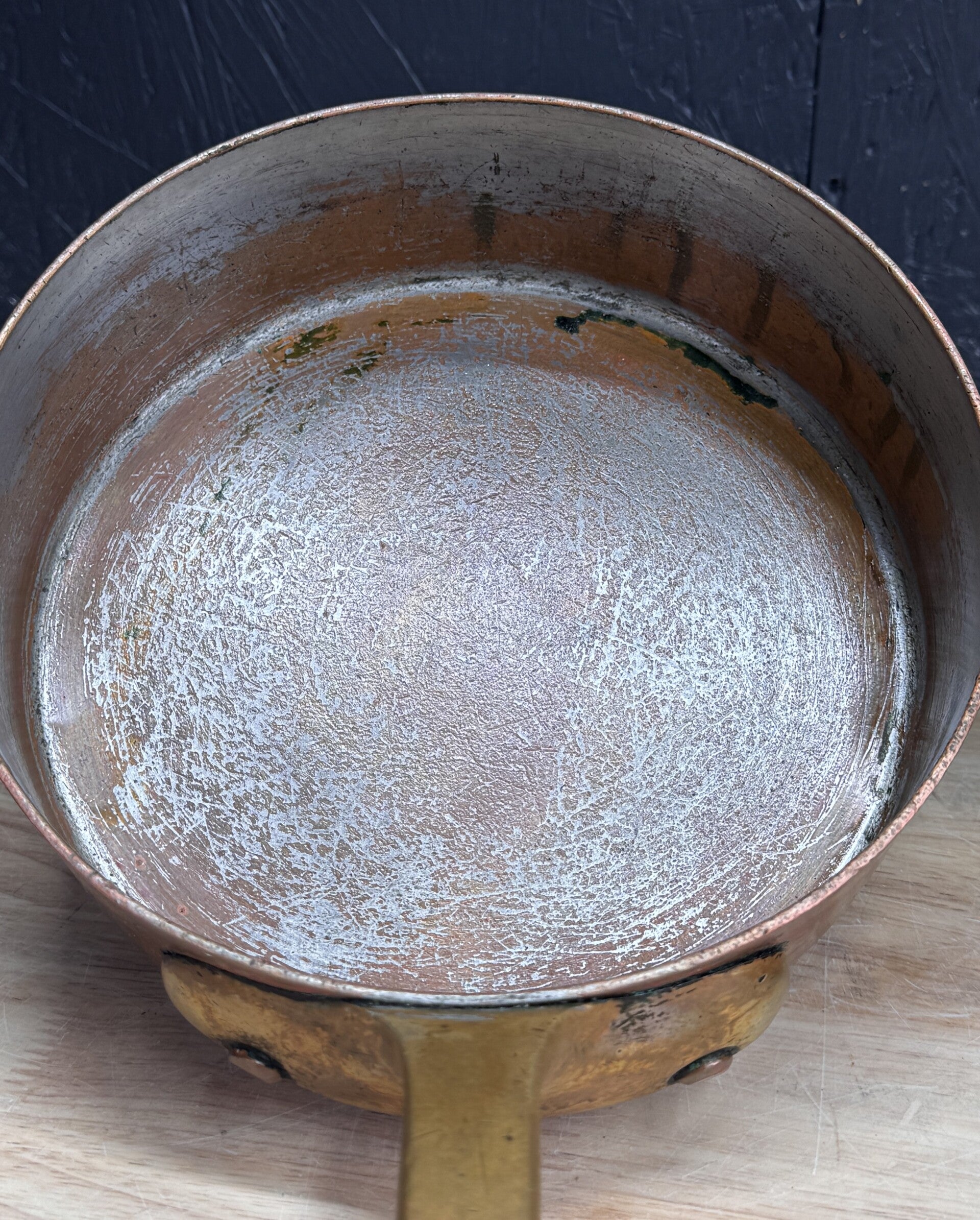
Re-lining involves heating the pan to approximately 260°C (500°F), applying pure food-safe tin, and spreading it evenly across the cooking surface. An experienced tinsmith will create a durable lining while maintaining the pan's original character. One sign of a high-quality hand-wiped lining is the presence of subtle "wipe marks" across the surface. These marks are not imperfections; they are evidence of a traditional hand-finishing process and often indicate a generous layer of tin.
As a general guideline, it is time to consider re lining when exposed copper becomes visible on the cooking surface, especially when the exposed area reaches roughly the size of a U.S. quarter (24.26 mm) or larger. Small pinpoints of copper are not usually an immediate concern, but continued use will gradually increase wear.
If you acquire antique copper cookware, it is highly recommended to have it professionally re lined before cooking with it, even if the existing lining appears intact. Historically, tin used in cookware was not always as pure as the food grade tin available today. In some cases, older linings contained traces of lead or other impurities that would not meet modern food-safety standards. Because it is often impossible to determine the composition of an old lining without testing, a fresh lining of modern pure tin provides peace of mind and ensures the cookware is safe for everyday use.
With proper care, periodic re lining, and responsible use, tin lined copper cookware can continue performing exactly as it was intended delivering exceptional cooking results for generations to come.
Add comment
Comments