

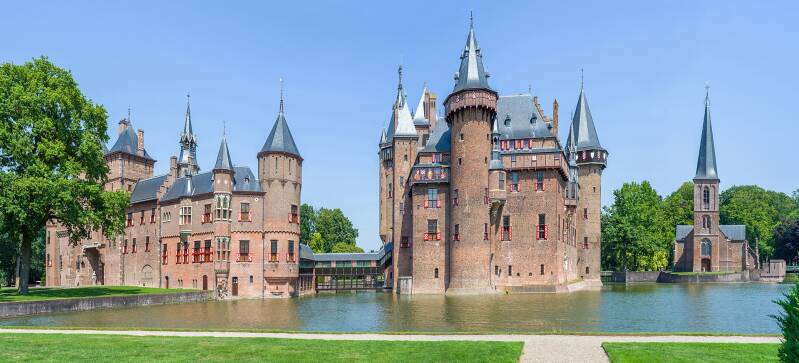
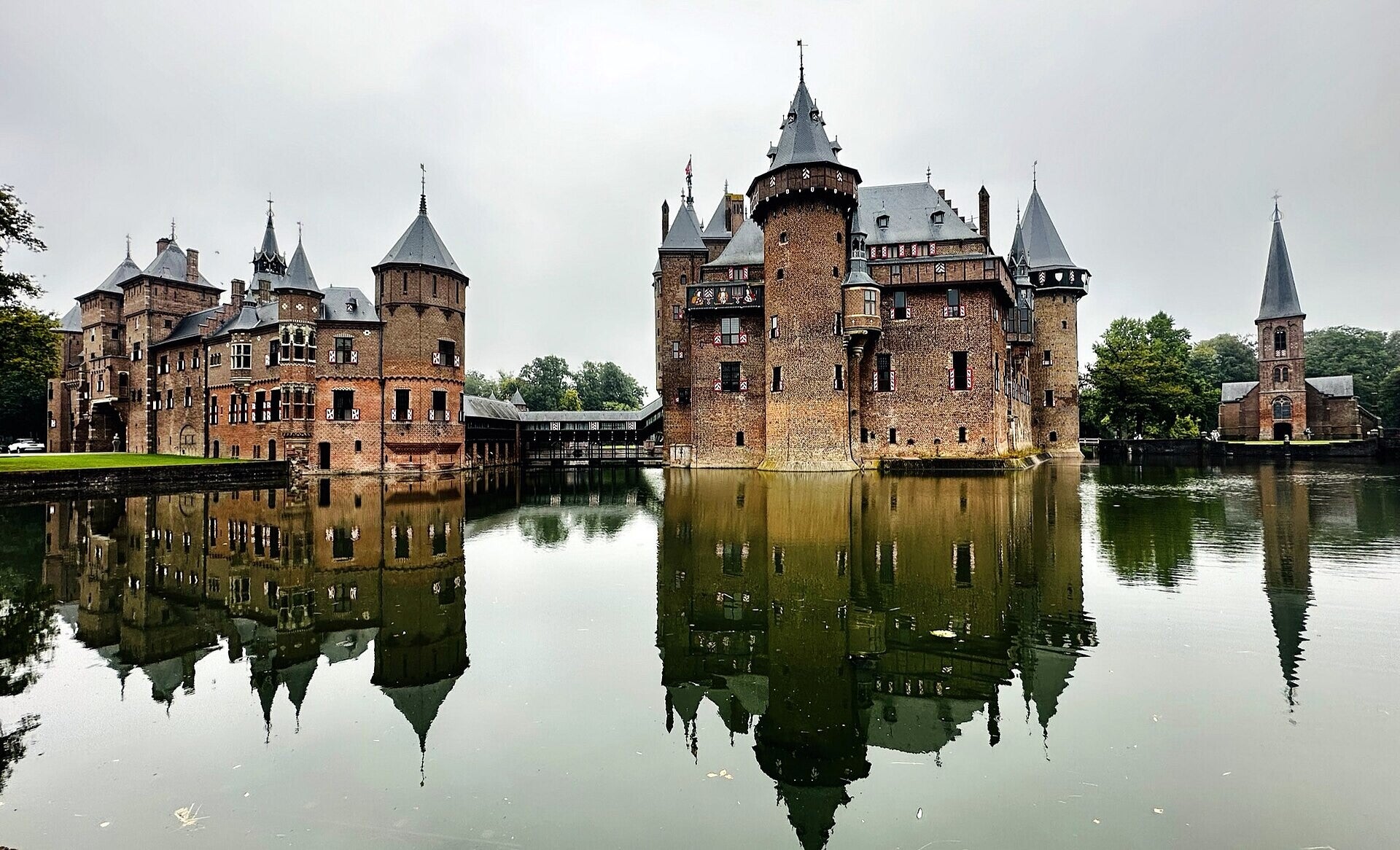
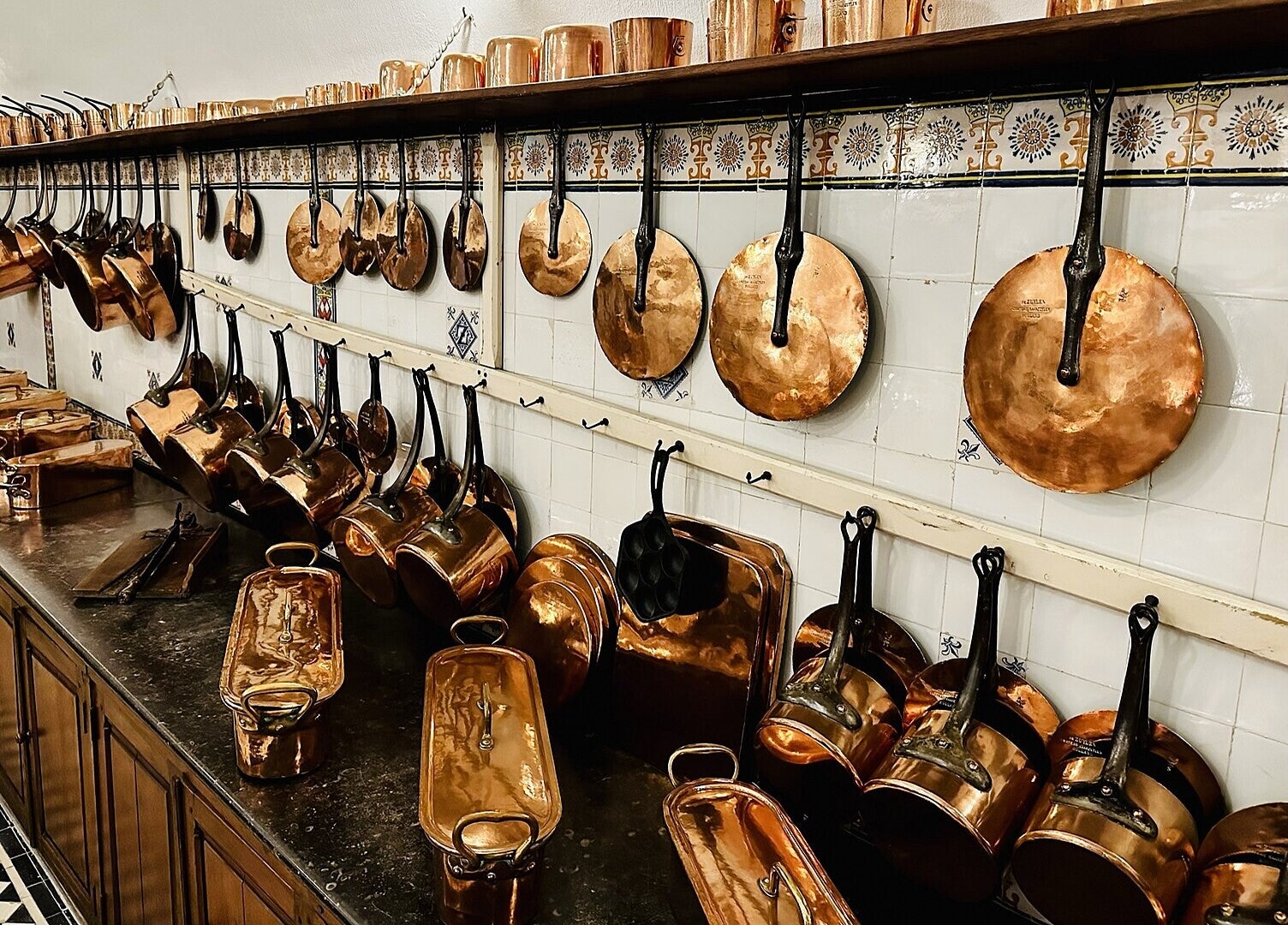
Outside Utrecht stands Kasteel de Haar - the largest castle in the Netherlands. Inside its basement lies something every copper collector wants to see: 150 antique copper pans.
From 13th Century to Ruin
The story starts around the 13th century, on a high riverbank of the Rhine. The first written mention is 1391. The Van der Haar family, serving the Prince-Bishop of Utrecht, built a fortified house here.
In the 15th century Josina van de Haar married Dirk van Zuylen, and the castle passed to the Van Zuylen family. Its famous five-sided shape appeared after it was destroyed in 1482 during conflicts between bishop and city of Utrecht, and rebuilt.
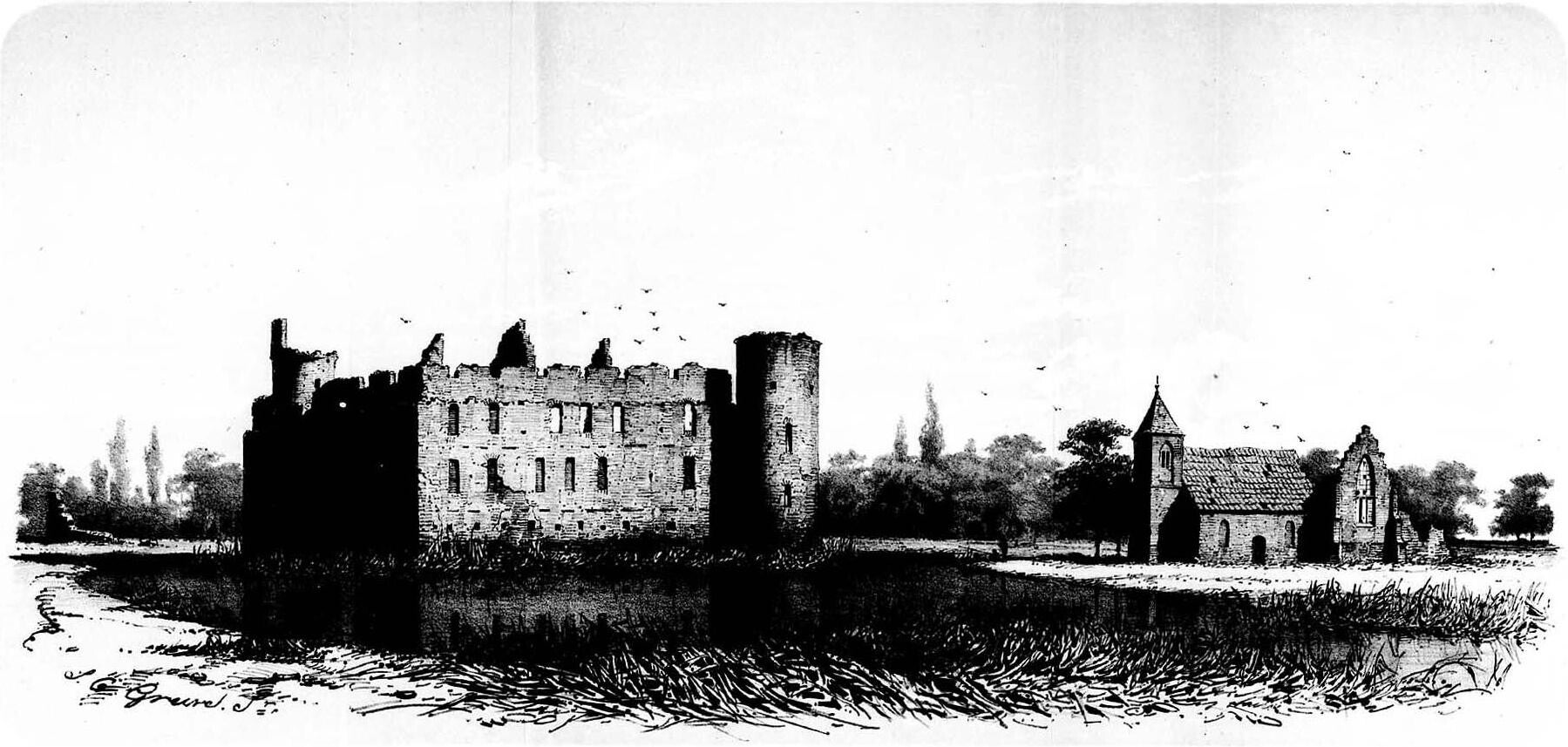
After 1641 the castle slowly became a ruin. Storms, wars and no heir left only walls. It even survived French troops in 1672.
Rebuilt by a Baron and a Rothschild
At the end of 19th century, Baron Etienne van Zuylen van Nijevelt inherited the ruin. In Paris he met Baroness Hélène de Rothschild at a masquerade ball - he was dressed as Hercules. They married in 1887 against both families' wishes, but with Rothschild money the dream to rebuild could start.
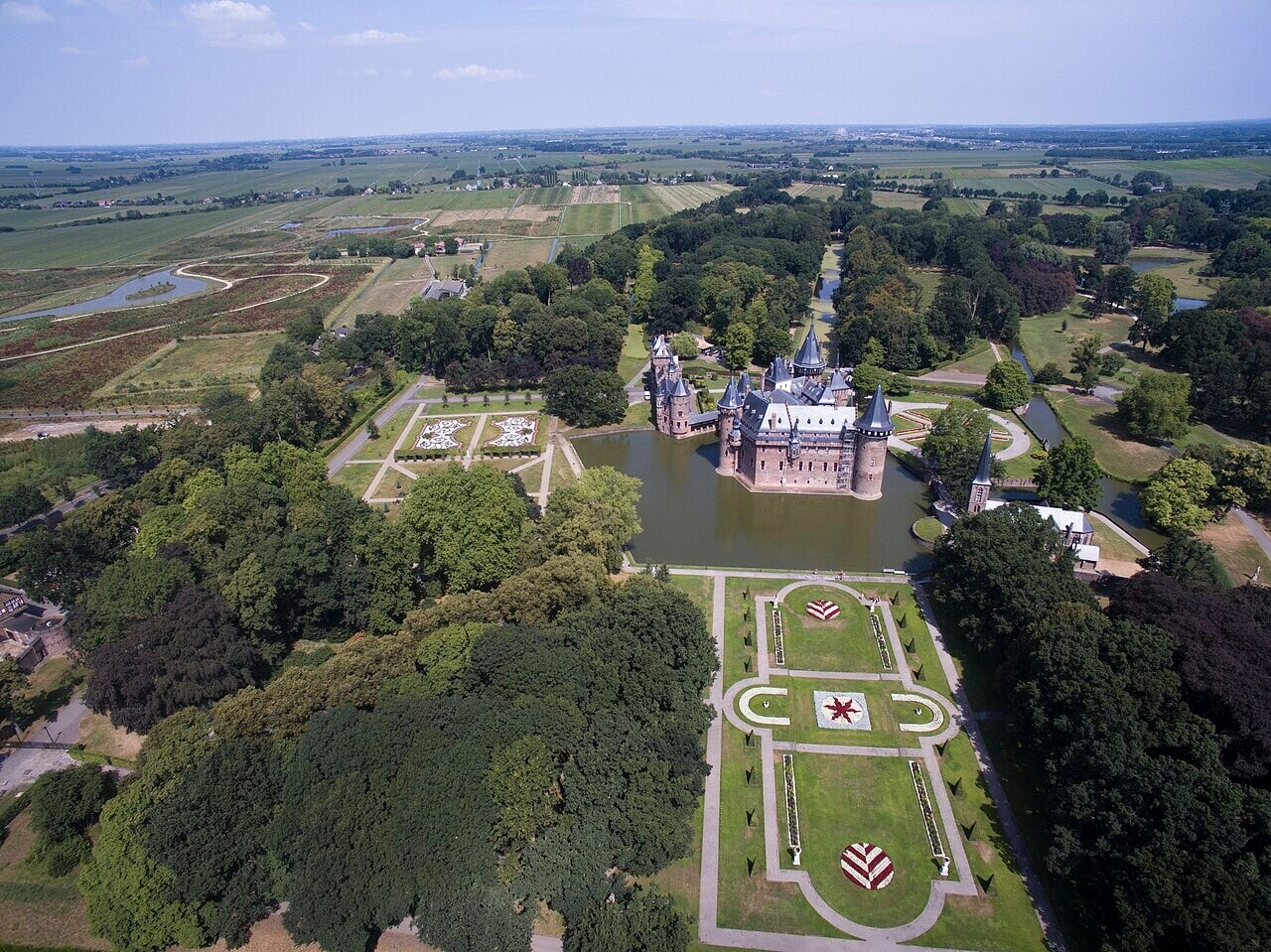
They hired Pierre Cuypers, the architect of the Rijksmuseum and Amsterdam Central Station. From 1892 to 1912 Cuypers rebuilt the castle on its original foundations in neo-Gothic style: 200 rooms, 25 bathrooms, 7,000 trees planted for the park designed by Hendrik Copijn. Even the village of Haarzuilens was moved 1km to make place for the gardens.
For its time the castle was shockingly modern: own generator for electric light, steam central heating, hot and cold running water, a Turkish bath and a passenger lift. Even Queen Emma, who visited in 1901, did not have that luxury.
Baron Etienne himself was far from medieval - champion in early car and airplane races, president of Club Automobile de France and Aéro Club de France, and organizer of the 1898 Paris-Antwerp rally.
The Kitchen - Installed June 1898
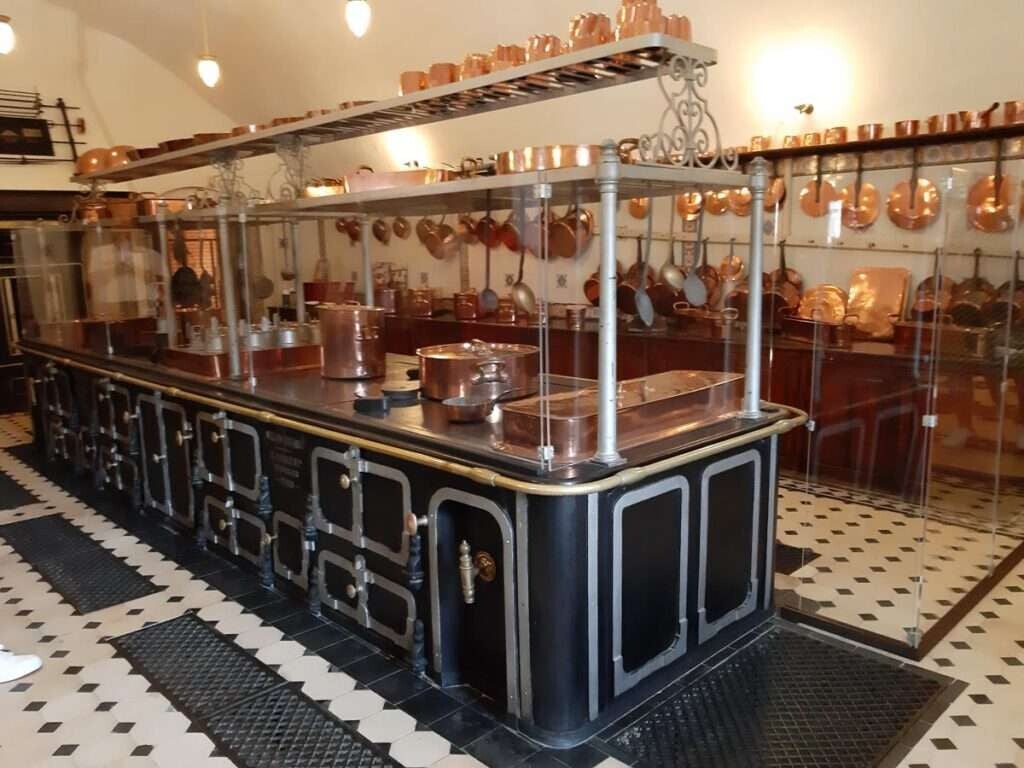
The basement holds several kitchens around the central hall - cooking kitchen, rinse kitchen, vegetable kitchen, dairy and butcher shop. Each entered directly from the hall.
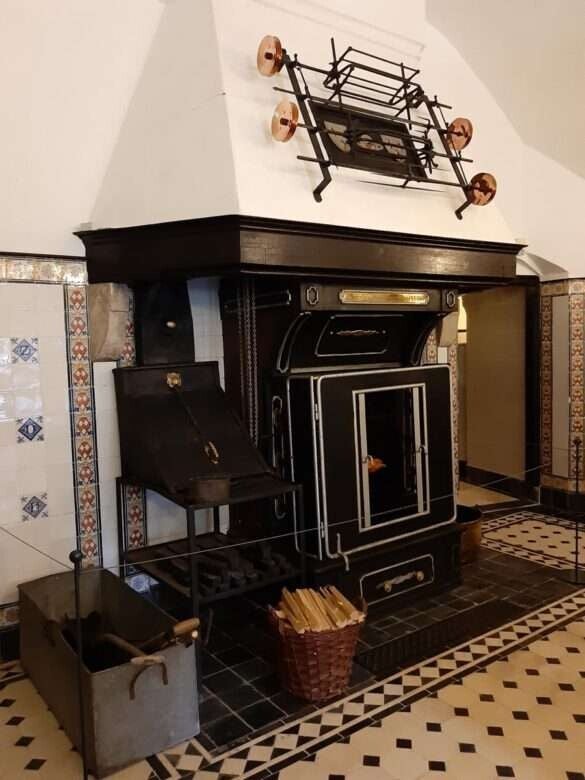
In June 1898 Parisian company Atelier Briffaut installed the state-of-the-art kitchen. Company G. Drouet supplied the colossal double coal stove, its name in large letters on the front. Floor grates supplied air to coal fires, smoke went underground to the chimney.
Rinse kitchen:Here worked the plongeur (dishwasher). Despite being staff-only, floor shows cheerful zigzag tiles in black, white and colour with ladder pattern, walls with multicolored border. Every corner finished with care - typical De Haar.
Butchery: Marble benches and meat hooks. Here meat for Canard à l'orange, stuffed chick, venison was stored, deboned and filleted for the Baron's French cuisine guests.
The 150 pans: The 150-piece batterie de cuisine is unique in Netherlands - only comparable to Palace on Dam Square. Parisian maker stamped not his name but the owner's name on each pan, lid and mold. Copper conducts perfectly but needs tin lining. Re-tinning became difficult and pans are extremely heavy, so in 1984 castle switched to stainless steel. Original stove remains, 6 meters long, heated with peat and coal, with tiles from Franeker showing De Haar and Van Zuylen coats of arms.
September Living and Jetset
De Haar was never meant to live year-round. It was September residence. Every August staff arrived from Paris - maids, chauffeurs, butler, cooks who started bouillons. The castle began to smell like home.
Baron took his Grand Seigneur role seriously, keeping scrapbooks of society pages 'Chronique Mondaine' with menu ideas: "Quelques noms pour invitations."
After WWII son Egmont continued tradition soberly as diplomat. Son Thierry revived it from 1960s - De Haar became jetset hotspot: Brigitte Bardot, Gina Lollobrigida, Joan Collins, Yves Saint Laurent, Roger Moore, Gregory Peck, Coco Chanel, Maria Callas all signed the guestbook.
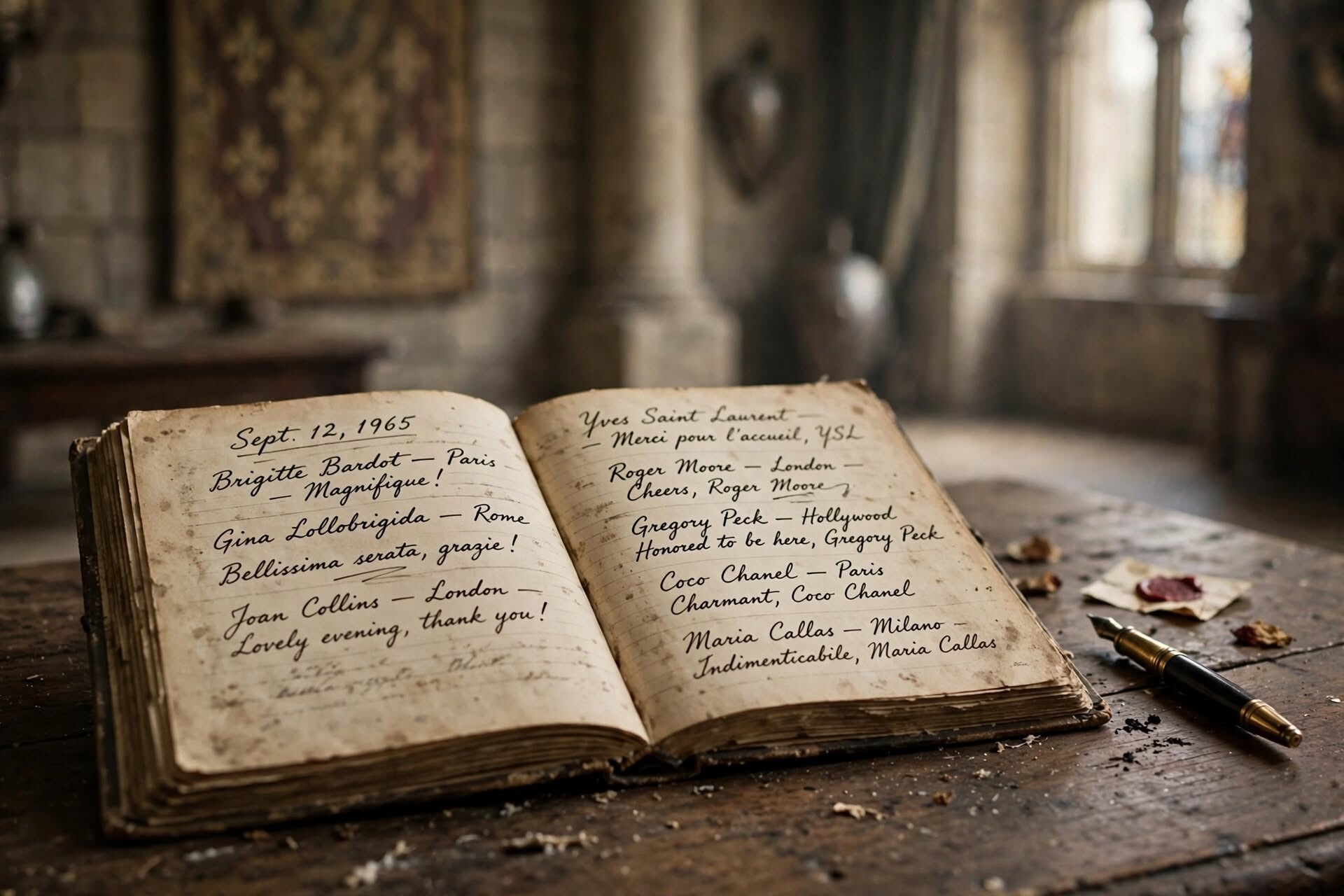
This illustration is our own impression, not an original document.
In 2000 family transferred castle and gardens to Foundation Kasteel de Haar, keeping right to stay one month per year. Now five daughters of Thierry keep history alive. The family arms - three red columns on silver - still seen everywhere in castle and village.
From De Haar to Stadskanaal - Own a Piece of the Past, Cook with History
What you see in De Haar is what we hunt for at Canal de la Ville Copper Cookware in Stadskanaal, Groningen: thick hand-hammered French copper from Villedieu-les-Poêles. Makers like Mauviel, Gaillard, Dehillerin, Legry, H.Pommier and Jacquotot.
Every piece restored, retinned and ready to cook - just like those 150 pans that once fed barons and baronesses in Kasteel de Haar.
That's why at Canal de la Ville it's not for nothing our slogan is: Own a piece of the past, cook with history.
P.S. Inspired?
We restore the same copper in our workshop in Stadskanaal. Worldwide shipping to USA - UPS 3-5 days - 5-star reviews on Etsy.


Sources & Further Reading
This story is based on historical facts from:
Kasteel de Haar Official Website** - History and collection of 150 copper pans
www.kasteeldehaar.nl
Foundation Kasteel de Haar Since 2000
Wikimedia Commons - Historical images before restoration 1862
All facts rewritten in own words for Canal de la Ville Copper Cookware.
Add comment
Comments